- Click here for the article.
The National Popular Vote Interstate Compact (NPVIC) is an interstate compact to award member state's presidential electors to the winner of the national popular vote. The NPVIC would go into effect if states representing at least 270 electoral college votes adopt the legislation.[1][2]
Article II, Section 1 of the U.S. Constitution gives states the authority to determine how their electoral votes will be awarded: "Each State shall appoint, in such Manner as the Legislature thereof may direct, a Number of Electors…." This compact does not abolish the electoral college system; rather, the compacts awards all of the electoral votes from the member states to the candidate who receives the most votes nationwide.[1]
Showing posts with label American States. Show all posts
Showing posts with label American States. Show all posts
Tuesday, May 7, 2019
Wednesday, September 7, 2016
Saturday, January 2, 2016
Federalism and Gun Policy
I'll post separately on the open carry laws that became effective yesterday - no need to prep for anything on that for the final. Below are a few items related to the increasing difference between the states on gun laws. This is a consequence of federalism which contains within it the understanding that states have discretion to pass certain types of laws as they see fit.
For the test, be familiar with the reserved powers, as well as police powers.
Gun laws seem to fit within this category, which explains the variance. I have a hunch though that gun proponents will start using the Second Amendment to challenge state restrictions on gun rights as being violations of a nationally defined right - but that remains to be seen.
Here's more on the subject:
From the Atlantic: The Split Between the States Over Guns.
For the test, be familiar with the reserved powers, as well as police powers.
Gun laws seem to fit within this category, which explains the variance. I have a hunch though that gun proponents will start using the Second Amendment to challenge state restrictions on gun rights as being violations of a nationally defined right - but that remains to be seen.
Here's more on the subject:
From the Atlantic: The Split Between the States Over Guns.
Will restrictions on guns expand or contract in 2016? It depends entirely on which state you’re in. Guns are about to become a lot more visible in the nation’s second most populous state. With a law that takes effect in the new year, Texans licensed to carry firearms won’t have to conceal them anymore—they can wear them out in the open, so long as they are in a belt or shoulder holster. Later in 2016, Texans will be allowed to take guns into campus dorms and classrooms, although those will have to remain hidden from view.
Gun laws are also set to change this week in California, but the country’s biggest state is going in the opposite direction. Concealed weapons will now be banned on college campuses, and police and families will have new powers to seek court orders to strip firearms from relatives believed to be a threat to themselves or others. The partisan debate over gun policy may have paralyzed Congress, but the rise in high-profile mass shootings has catalyzed action in the states, and 2015 saw the gap in gun laws between red and blue states grow ever larger.
The Center for Public Integrity: State lawmakers take aim at federal gun control.
Across the country, a thriving dissatisfaction with the U.S. government is prompting a growing spate of bills in state legislatures aimed at defying federal control over firearms — more than 200 during the last decade, a News21 investigation found.
Particularly in Western and Southern states, where individual liberty intersects with increasing skepticism among gun owners, firearms are a political vehicle in efforts to ensure states’ rights and void U.S. gun laws within their borders. State legislators are attempting to declare that only they have the right to interpret the Second Amendment, a movement that recalls the anti-federal spirit of the Civil War and civil-rights eras.
“I think the president and the majority of Congress, both in the House and Senate, are just completely out of touch with how people feel about Second Amendment rights,” said Missouri state Sen. Brian Nieves, who has fought for bills to weaken the federal government’s authority over firearms in his state.
This article is a bit dated, but it discusses the possible consequences of increased disparity in various types of laws across the states. Could this be yet another factor leading to polarization in the nation?
Governing: Could Gay Marriage, Guns and Marijuana Lead to a Fragmented United States of America?
. . . states pass legislation with an almost industrial efficiency, America, as is often noted these days, is becoming a more and more splintered nation. Red states are redder; blue states are bluer.
Take a look at a U.S. map colored by state party control. In the upper right-hand corner down to the Mid-Atlantic, it’s all blue. In the South and across the Great Plains, you see a blanket of red. That crimson sea begins to break at the Rocky Mountains until you reach a stretch of blue along the West Coast. In a way, we are returning to our roots as a loose confederation of culturally and geographically distinct governments.
States led by Democrats are moving toward broader Medicaid coverage, stricter gun laws and a liberalized drug policy. They’ve legalized gay marriage, abolished the death penalty and extended new rights to undocumented immigrants. Republican strongholds are working quickly to remove government from the business sphere -- reducing taxes, pushing anti-union right-to-work laws and rebelling against the Affordable Care Act (ACA). They’re also pressing forward on some of their most valued social issues, promoting pro-life abortion policies and protecting the rights of gun owners.
The divisions generate fundamental questions about the nature of federalism. The sweeping national interventions of the New Deal and the comprehensive federal social legislation of the 1960s have been replaced by a more decentralized approach to governance. States are openly defying federal law and resurrecting the concept of nullification. These are not merely legal or rhetorical exercises. They are fostering real change and real consequences for average Americans.


Tuesday, November 17, 2015


Wednesday, October 7, 2015
Tuesday, September 1, 2015
The full text of Section 4 of the U.S. Constitution
For GOVT 2306 this week.
For back ground on it:
- National Constitution Center.
- Justicia.
- GPO.
SECTION. 1. Full Faith and Credit shall be given in each State to the public Acts, Records, and judicial Proceedings of every other State. And the Congress may by general Laws prescribe the Manner in which such Acts, Records and Proceedings shall be proved, and the Effect thereof.
SECTION. 2. The Citizens of each State shall be entitled to all Privileges and Immunities of Citizens in the several States.
A Person charged in any State with Treason, Felony, or other Crime, who shall flee from Justice, and be found in another State, shall on Demand of the executive Authority of the State from which he fled, be delivered up, to be removed to the State having Jurisdiction of the Crime.
No Person held to Service or Labour in one State, under the Laws thereof, escaping into another, shall, in Consequence of any Law or Regulation therein, be discharged from such Service or Labour, but shall be delivered up on Claim of the Party to whom such Service or Labour may be due. (This was nullified in by the 13th Amendment)
SECTION. 3. New States may be admitted by the Congress into this Union; but no new State shall be formed or erected within the Jurisdiction of any other State; nor any State be formed by the Junction of two or more States, or Parts of States, without the Consent of the Legislatures of the States concerned as well as of the Congress.
The Congress shall have Power to dispose of and make all needful Rules and Regulations respecting the Territory or other Property belonging to the United States; and nothing in this Constitution shall be so construed as to Prejudice any Claims of the United States, or of any particular State.
SECTION. 4. The United States shall guarantee to every State in this Union a Republican Form of Government, and shall protect each of them against Invasion; and on Application of the Legislature, or of the Executive (when the Legislature cannot be convened) against domestic Violence.
For back ground on it:
- National Constitution Center.
- Justicia.
- GPO.
Sunday, August 30, 2015
The national government owns all the land in red on this map

One of the points made in the section on federalism - where we try to understand the conflict between the national and state governments - is that some of this conflict exists because the national government owns a lot of land - especially in the west.
At one point it own the bulk of all land across the nation because it either bought it or claimed it. This isn't the case in Texas - notice the lack of red - because Texas was its own nation for a brief period of time. This means that Texas owns the bulk of its land, unless it sold some to the national government to create a park or a fort.
The following story discusses conflict in the west over whether the national government should start selling the land to the private sector.
- Click here for it.
Thursday, July 16, 2015
This Day in Texas History: The Red River Bridge War
This is a new one on me.
I guess Texas and Oklahoma almost went to war. And it had nothing to do with football. It was about who had access to each bank of the Red River and included concern that Texas was being invaded by Oklahoma.
Seems like we're always concerned about being invaded by someone.
- TSHA: Red River Bridge Controversy.
- Wikipedia: Red River Bridge War.
I guess Texas and Oklahoma almost went to war. And it had nothing to do with football. It was about who had access to each bank of the Red River and included concern that Texas was being invaded by Oklahoma.
Seems like we're always concerned about being invaded by someone.
- TSHA: Red River Bridge Controversy.
- Wikipedia: Red River Bridge War.
The Red River Bridge controversy between Texas and Oklahoma (sometimes called the Red River War) occurred in July 1931 over the opening of a newly completed free bridge, built jointly by the two states, across the Red River between Denison, Texas, and Durant, Oklahoma. On July 3, 1931, the Red River Bridge Company, a private firm operating an old toll bridge that paralleled the free span, filed a petition in the United States district court in Houston asking for an injunction preventing the Texas Highway Commission from opening the bridge. The company claimed that the commission had agreed in July 1930 to purchase the toll bridge for $60,000 and to pay the company for its unexpired contract an additional $10,000 for each month of a specified fourteen-month period in which the free bridge might be opened, and that the commission had not fulfilled this obligation. A temporary injunction was issued on July 10, 1931, and Texas governor Ross S. Sterling ordered barricades erected across the Texas approaches to the new bridge. However, on July 16 Governor William (Alfalfa Bill) Murrayqv of Oklahoma opened the bridge by executive order, claiming that Oklahoma's "half" of the bridge ran lengthwise north and south across the Red River, that Oklahoma held title to both sides of the river from the Louisiana Purchase treaty of 1803, and that the state of Oklahoma was not named in the injunction. Oklahoma highway crews crossed the bridge and demolished the barricades. Governor Sterling responded by ordering a detachment of three Texas Rangersqv, accompanied by Adjutant General William Warren Sterling, to rebuild the barricades and protect Texas Highway Department employees charged with enforcing the injunction. The rangers arrived on the night of July 16. On July 17 Murray ordered Oklahoma highway crews to tear up the northern approaches to the still-operating toll bridge, and traffic over the river came to a halt. On July 20 and 21 mass meetings demanding the opening of the free bridge were held in Sherman and Denison, and resolutions to this effect were forwarded to Austin. On July 23 the Texas legislature, which was meeting in a special session, passed a bill granting the Red River Bridge Company permission to sue the state in order to recover the sum claimed in the injunction. The bridge company then joined the state in requesting the court to dissolve the injunction, which it did on July 25. On that day the free bridge was opened to traffic and the rangers were withdrawn.
Meanwhile, a federal district court in Muskogee, Oklahoma, acting on a petition from the toll-bridge company, had on July 24 enjoined Governor Murray from blocking the northern approaches to the toll bridge. Murray, acting several hours before the injunction was actually issued, declared martial law in a narrow strip of territory along the northern approaches to both bridges and then argued that this act placed him, as commander of the Oklahoma National Guard, above the federal court's jurisdiction. An Oklahoma guard unit was ordered to the bridge, and Murray, armed with an antique revolver, made a personal appearance in the "war zone," as the newspapers labeled it. No attempt was made to enforce the Oklahoma injunction, but on July 24, with the free bridge open, Murray directed the guardsmen to permit anyone who so desired to cross the toll bridge. On July 27 Murray announced that he had learned of an attempt to close the free bridge permanently, and he extended the martial-law zone to the Oklahoma boundary marker on the south bank of the Red River. Oklahoma guardsmen were stationed at both ends of the free bridge, and Texas papers spoke of an "invasion." Finally, on August 6, 1931, the Texas injunction was permanently dissolved, the Oklahoma guardsmen were withdrawn to enforce martial law in the Oklahoma oilfields, and the bridge controversy was laid to rest. The bridge was dynamited on December 6, 1995, to make room for a new one.
Saturday, May 23, 2015
Wednesday, April 8, 2015
From the Washington Post: Map: The most liberal and conservative towns in each state

- Click here for the article.
- The data comes from this article in Business Insider.
Texas' most conservative town is Garden City.
Texas' most liberal town is Sarita.
Tuesday, April 7, 2015
From the Hill: Ted Cruz aims to win the West
After starting his campaign with a speech to evangelicals Senator Cruz is making a pitch to residents of the west - especially Nevada - who would like access to the national government's land holding in western states.
- Click here for the article.
- Click here for the article.
Sen. Ted Cruz (R-Texas) is making a play for the West in the 2016 race by touting his opposition to the federal government’s expansive land holdings.
Cruz’s disdain for federal land control is resonating with Westerners whose lives are impacted by land managers, and could help him win over conservatives in Nevada, one of the early nominating states in the presidential contest.
“This is an issue he’s been focused on for quite some time, and it’s one that plays extremely well with the conservative base in the western part of the United States,” said Ford O’Connell, a GOP strategist who advised the 2008 presidential campaign of Sen. John McCain (R-Ariz.)
Nationwide, the government owns nearly 630 million acres, a landmass bigger than Alaska and California combined. Most of that land, managed by agencies like the Bureau of Land Management and Forest Service, is located in states west of the Mississippi River.
Federal control is particularly heavy in Nevada, where the government owns 81 percent of all land, the most of any state.
“This is something that has been a perennial issue in the West since it became part of the United States,” said James McCarthy, a geography professor at Clark University who studies the history of western land. “It’s a staple of western politics to complain about that.”
Tuesday, March 3, 2015
Religious Exemptions to Child Neglect
As we look at religious liberty in 2305, we'll struggle with how the courts have dealt with the extent to which a parents religious beliefs can bu used to justify withholding medical care for their children.
Many states - 37 - have passed laws protecting parents from criminal liability for not providing medical assistance for their children, should they be harmed as a result.
The National District Attorney's Association lists these exceptions:
- Click here for the report.
Interestingly enough, Texas is not one of these states.
Many states - 37 - have passed laws protecting parents from criminal liability for not providing medical assistance for their children, should they be harmed as a result.
The National District Attorney's Association lists these exceptions:
- Click here for the report.
Interestingly enough, Texas is not one of these states.
Thursday, February 26, 2015
From Vox: 70 maps that explain America
This fits with 2306's look at the expansion of states across the United States.
- Click here for it.
- Click here for it.
Friday, January 23, 2015
From Vox: The real state of the union, in 33 maps and charts
If you like maps and charts, you'll like this page.
- Click here for it.
It contains info about both the state of the union and the relative status of each state. So it's useful for both 2305 and 2306.
Here's a sampling:
/cdn0.vox-cdn.com/uploads/chorus_asset/file/2908448/oil_price_jan6.0.png)
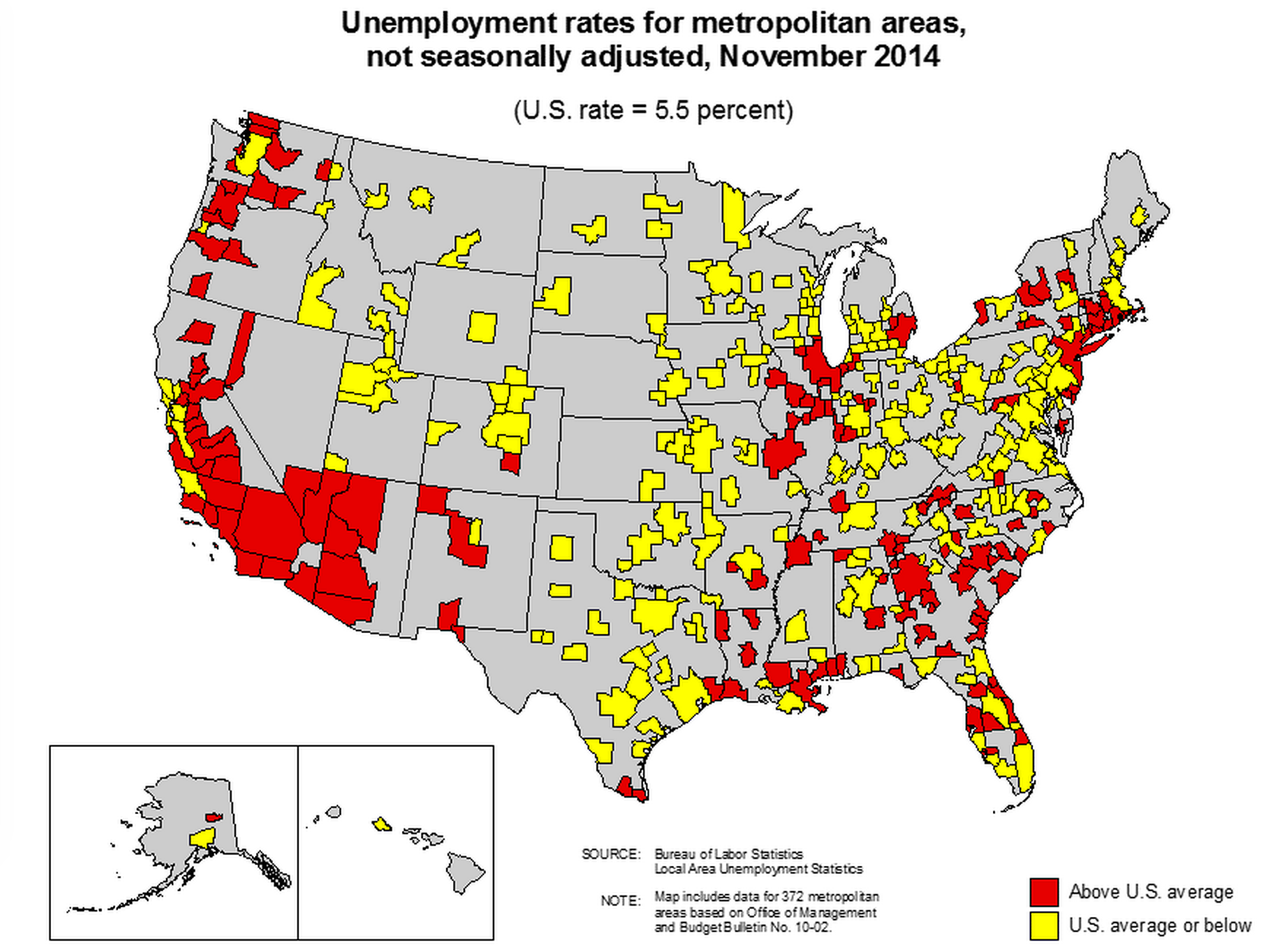
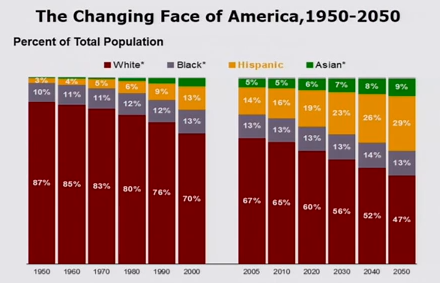
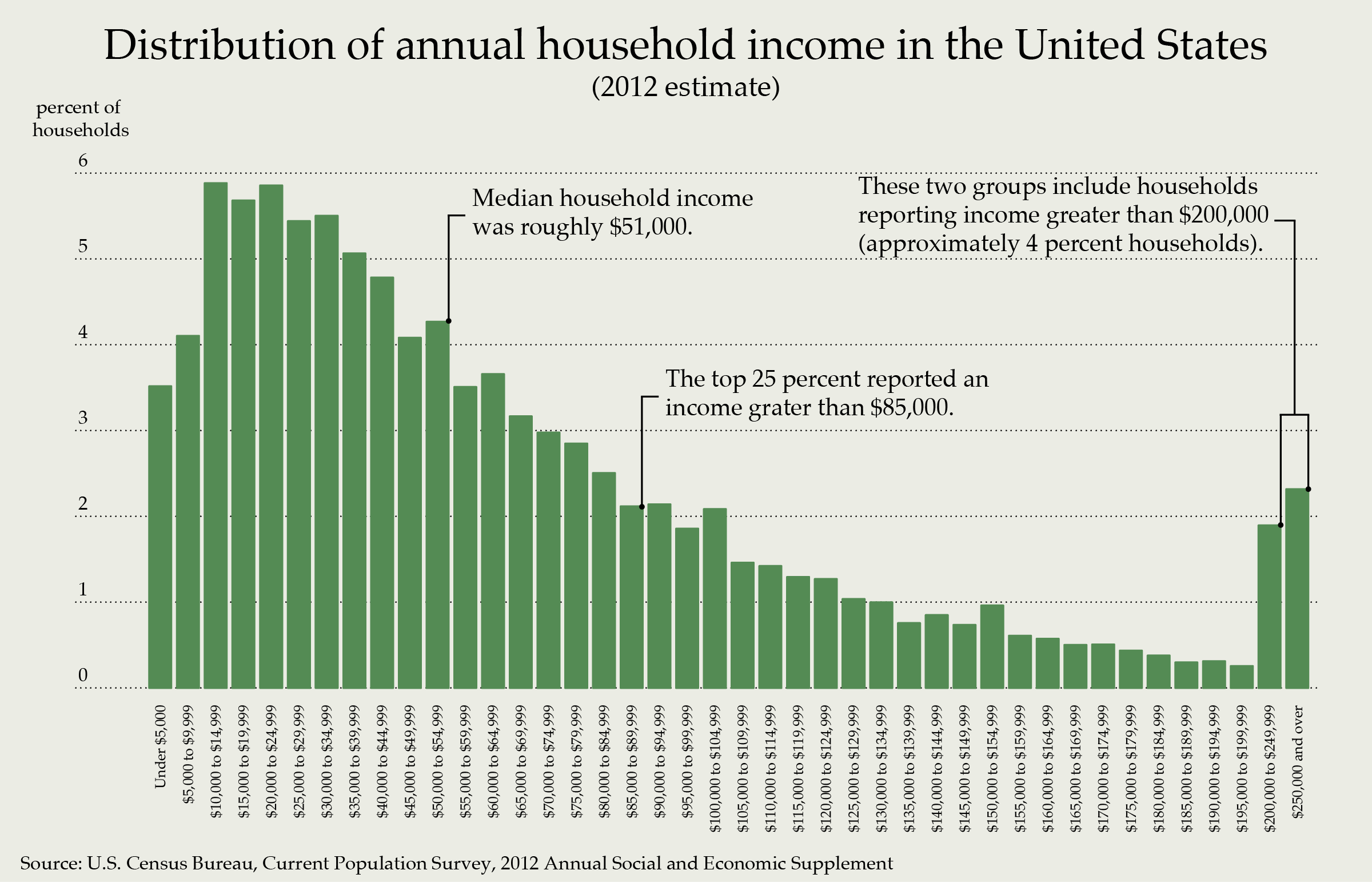
- Click here for it.
It contains info about both the state of the union and the relative status of each state. So it's useful for both 2305 and 2306.
Here's a sampling:
Thursday, July 3, 2014
From Vox: What maps of America get wrong
This is a fun video detailing the extent of the territories of the United States.
- Click here for it.
- Click here for it.
Thursday, February 27, 2014
From the NYT: Arizona Governor Vetoes Bill on Refusal of Service to Gays
Neither the Kansas not Arizona bills allowing religious beliefs to legally justify discrimination against gays and lesbians will become law.
Is this a consequence of checks and balances? What motivates one governing institution, does not motivate - necessarily - others. The same could be said of the previous story regarding laws against same-sex marriage in Texas being found unconstitutional by a federal judge in the state. That brings in the complicating factor of federalism - but let's hold that aside for now.
Among the arguments against the bill were its unintended consequences - which seem limitless.
- Click here for the article:
Is this a consequence of checks and balances? What motivates one governing institution, does not motivate - necessarily - others. The same could be said of the previous story regarding laws against same-sex marriage in Texas being found unconstitutional by a federal judge in the state. That brings in the complicating factor of federalism - but let's hold that aside for now.
Among the arguments against the bill were its unintended consequences - which seem limitless.
- Click here for the article:
Ending a day that cast a glaring national spotlight on Arizona, Gov. Jan Brewer, a Republican, vetoed a bill on Wednesday that would have given business owners the right to refuse service to gay men, lesbians and other people on religious grounds.
Her action came amid mounting pressure from Arizona business leaders, who said the bill would be a financial disaster for the state and would harm its reputation. Prominent members of the Republican establishment, including Mitt Romney and Gov. Rick Scott of Florida, also sided with the bill’s opponents, who argued that the measure would have allowed people to use religion as a fig leaf for prejudice.
Ms. Brewer announced her veto at a hastily called news conference after spending the day holed up in the Capitol in private meetings with opponents and supporters. “I call them like I see them, despite the cheers or the boos from the crowd,” she said. She added that the legislation “does not address a specific or present concern related to religious liberty in Arizona,” and that it was “broadly worded and
The governor further castigated the Republican-controlled Legislature, which passed the bill last Thursday, for making it the first piece of legislation to reach her desk this year. Her priorities, she said, are a budget, continuing the state’s economic growth, and “fixing our broken child protection system.”
The bill was inspired by episodes in other states in which florists, photographers and bakers were sued for refusing to cater to same-sex couples. But it would have allowed much broader religious exemptions by business owners.
A range of critics — who included business leaders and figures in both national political parties — said it was broadly discriminatory and would have permitted all sorts of denials of service, allowing, say, a Muslim taxi driver to refuse to pick up a woman traveling solo.
Friday, February 21, 2014
Meth Labs of Democracy
The National Journal highlights a fun video from the Daily Show featuring some of the more creative laws passed by state legislatures recently.
- Click here for the article.
- Click here for the article.
Thursday, February 20, 2014
From the Center on Budget and Policy Priorities: More Evidence That You Can’t Lure Entrepreneurs With Tax Cuts
This cuts against an argument commonly made by Texas politicians:
Cutting state taxes to attract entrepreneurs is likely futile at best and self-defeating at worst, a new survey of founders of some of the country’s fastest-growing companies suggests. The study, which is consistent with other research, should be required reading for state policymakers — especially those in Michigan, Missouri, Nebraska, Ohio, Oklahoma, South Carolina, and Wisconsin who are pushing for large income tax cuts.
The 150 executives surveyed by Endeavor Insight, a research firm that examines how entrepreneurs contribute to job creation and long-term economic growth, said a skilled workforce and high quality of life were the main reasons why they founded their companies where they did; taxes weren’t a significant factor. This suggests that states that cut taxes and then address the revenue loss by letting their schools, parks, roads, and public safety deteriorate will become less attractive to the kinds of people who found high-growth companies. (Hat tip to urbanologist Richard Florida for calling attention to the study.)
. . . The new survey provides further evidence for these arguments. It found that:
- “The most common reason cited by entrepreneurs for launching their business in a given city was that it was where they lived at the time. The entrepreneurs who cited this reason usually mentioned their personal connections to their city or specific quality of life factors, such as access to nature or local cultural attractions.”
- “31% of founders cited access to talent as a factor in their decision on where to launch their company. . . . A number of founders also highlighted the link between the ability to attract talented employees and a city’s quality of life.”
- “Only 5% of entrepreneurs cited low tax rates as a factor in deciding where to launch their company” and only 2% mentioned “business-friendly regulations” and other government policies. The report’s authors concluded, “We believe that the lack of discussion of these factors indicates that marginal differences in these areas at the state or municipal level have little influence on great entrepreneurs’ decision-making processes.”
Kansas, North Carolina, and Ohio have cut personal income taxes significantly in the last two years, and in each case the governor argued that it would give a big boost to creating or attracting new firms. This new study provides more compelling evidence that that’s the wrong approach. Let’s hope other states don’t start down the same dead-end path.
Sunday, February 9, 2014
From the NYT: ‘Aid in Dying’ Movement Takes Hold in Some States
Add this to the list of stories on states as laboratories of democracy. Its a report on the what used to be called doctor assisted suicide, but now is called aid in dying. Put a more positive spin on it. The movement started in Oregon a few years back and seems to be on the move.
From the NYT:
In January, a district court in New Mexico authorized doctors to provide lethal prescriptions and declared a constitutional right for “a competent, terminally ill patient to choose aid in dying.” Last May, the Vermont Legislature passed a law permitting it, joining Montana, Oregon and Washington. This spring, advocates are strongly promoting “death with dignity” bills in Connecticut and other states.
Public support for assisted dying has grown in the past half-century but depends in part on terminology. In a Gallup Poll conducted in May, for example, 70 percent of respondents agreed that when patients and their families wanted it, doctors should be allowed to “end the patient’s life by some painless means.” In 1948, that share was 37 percent, and it rose steadily for four decades but has remained roughly stable since the mid-1990s.
Yet in the same 2013 poll, only 51 percent supported allowing doctors to help a dying patient “commit suicide.”
Here's the graph from the Gallup Poll linked to above. Perhaps this movement will join marijuana and same sex marriage as policy areas where major changes are happening on the state level.

The shift might have a lot to do with how the policy is framed. Death with dignity sounds better than suicide.
From the NYT:
In January, a district court in New Mexico authorized doctors to provide lethal prescriptions and declared a constitutional right for “a competent, terminally ill patient to choose aid in dying.” Last May, the Vermont Legislature passed a law permitting it, joining Montana, Oregon and Washington. This spring, advocates are strongly promoting “death with dignity” bills in Connecticut and other states.
Public support for assisted dying has grown in the past half-century but depends in part on terminology. In a Gallup Poll conducted in May, for example, 70 percent of respondents agreed that when patients and their families wanted it, doctors should be allowed to “end the patient’s life by some painless means.” In 1948, that share was 37 percent, and it rose steadily for four decades but has remained roughly stable since the mid-1990s.
Yet in the same 2013 poll, only 51 percent supported allowing doctors to help a dying patient “commit suicide.”
Here's the graph from the Gallup Poll linked to above. Perhaps this movement will join marijuana and same sex marriage as policy areas where major changes are happening on the state level.
The shift might have a lot to do with how the policy is framed. Death with dignity sounds better than suicide.
Friday, February 7, 2014
What might Texas look like if it split into 5 states?

We would be in Gulfland:

Capital: HoustonOther Cities: Corpus Christi, Beaumont, Baytown, GalvestonPopulation (2008 Estimate): 7,494,089 (about as many as Virginia)Congressional Districts: 10 (would increase to 11 following 2010 reallocation)Electoral Votes: 12 (would increase to 13 following 2010 reallocation)Area: 36,547 square miles (14% of former Texas territory, about as large as Indiana)Demographics: 32% Hispanic, 16% Black, 5% AsianEconomic: 32% college degree (adults 25+); 16% below poverty line2008 Vote (Excludes third parties): McCain 1,350,322 (56.1%), Obama 1,058,446 (43.9%)
This somewhat unusually-shaped state, which looks a bit like West Virginia rotated 90 degrees, would contain the Houston metroplex, while then meandering to include nearly the entirety of Texas' Gulf Coast, from the Louisiana border up to (but not including) Texas' southermost reaches in Cameron County. Gulfland's economy would likely be heavily dependant on offshore drilling platforms in the Gulf of Mexico.
However, there are a few things for Democrats to like about Gulfland -- it would be a majority-minority state (although barely) and Barack Obama won Houston's Harris County in November (also barely). Gulfland might be incrementally more competitive than Trinity, although very likely only for the Senate and not the Presidency, as Democrats have been gradually losing ground in this part of the country.
Subscribe to:
Posts (Atom)