Monday, February 3, 2025
Week 4 . . .
Ask ChatGPT: What are the unenumerated rights?
Is there a right to vote in the US Constitution?
- What Does the Constitution Say About the Right to Vote?
The 14th Amendment.
Corporate Personhood.
The Selective Incorporation of The U.S. Bill of Rights to the States.
- Barron v Baltimore.
- Slaughter-House Cases.
- Chicago, Burlington & Quincy Railroad Co. v. City of Chicago.
- Twining v. New Jersey.
- Gitlow v. New York.
- West Virginia State Board of Education v. Barnette.
- Mapp v Ohio.
- McDonald v. City of Chicago.
- Timbs v. Indiana.
United States free speech exceptions.
The Texas Bill of Rights.
Enabling legislation introduced in the 89th session.
Proposed amendments to the Texas Constitution.
U.S. Code: Title 18 — CRIMES AND CRIMINAL PROCEDURE.
CODE OF CRIMINAL PROCEDURE.
PENAL CODE.


Sunday, February 2, 2025
ChatGPT's "thoughts" on the relationship between partisanship and law enforcement.
Yes, law enforcement should be nonpartisan. The primary role of law enforcement is to uphold the law, ensure public safety, and protect the rights of all citizens, regardless of their political beliefs or affiliations. If law enforcement becomes partisan or politically motivated, it can lead to bias, erosion of public trust, and unequal treatment of individuals based on their political or social affiliations. Nonpartisan law enforcement ensures that all individuals are treated fairly and equally under the law, which is crucial for maintaining justice and the rule of law in a democratic society.
Dear ChatGPT: Is law enforcement non partisan?
In theory, law enforcement agencies are supposed to be nonpartisan, meaning they should carry out their duties impartially, without being influenced by political beliefs or affiliations. In practice, however, achieving complete nonpartisanship can be challenging. Law enforcement agencies can sometimes be perceived as influenced by politics, especially when there's a political climate or leadership that may affect policies, priorities, or even the way laws are enforced.
For example, political pressure can sometimes influence decisions on which issues to prioritize or how certain events are handled, especially in high-profile cases that may involve political figures or movements. Additionally, individual officers, like anyone, might hold personal political views, but it is generally expected that these do not impact their professional duties.
Public trust in law enforcement hinges on the belief that they are impartial, so any actions that seem politically motivated can damage that trust. Ideally, reforms and training are in place to reinforce nonpartisanship and ensure that officers act in accordance with the law and their duty to protect all citizens equally.
Dear ChatGPT: Is the Attorney General of the United States supposed to be non partisan?
Yes, the Attorney General of the United States is supposed to be nonpartisan in principle. As the head of the Department of Justice (DOJ), the Attorney General is expected to enforce the law impartially, without political bias, and to act in the best interests of justice and the public. The Attorney General’s role is to provide legal advice to the President and the government, oversee federal prosecutions, and ensure the fair application of the law across the country.
However, the Attorney General is appointed by the President and serves at the President's pleasure, which often leads to concerns about the potential for political influence. While the Attorney General is expected to act independently, their decisions can sometimes be viewed as politically motivated, especially when the President who appointed them has a strong political agenda or when the Attorney General is involved in cases related to the President’s own interests or political party.
This dynamic has sparked debates over whether the office can truly be nonpartisan when the person holding it may be seen as politically aligned with the administration. Ideally, though, the Attorney General is expected to maintain an independent stance and avoid partisanship in their legal decision-making.
Dear ChatGPT: How do we know if the Attorney General is partisan?
It can be difficult to definitively prove whether an Attorney General (AG) is partisan, but there are several indicators that can give the public and analysts a sense of whether political factors are influencing their decisions. Here are some ways we might assess whether an Attorney General is acting in a partisan manner:
1. Decision-Making in Politically Sensitive Cases: One of the clearest signs of partisanship is how an AG handles high-profile or politically sensitive cases—especially those involving political figures or political parties. If an AG seems to protect or target individuals based on their political affiliation, or if there is inconsistency in how similar cases are handled based on political alignment, it may raise concerns about partisan influence.
2. Public Statements and Actions: An AG who frequently makes public statements that align with or support the views of the sitting President or political party could be seen as partisan. For example, if the AG consistently speaks in favor of the President’s political agenda, criticizes the opposition, or takes public stances that mirror political rhetoric, it may suggest partisanship.
3. Handling of Investigations: The way an AG oversees or intervenes in investigations can be a strong indicator. For instance, if the AG or DOJ appears to launch investigations that disproportionately target political opponents or, conversely, fails to act on cases involving political allies, that could signal partisan behavior. The timing and scope of investigations can also be scrutinized to see if they coincide with political cycles, such as during elections.
4. Consistency with Legal Precedent and the Law: A nonpartisan AG should prioritize legal principles and consistency with the rule of law over political convenience. If an AG consistently alters or interprets the law in a way that benefits one political party or group while neglecting the broader legal framework, it may indicate partisan motivations. Legal decisions should be made based on law and evidence, not political pressure.
5. Appointments and Staffing: Who the Attorney General appoints to key positions within the Department of Justice can provide insights into their potential partisanship. If the AG fills positions with individuals who have clear political affiliations or have previously shown strong support for a particular party, that might suggest a partisan approach to law enforcement.
6. Congressional Oversight and Hearings: Congressional hearings are another way to assess an AG’s impartiality. Congress often conducts hearings to scrutinize the AG's actions. If the AG cannot effectively justify decisions or seems to prioritize political considerations over legal principles during these hearings, it might suggest partisanship.
7. Public Perception and Media Coverage: Public and media reactions can also reveal whether an AG is perceived as partisan. While public opinion can be polarized, if there’s a consistent pattern of criticisms from multiple sources—across the political spectrum—this can be an indicator that the AG’s actions are seen as politically motivated rather than driven by the law.
Despite these potential indicators, proving that an AG is partisan can be challenging. Often, it's a matter of perception and public trust. If the AG consistently acts in ways that align with the President’s political agenda, it can be difficult to separate the role of law enforcement from political considerations.
What is impoundment?
- What is impoundment? How Trump thinks he can control spending without Congress.
Does he?
- Wikipedia: Impoundment of appropriated funds.
Impoundment is an act by a President of the United States of not spending money that has been appropriated by the U.S. Congress. Thomas Jefferson was the first president to exercise the power of impoundment in 1801. The power was available to all presidents up to and including Richard Nixon, and was regarded as a power inherent to the office, although one with limits. The Congressional Budget and Impoundment Control Act of 1974 was passed in response to the abuse of power under President Nixon. The Act removed that power, and Train v. City of New York (whose facts predate the 1974 Act, but which was argued before the U.S. Supreme Court after its passage), closed potential loopholes in the 1974 Act. The president's ability to indefinitely reject congressionally approved spending was thus removed.
- Wikipedia: Train v. City of New York.
Train v. City of New York, 420 U.S. 35 (1975), was a statutory interpretation case in the Supreme Court of the United States.[1] Although one commentator characterizes the case's implications as meaning "[t]he president cannot frustrate the will of Congress by killing a program through impoundment,"[citation needed] the Court majority itself made no categorical constitutional pronouncement about impoundment power but focused on the statute's language and legislative history. The words "Constitution," "separation of powers," "separated powers" appear nowhere in the 8-justice majority opinion. The Court's opinion approaches the case as a question of statutory interpretation, albeit one with implications for the American system of checks and balances.
- Wikipedia: Congressional Budget and Impoundment Control Act of 1974.
- Congress.gov: Impounding Appropriated Funds.
- FAQs on Impoundment: Presidential Actions Are Constrained by Long-Standing Constitutional Restrictions.
Saturday, February 1, 2025
What is an Institution?
I a previous post I mentioned that strong institutions are argued to be essential to limiting power, which in turn, preserves individual liberties.
But what exactly is an "institution?"
From Chat GPT:
An institution is essentially an established organization, system, or structure that has a set purpose or function within a society or a community. It can refer to formal entities like schools, governments, hospitals, or banks, but it can also apply to informal systems, like family structures or cultural practices.
From Merriam Webster:
- an established organization or corporation (such as a bank or university) especially of a public character, such asd a financial institutions
- a facility or establishment in which people (such as the sick or needy) live and receive care typically in a confined setting and often without individual consent
- a significant practice, relationship, or organization in a society or culture such as the institution of marriage
- something or someone firmly associated with a place or thing: "she has become an institution in the theater"
From Wikipedia:
An institution is a humanly devised structure of rules and norms that shape and constrain social behavior. All definitions of institutions generally entail that there is a level of persistence and continuity. Laws, rules, social conventions and norms are all examples of institutions. Institutions vary in their level of formality and informality.
Friday, January 31, 2025
Some topics from class 2/1/25
Eminent Domian.
The compulsory acquisition of private property for public use. It does not include the power to take and transfer ownership of private property from one property owner to another private property owner without a valid public purpose. This power can be legislatively delegated by the state to municipalities, government subdivisions, or even to private persons or corporations, when they are authorized to exercise the functions of public character. The most common uses of property taken by eminent domain have been for roads, government buildings and public utilities.
Police Power.
In United States constitutional law, the police power is the capacity of the states and the federal government to regulate behavior and enforce order within their territory for the betterment of the health, safety, morals, and general welfare of their inhabitants. Police power is defined in each jurisdiction by the legislative body, which determines the public purposes that need to be served by legislation.
Lobbying Disclosure Act of 1995.
The Lobbying Disclosure Act of 1995 (2 U.S.C. § 1601) was legislation in the United States aimed at bringing increased accountability to federal lobbying practices in the United States. The law was amended substantially by the Honest Leadership and Open Government Act of 2007. Under provisions which took effect on January 1, 1996, federal lobbyists are required to register with the Clerk of the United States House of Representatives and the Secretary of the United States Senate. Anyone failing to do so is punishable by a civil fine of up to $50,000. The clerk and secretary must refer any acts of non-compliance to the United States Attorney for the District of Columbia.
Lobbying in the United States is paid activity in which special interest groups hire well-connected professional advocates, often lawyers, to argue for specific legislation in decision-making bodies such as the United States Congress. It is often perceived negatively by journalists and the American public; critics consider it to be a form of bribery, influence peddling, or extortion. Lobbying is subject to complex rules which, if not followed, can lead to penalties including jail. Lobbying has been interpreted by court rulings as free speech protected by the First Amendment to the U.S. Constitution. Since the 1970s, the numbers of lobbyists and the size of lobbying budgets has grown and become the focus of criticism of American governance.
State capacity is the ability of a government to accomplish policy goals, either generally or in reference to specific aims. More narrowly, state capacity often refers to the ability of a state to collect taxes, enforce law and order, and provide public goods. A state that lacks capacity is defined as a fragile state or, in a more extreme case, a failed state. Higher state capacity has been strongly linked to long-term economic development, as state capacity can establish law and order, private property rights, and external defense, as well as support development by establishing a competitive market, transportation infrastructure, and mass education.
Wednesday, January 29, 2025
From the National Hurricane Center: Tropical Cyclone Report - Hurricane Beryl
- Click here for the info on the web.
- Click here for the PDF.
Hurricane Beryl was a long-lived tropical cyclone that began across the deep tropical Atlantic’s Main Development Region on June 28th, and steered westward by a large mid to upper-level ridge of high pressure across the Central and Western North Atlantic Ocean. The tropical cyclone quickly strengthened to a tropical storm that evening, and a hurricane on June 29th. Beryl quickly strengthened to a major hurricane, making landfall on the island of Carriacou in Grenada as a high-end Category 4 on July 1st, and later strengthened to a category 5 in the Eastern Caribbean Sea. Weakening only very little, Beryl passed just south of Jamaca as a category 4 hurricane on July 3rd. Further weakening occurred before making a second landfall on the Yucatán Peninsula as a high-end category 2 hurricane early on July 5th.
Beryl weakened during its passage over the Yucatán Peninsula, emerging into the Southwest Gulf of Mexico the evening of July 5th as a strong tropical storm. Beryl began to move northwest as a large mid to upper-level trough of low pressure over the Central U.S. eroded the strong ridge of high pressure over the Gulf of Mexico. Also, increased wind shear and dry air entrainment limited any strengthening of Beryl, remaining nearly steady state through daybreak on July 7th. Later that morning, Beryl began to move north northwest towards the Central Texas coast as the mid to upper-level trough to the north deepened. Decreased wind shear and increased moisture allowed Beryl to slowly get better organized, re-attaining minimal hurricane strength by 11 PM CDT July 7th. Hurricane Beryl made landfall near Mategorda, Texas around 4 AM CDT July 8th with maximum sustained winds of 80 mph (70 knots) and a minimum central pressure of 979 millibars (28.91 inches).
After landfall, Hurricane Beryl began to move north northeast, only slowly weakening the next several hours. Beryl weakened to a tropical storm just northwest of Houston by 10 AM CDT, with further weakening as it traveled northeast across East Texas. Beryl weakened to a tropical depression by 10 PM CDT just northwest of Shreveport, Louisiana. Beryl became a post tropical cyclone by late morning on July 9th across Northwest Arkansas, and moving quickly across the Northeast U.S. through July 10th.

Links - 1/29/25
- Baker v Carr.
- Enabling Legislation.
- Magazine Fort.
- Arizona v United States.
- Turner BioMed.
- Enjoin.
- Poker Is Not Gambling, Says Federal Judge.
- The Impact of Wildfires on Building Codes: Reflections on the Recent Los Angeles Fires.
- Worcester v. Georgia.
- U.S. Senate: Nominations.
- SB 2 - 89(R).
- U.S. Senate: Class II - Senators Whose Terms of Service Expire in 2027.
- Pearland Code of Ordinances: Chapter 19 - NOISE.
- Media literacy is having a moment. We can't lose momentum. | Opinion.
Dear ChatGPT:
- what are privileges or immunities?
- is it illegal to be in the united states undocumented?
- is poker gambling? Yes or no?
- what is NATO?
- who are the members of NATO?
- Are economies inherited from presidential administration to presidential administration?
- What are the ordinary sensibilities of a reasonable and prudent person?
- what is a chief executive?
Tuesday, January 28, 2025
What is Licensing?
One answer is that it is something you might need of you are to practice your choosen profession:
From Chat GPT: What is licensing?
There are different types of licensing, depending on the nature of the intellectual property:
- Copyright Licensing: Allows someone to use creative works (e.g., books, music, software) while the original creator still holds ownership.
- Patent Licensing: Gives permission to use a patented invention or technology.
- Trademark Licensing: Allows another business to use a brand name, logo, or other trademarked items for their products or services.
The terms of a licensing agreement typically include the scope of use, the duration, and any financial arrangements like royalties or upfront payments. Would you like to dive into any specific type of licensing?
From ChatGPT: What is professional licensing?
Professional licensing refers to the legal authorization given to individuals to practice certain professions or occupations. It's typically required for jobs that involve specialized knowledge or skills that impact public safety, health, or well-being. The goal of professional licensing is to ensure that individuals meet specific standards of education, training, and competence before they can legally practice in their field.
Common examples of professions that require professional licensing include:
- Doctors and Nurses: Health professionals must pass exams, meet education requirements, and complete a licensing process to practice medicine or nursing.
- Lawyers: To practice law, individuals must pass the bar exam and meet other legal requirements set by the state or country.
- Engineers: In many places, engineers must be licensed (e.g., Professional Engineer or PE) to sign off on certain technical work, ensuring the safety and integrity of structures or systems.
- Accountants: Certified Public Accountants (CPAs) need to pass specific exams and meet experience requirements to be licensed to practice accounting.
Professional licensing often involves a combination of education, examinations, practical experience, and continuing education to maintain the license over time.
It then asked me:
Do you have a specific profession in mind that you're curious about the licensing process for?
An ad for community colleges
Found in the Trexas Tribune.
P paid for by Texas Association of Community Colleges, which os the interest group headed by the presidents of community colleges across the state.

From the HIll: Undergraduate certificate programs soar in popularity amid changes to labor market
- Click here for the article.
The shifting labor market has fueled a huge spike in undergraduate certificate programs, which are vastly outpacing the growth in undergraduate enrollment in general.
From 2019 to last fall, the National Student Clearinghouse Research Center found a 28.5 percent increase in enrollment in the programs, which are seen both as a way to move into the workforce quicker without a college degree and as a resume-booster for those still working on their bachelor’s.
Schools have responded to the needs of communities, creating programs such as certificates for teachers and nurses to help address long-standing shortages or ones in emergency management amid the rise in natural disasters.
“Our population has changed and is changing so dramatically, it’s put an incredible pressure on businesses because they can’t find the skilled workers that they need to build the jobs of today and, very importantly, the jobs of tomorrow,” said Edson Barton, CEO and co-founder of YouScience, a college and career readiness platform.
“Employers are sitting there saying, ‘Hey, we’re not getting what we need,’ and so, they are putting tremendous pressure on the post-secondary institutions […] to build more programs,” Barton added.
Undergraduate certificate programs are courses that focus on teaching a particular skill, most often technical ones, that encompass a wide variety of fields from health care to cybersecurity.
With that in mind:
- From ACC: CEWD - Continuing Ed & Workforce Development.
This is what we do.
Monday, January 27, 2025

Sunday, January 26, 2025
For GOVT 2306: The Texas Legislature Online
In my opinion, this is the one website you need to follow the activities of the Texas Legislature, as well as past sessions.
- Click here for it.
We will go over this in class, and I'll add to this post regularly.
What you want to be when you grow up
I'm curious about which of these require some sort of government approval - like a medical or law license. Conservely, which don't. I'm also curious about why those requirements exist, and who get to decide what they are, and what it takes to pass them?
I'll reorganize from time to time as I try to make more sense of the list.
- Certified Nurse Assistant
- Certified Registered Nurse Anesthetist.
- Licensed Vocational Nurses
- Registered Nurses
- Neonatal Nurse
- pediatric or NICU nurse
- Counselor
- - High School
- - Prison
- - Rehabilitation
- nuclear radiology technician.
- zoologist
- herpetologist
- child psychology
- sports psychology
- psychiatrist
- neonatal nurse
- accountant
- - CPA
- neo natal nurse
- animation, visual effects, and video production.
- therapist
- a wildlife biologist for National Geographic
- Architect
- astrobiologist
- engineer
- soil conservationist for the Natural Resource Conservation Service (NRCS) through the USDA
- pediatric dentist.
- orthodontist
- criminal lawyer
- Supreme Court Justice in the United States
- entrepreneur with my own cosmetics business
- hairstylist and eventually own my own salon
- physical therapist
- chemical engineering
- NBA basletball teamn owner
- social worker
- Real Estate Agent
- radiologic technologist
- civil engineer
- a pilot
- dermatologist
- veterinarian
- IT, social media or web analytics
- dermatology
- a professional dancer
- corporate lawyer, finance and mergers
- software developer
- auditor
- supply logistics analysts
- Management Information Systems
- athletic trainer or a physical therapist
- corporate lawyer specializing in finance and mergers
- Daycare
- Pediatrician
- a celebrity stylist
- an electrical contractor focusing on wastewater and water treatment plants
- construction manager
- Marine Engineer
- hospitality
- aerospace engineer
- general dentist or orthodontist.
- pharmacist
- I want to own my own cosmetic company.
- artist, a songwriter and composer
- microbiologist
- a journalist
- a traveler
- Cardiac Sonographer
- homicide detective or forensic analyst,
- firefighter
- an entrepreneur who owns my clothing business.
- herpetologist
- a Licensed Clinical Social Worker
- Child Life Specialist
- Computer Science
What are Political Norms?
From ChatGPT:
What are Political Norms?
Political norms refer to the unwritten rules, expectations, and practices that shape how political actors behave within a system or society. These norms help guide interactions between politicians, citizens, and institutions, and they can be deeply rooted in culture, history, and social values. While political norms aren't formally codified in laws or constitutions, they still influence decisions, behaviors, and the overall functioning of politics.
When these norms are upheld, political systems tend to function more smoothly. However, when norms break down or are violated, it can lead to political instability, conflict, or erosion of trust in the system.
Provide Examples of Political Norms.
Here are some examples of political norms:
1 - Respecting Election Outcomes: In many democratic systems, there’s a strong norm that politicians and citizens accept the results of free and fair elections, even if they disagree with the outcome. This prevents political chaos and upholds the integrity of the democratic process.
2 - Peaceful Transfer of Power: In democracies, it’s an important norm that when one political leader or party loses an election, they peacefully hand over power to the winner. This norm promotes stability and avoids violent conflicts after elections.
3 - Bipartisan Cooperation: While political parties may have different views, there’s often a norm in democratic systems that encourages some level of cooperation across party lines to pass legislation, particularly on issues that are seen as in the national interest.
4 - Civility in Political Discourse: There’s a longstanding norm in many democratic societies that politicians engage in debates and discussions with a level of respect and civility, even when they strongly disagree. This helps to maintain a healthy public discourse.
5 - Transparency and Accountability: A political norm in many countries is the expectation that government officials be transparent in their decision-making and be held accountable for their actions. This helps build trust in political institutions.
6 - Separation of Powers: In many countries, there’s a norm that the branches of government (executive, legislative, and judicial) remain independent from one another to prevent any single branch from gaining too much power.
7 - Respect for Constitutional Principles: Politicians are generally expected to act in ways that uphold the fundamental principles of the constitution, such as individual rights, the rule of law, and democratic governance.
8 - Voting as a Civic Duty: In many democracies, there’s a norm that citizens participate in elections by voting, viewing it as a key part of their responsibility in the political system.
9 - Political Etiquette: There are often informal norms about how politicians and public officials should behave in specific situations, such as adhering to certain dress codes, addressing colleagues with respect, or following protocol in meetings and public events.
These norms vary across cultures and political systems, but they play a key role in shaping how politics operates in any given society. When these norms are followed, it tends to create a more stable and functioning political environment.
You may wish to ask ChatGPT the following questions:
- Provide examples of political norms in the legislature.
- Provide examples of political norms in the executive.
- Provide examples of political norms in the judiciary.
Some High Level Reading:
- Political Norms, Constitutional Conventions, and President Donald Trump.
- PRESIDENTIAL NORMS AND ARTICLE II.
Saturday, January 25, 2025
Review of Week Two - 16 Week
In the previous week, I covered abstract issues such as power and the like.
This week I covered constitutions.
A constitution provides rational-legal authority for a governing system.
That is the basic purpose of the Constitutions of both Texas and the United States.
A charter performs the same purpose as a city.
The United States Constitution does the following:
- Click here.
The Texas Constitution does the following:
- Click here.
The Houston City Charter (as an example) does the following:
- Click here.
Thursday, January 23, 2025
From the Legislative Budget Board: The 2024 - 2025 Fiscal Size-Up.
A thorough look at revenue and expenditures authorized by the 88th Legislature.
- Click here for it.
A look at local government: Lamplighter
From Wikipedia.
A lamplighter or gaslighter is a person employed to light and maintain street lights. These included candles, oil lamps, and gas lighting.
Public street lighting was developed in the 16th century. During this time, lamplighters toured public streets at dusk, lighting outdoor fixtures by means of a wick on a long pole. At dawn, the lamplighter would return to put them out using a small hook on the same pole. Other duties include carrying a ladder and renewing the candles, oil, or gas mantles.
In some communities, lamplighters served in a role akin to a town watchman; in others, it may have been seen as little more than a sinecure.
Public street lighting is a classic example of a public good.
- City of Houston Code of Ordinances: Chapter 40 - Streets and Sidewalks.
From the White House: RESTORING NAMES THAT HONOR AMERICAN GREATNESS
One of the many executive orders released by the White House.
- Click here for it.
Of note:
Sec. 4. Gulf of America. (a) The area formerly known as the Gulf of Mexico has long been an integral asset to our once burgeoning Nation and has remained an indelible part of America. The Gulf was a crucial artery for America’s early trade and global commerce. It is the largest gulf in the world, and the United States coastline along this remarkable body of water spans over 1,700 miles and contains nearly 160 million acres. Its natural resources and wildlife remain central to America’s economy today. The bountiful geology of this basin has made it one of the most prodigious oil and gas regions in the world, providing roughly 14% of our Nation’s crude-oil production and an abundance of natural gas, and consistently driving new and innovative technologies that have allowed us to tap into some of the deepest and richest oil reservoirs in the world. The Gulf is also home to vibrant American fisheries teeming with snapper, shrimp, grouper, stone crab, and other species, and it is recognized as one of the most productive fisheries in the world, with the second largest volume of commercial fishing landings by region in the Nation, contributing millions of dollars to local American economies. The Gulf is also a favorite destination for American tourism and recreation activities. Further, the Gulf is a vital region for the multi-billion-dollar U.S. maritime industry, providing some of the largest and most impressive ports in the world. The Gulf will continue to play a pivotal role in shaping America’s future and the global economy, and in recognition of this flourishing economic resource and its critical importance to our Nation’s economy and its people, I am directing that it officially be renamed the Gulf of America.
(b) As such, within 30 days of the date of this order, the Secretary of the Interior shall, consistent with 43 U.S.C. 364 through 364f, take all appropriate actions to rename as the “Gulf of America” the U.S. Continental Shelf area bounded on the northeast, north, and northwest by the States of Texas, Louisiana, Mississippi, Alabama and Florida and extending to the seaward boundary with Mexico and Cuba in the area formerly named as the Gulf of Mexico. The Secretary shall subsequently update the GNIS to reflect the renaming of the Gulf and remove all references to the Gulf of Mexico from the GNIS, consistent with applicable law. The Board shall provide guidance to ensure all federal references to the Gulf of America, including on agency maps, contracts, and other documents and communications shall reflect its renaming.
Ask ChatGPT: Can the President of the USA change the name of an international body of water?
The President of the United States doesn’t have the authority to unilaterally change the name of an international body of water. Naming or renaming international bodies of water typically involves international agreements or conventions and is subject to the approval of multiple nations or international bodies, depending on the specific waterway in question.
In some cases, the U.S. government can officially rename domestic places (like national parks or geographic features), but when it comes to international waters, such decisions would generally need to be made through diplomatic discussions, treaties, or international law.
For example, if a body of water is part of an area disputed between two or more countries, the renaming could be part of broader negotiations or a peace agreement. But no single nation can unilaterally impose a name change on a body of water recognized globally.
Understanding the fuss over "birthright citizenship"
Lot's of checking and balancing going on here. Let's discuss in class:
- What is birthright citizenship?
- What is the 14th Amendment?
- What does the citizenship doctrine mean?
- The executive order in question: “Protecting the Meaning and Value of American Citizenship"
- The NYT: Judge Temporarily Blocks Trump’s Plan to End Birthright Citizenship.
- The Washington Post: States, civil rights groups sue to stop Trump’s birthright citizenship order.
Wednesday, January 22, 2025
The Extent of Presidential Power: Trump's Inaugural Promises
One of the major points I've tried to make so far in class is the the key to minimizing the chance that an autocratic system (rule of the one - dictatorship / tyranny) develops is to ensure that power is limited in a substantive way. This means with powerful, independent institutions.
Minimizing executive power is especially important since they have coercive power.
Yesterday's inagural address contained a variety of declarations about what Trump intends to do.
But does the U.S. Constitution grant him the power to do these things? Does he have to work with other institutions?
Let's explore.
- - Click here for the transcript.
- I will declare a national emergency at our
southern border.
- We will reinstate my remain in Mexico policy.
- we will also be designating the cartels as
foreign terrorist organizations.
- invoking the Alien Enemies Act of 1798, I will direct our
government to use the full and immense power of federal and state law
enforcement to eliminate the presence of all foreign gangs and criminal
networks
- defeat what was record inflation and rapidly bring down
costs and prices.
- We will drill, baby, drill.
- fill our strategic reserves up again,
- export American energy all over the world.
- end the Green New Deal and we will revoke the electric vehicle mandate,
- We will build automobiles in America
- we will tariff and tax foreign countries to enrich our citizens.
- establishing the External Revenue Service to collect all tariffs, duties and
revenues.
- establish the brand new Department of Government Efficiency.
- sign an executive order to immediately stop all government censorship and
bring back free speech to America.
- bring law and order back to our cities.
- end the government policy of trying to socially engineer race and gender
into every aspect of public and private life.
- it will henceforth be the official policy of the United States government
that there are only two genders, male and female.
- I will reinstate any service members who were unjustly expelled from the
military for objecting to the Covid vaccine mandate with full back pay.
- I will sign an order to stop our warriors from being subjected to radical
political theories and social experiments while on duty.
- changing the name of the Gulf of Mexico to the Gulf of
America.
- restore the name of the
great President William McKinley to Mount McKinley
- gave it to Panama, and we're taking
it back.
- pursue our manifest destiny into the stars, launching American astronauts to
plant the Stars and Stripes on the planet Mars.
Review of Week One - 16 Week
Why Do You Have to Take this Class?
1 - It is required
2 - An understanding of government is necessary in order to secure civil liberties and rights, and ensure the capacity for self government.
Ask ChatGPT: Does artifical intelligence pose a threat to civil liberties?
Key Terms:
- What is Power?
- What is Authority?
- What is Government?
- What is Politics?
Ask ChatGPT: How can power be limited?
Ask ChatGPT: How does the U.S. Constitution limit power?
Types of Authority:
- Charismatic
- Rational Legal
- Traditional
Ask ChatGPT: What are current examples of governments based on traditional authority?
Ask ChatGPT: What are current examples of governments based on charismatic authority?
Aristotle's Conception of Government
- Who rules?
- - one
- - few (what does this mean?)
- - many (plurality, simple majority, super majority, consensus)
- Good or Corrupt?
- - Good benefits all
- - Corrupt benefits only the rulers
Ask ChatGPT: What are the advantages and disadvantages of rule of the one?
Ask ChatGPT: What is corruption?
Key Terms:
- Dictatorship
- - Tyranny
- Oligarchy
- - Plutocracy, others . . .
- Democracy
- - Direct, or pure
- - Indirect, or Representative
Centralized
- Unitary
Decentralized
- Separated Powers
- Federal
Arbitrary
Limited
What is a Executive Order?
As with pardons, there have been a flurry of these on the national level in the past two days.
Unlike pardons, this power is not intended to check the powers of the other two branches. Instead it clarifies and narrows the power of the executive - specifically the president. It is to carry our what Congress tells it to do. The president cannot rule arbitrality, with discretion - or at least they are limits to the office's discretion.
Also unlike pardons, there is no specific mention of executive orders in the U.S. Constitution, but it is based on the take care clause in Article 2, Section 3 of the U.S. Constitution:
He shall from time to time give to the Congress information of the state of the Union, and recommend to their consideration such measures as he shall judge necessary and expedient; he may, on extraordinary occasions, convene both Houses, or either of them, and in case of disagreement between them, with respect to the time of adjournment, he may adjourn them to such time as he shall think proper; he may receive ambassadors, and other public ministers; he shall take care that the laws be faithfully executed, and shall commission all the officers of the United States.
The requirement is also contained in the presidential oath which can be found in Article 2, Section 1, Clause 7:
Before he enter on the execution of his office, he shall take the following oath or affirmation:
"I do solemnly swear (or affirm) that I will faithfully execute the office of the President of the United States, and will to the best of my ability, preserve, protect and defend the Constitution of the United States."
For more:
- Wikipedia.
- Federal Register.
- American Presidency Project.
- White House: Presidential Actions.
- White House: Initial Rescissions of Harmful Executive Orders and Actions.
What is a Presidential Pardon?
We've seen quite a few in the past few days.
In short, it is one of the internal checks on power intended to limit the ability of one interest to control all aspects of governmental power.
It can be found in the plain language of the U.S. Constitution, Article 2, Section 2, Clause 1:
1. The President shall be Commander-in-Chief of the Army and Navy of the United States, and of the militia of the several States, when called into the actual service of the United States; he may require the opinion, in writing, of the principal officer in each of the executive departments, upon any subject relating to the duties of their respective offices, and he shall have power to grant reprieves and pardons for offenses against the United States, except in cases of impeachment.
For more:
- U.S. Constitution Annotated: Overview of Pardon Power.
- List of people pardoned or granted clemency by the president of the United States.
- U.S. Department of Justice - Office of the Pardon Attorney.
- Pardons Granted by President Joseph Biden (2021-Present).
- Pardons Granted by President Trump (still looking for the best link)
For a more expansive look at the powers of the U.S. President:
- Powers of the president of the United States.

Dear ChatGPT: How has the President Implemented the Protecting Americans from Foreign Controlled Applications Act?
- Executive Orders and Legislation:
- - In 2020, President Trump signed an executive order aiming to ban Chinese-owned apps like TikTok and WeChat, citing national security concerns over the potential for foreign governments to access sensitive data from American users.
- - The Biden administration has taken a more cautious, comprehensive approach, emphasizing a review of national security risks posed by foreign-controlled apps. The focus is on evaluating data security and privacy risks posed by apps tied to adversarial foreign governments.
- Reviews by CFIUS (Committee on Foreign Investment in the United States):
- - The Biden administration has relied heavily on CFIUS, which reviews transactions that might affect U.S. national security. In the context of foreign-controlled apps, CFIUS has looked into acquisitions of American companies by foreign entities, particularly in the technology sector. This could include assessing the risk that certain foreign entities could have access to Americans’ personal data.
- Bipartisan Congressional Support:
- - Both parties in Congress have supported legislation that addresses the national security risks posed by foreign-controlled apps, particularly those from China. This has resulted in calls for new laws that would give the president more tools to prevent the spread of apps that could be used for espionage or surveillance.
- Increased Scrutiny on Popular Foreign Apps:
- - TikTok, owned by Chinese company ByteDance, has been a key target of scrutiny. The administration has considered actions ranging from forcing the app to sell its U.S. operations to imposing bans or additional regulations.
- Focus on Data Privacy and Security:
- - The administration has emphasized protecting American data from foreign access by increasing scrutiny on apps that collect massive amounts of personal data, especially when they have ties to foreign governments. The Biden administration has signaled an interest in enhancing data privacy laws to prevent foreign governments from exploiting American data.
- These actions align with ongoing concerns about cybersecurity, digital privacy, and national security in the face of growing technological influence from foreign governments. The goal is to strike a balance between protecting national interests and allowing the free flow of information and technology.
Tuesday, January 21, 2025
The court case at issue regarding TikTok: TikTok, Inc. v. Garland
- Oyez.
In response to national security concerns about Chinese influence over TikTok, both the Trump and Biden administrations attempted various measures to address these risks, including attempted forced divestiture and transaction bans. After lengthy negotiations over TikTok’s proposed National Security Agreement proved unsuccessful, Congress passed a law in 2024 requiring “foreign adversary controlled applications” (specifically including TikTok) to divest from foreign ownership or face effective shutdown through prohibitions on U.S. companies providing hosting and distribution services. The law takes effect on January 19, 2025, though companies can avoid the prohibitions by completing a qualified divestiture that eliminates foreign adversary control and operational relationships.
- Scotusblog.
The law at the center of the case is the Protecting Americans from Foreign Controlled Applications. Passed in 2024 to address national security concerns, the law bars the use of apps controlled by “foreign adversaries” of the United States, including China. More specifically, the law defines apps controlled by foreign adversaries to include any app run by TikTok or ByteDance. The law makes it illegal for U.S. companies to provide services to distribute, maintain, or update TikTok unless the app’s Chinese parent company sells it. This means, as ABC News reported on Thursday, that app stores and internet hosting services would be exposed to liability if they continued to provide services to TikTok after Jan. 19.
- Wikipedia.
TikTok, Inc. v. Garland, was a United States Supreme Court case brought by ByteDance Ltd. and TikTok on the constitutionality of the Protecting Americans from Foreign Adversary Controlled Applications Act (PAFACA) based on the Freedom of Speech Clause of the First Amendment, the Bill of Attainder Clause of Article One, Section Nine, and the Due Process Clause and Takings Clause of the Fifth Amendment.
The law at issue in the TikTok case: Protecting Americans from Foreign Controlled Applications
An Act to protect the national security of the United States from the threat posed by foreign adversary controlled applications, such as TikTok and any successor application or service and any other application or service developed or provided by ByteDance Ltd. or an entity under the control of ByteDance Ltd.
A few useful links:
- Wikipedia.
- Congress.gov.
- House: Energy and Commerce Committee.
- House: The Select Committee on the CCP.
From Wikipedia:
The Protecting Americans from Foreign Adversary Controlled Applications Act (PAFACA) is an act of Congress that was signed into law on April 24, 2024, as part of Public Law 118-50. It would ban social networking services within 270 days if they are determined by the president of the United States and relevant provisions to be a "foreign adversary controlled application", with a possible extension of up to 90 days to be granted by the president; the definition covers websites and application software, including mobile apps. The act explicitly applies to ByteDance Ltd. and its subsidiaries—including TikTok—without the need for additional determination, with the company to become compliant by January 19, 2025. It ceases to be applicable if the foreign adversary controlled application is divested and no longer considered to be controlled by a foreign adversary of the United States.
Dear ChatGPT: How are free speech rights balanced against the need to preserve national security?
As we start to look into the issues surrounding the ban on TikTok, let's look at this as an abstract civil liberies issue. What limits can, and cannot, be placed on free speech? Why?
Balancing free speech rights against the need to preserve national security is a complex and ongoing challenge. In democratic societies, free speech is considered a fundamental right, often enshrined in constitutions and human rights laws. However, national security concerns, such as preventing terrorism, protecting state secrets, and maintaining public order, can sometimes conflict with this right.
Here are some key considerations in finding that balance:
- Limits on Speech: While free speech is protected, there are limits. For example, speech that incites violence, endangers national security, or leads to public harm can be restricted. This includes speech that promotes terrorism, espionage, or the dissemination of classified information that could compromise a nation's security.
- Clear and Present Danger: In the United States, the "clear and present danger" test, established in the 1919 Schenck v. United States case, helped define when speech could be limited. The test states that speech may be restricted if it poses a clear and present danger to national security or public safety.
- Proportionality: Any restriction on speech should be proportional to the threat it addresses. Governments are generally required to ensure that any national security measures, such as surveillance or censorship, are no more restrictive than necessary to protect the public interest. Overbroad or excessive restrictions can undermine the fundamental right to free speech.
- Transparency and Accountability: National security measures that limit speech should be subject to judicial oversight and transparency where possible. This ensures that limitations are applied fairly and that there is a way for individuals to challenge unjust restrictions.
- Case-by-case Analysis: Balancing these competing interests often requires a case-by-case analysis, considering the specific context of the speech in question. For instance, speech that is clearly intended to incite violence or harm national security may be restricted, whereas general political speech or criticism of the government is usually afforded more protection.
- International Standards: International human rights law recognizes the right to freedom of expression but also allows for restrictions, particularly when it comes to national security. The International Covenant on Civil and Political Rights (ICCPR) allows limitations on speech but specifies that these limitations must be "necessary" and "proportionate" to achieve legitimate aims like national security.
In short, the challenge is finding a balance that allows for the free exchange of ideas while also protecting against actions or speech that could threaten national security. Governments must carefully define the boundaries and ensure that any restrictions are well justified, narrowly tailored, and subject to oversight
And . . .
What makes TikTok a national security threat?
TikTok has raised national security concerns, particularly in countries like the United States, due to several key issues:
- Data Privacy and User Information: TikTok collects a vast amount of personal data from its users, including location, browsing history, device information, and even biometric data such as faceprints and voiceprints. Critics worry that this data could be accessed by the Chinese government, as TikTok's parent company, ByteDance, is based in China. Under Chinese law, companies may be compelled to share data with the government upon request.
- Potential Influence on Public Opinion: TikTok's algorithm is highly effective at promoting content, which can be used to shape public opinion, spread disinformation, or even influence elections. There are concerns that hostile actors (including foreign governments) could use TikTok's algorithm to push divisive content, manipulate political discourse, or disrupt social stability.
- National Security and Espionage: Given TikTok's data collection capabilities, there are fears that the app could be used for espionage purposes, such as gathering intelligence about individuals, organizations, or governments. This could have serious implications for privacy and national security.
- Censorship and Content Control: TikTok has faced criticism for censoring content in ways that align with Chinese political interests, including suppressing content related to sensitive topics like the Tiananmen Square protests, Hong Kong protests, or the treatment of Uyghurs. This has led to concerns about the app's role in promoting narratives that align with Chinese governmental priorities while limiting free speech.
- Influence on Children and Vulnerable Users: The app's algorithms are particularly effective at engaging younger users, leading to concerns about TikTok's potential to expose minors to harmful content or exploit their data in ways that could jeopardize their privacy and security.
Governments, particularly in the U.S. and India, have expressed concerns about these issues, with some even banning or considering banning the app on government-issued devices for national security reasons.
Monday, January 20, 2025
Told Ya!

Be safe. Play in the snow.
If you can, stay on top of your work.
See you next week.
If you have me on TTH, we might still have class - dunno yet.
Saturday, January 18, 2025
A mouse in my attic ate through a wire in my heater. So now I seek revenge.
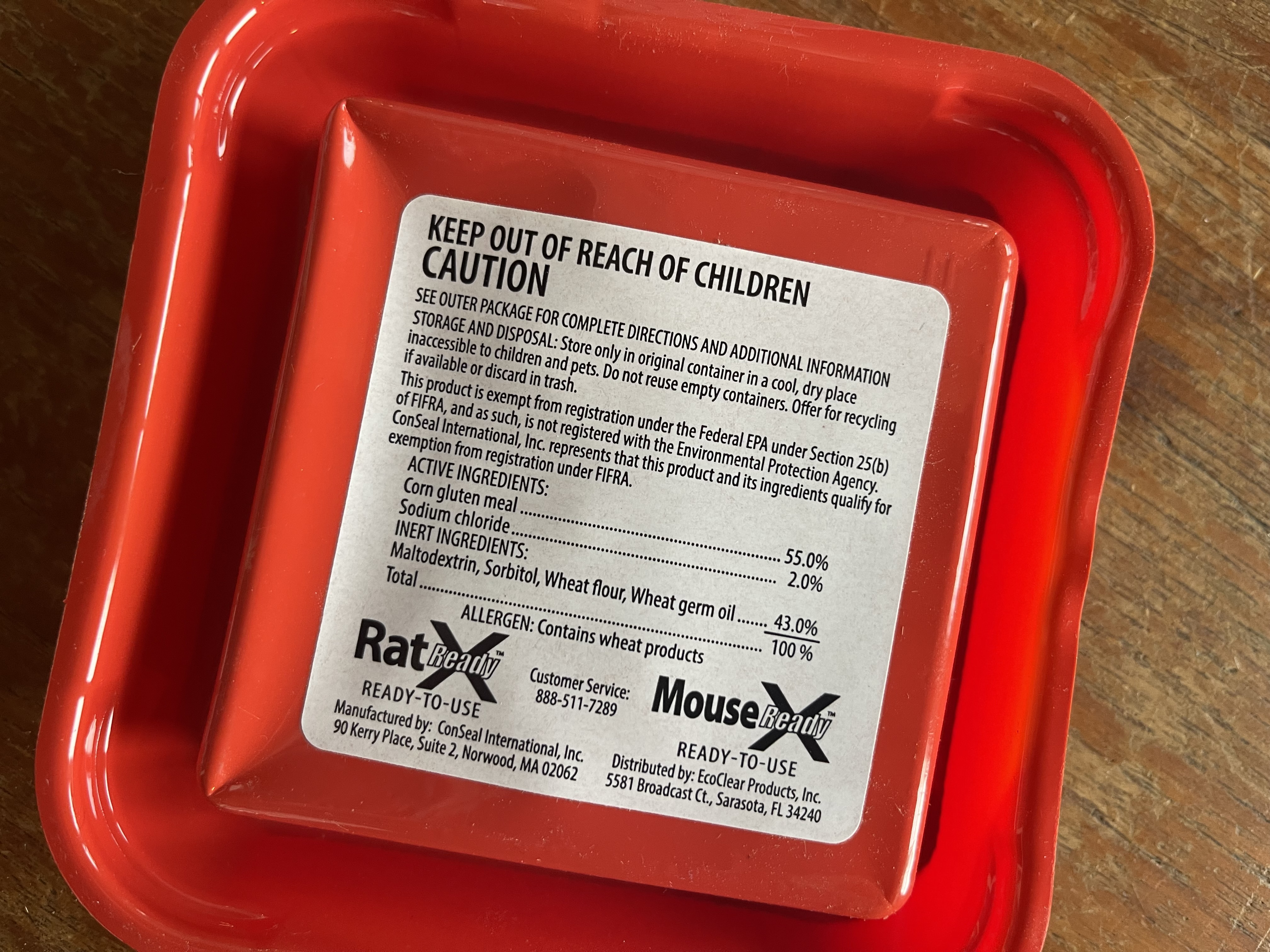
Note the following text:
This project is exempt from registration under the Federal EPA under Section 25(b) of FIFRA, and as such, is not registered with the Environmental Protection Agency. ConSeal International, Inc. represents that this product and its ingredients quality for exemption from registration under FIFRA.
- Pesticide.
- United States Environmental Protection Agency.
- Federal Insecticide, Fungicide, and Rodenticide Act.
- Federal Insecticide Act.
- ConSeal.
The Iron Law of Oligarchy - A Couple Views
The iron law of oligarchy, sociological thesis according to which all organizations, including those committed to democratic ideals and practices, will inevitably succumb to rule by an elite few (an oligarchy). The iron law of oligarchy contends that organizational democracy is an oxymoron. Although elite control makes internal democracy unsustainable, it is also said to shape the long-term development of all organizations—including the rhetorically most radical—in a conservative direction.
- Wikipedia:
The iron law of oligarchy is a political theory first developed by the German-born Italian sociologist Robert Michels in his 1911 book Political Parties. It asserts that rule by an elite, or oligarchy, is inevitable as an "iron law" within any democratic organization as part of the "tactical and technical necessities" of the organization.
Michels' theory states that all complex organizations, regardless of how democratic they are when started, eventually develop into oligarchies. Michels observed that since no sufficiently large and complex organization can function purely as a direct democracy, power within an organization will always get delegated to individuals within that group, elected or otherwise. As he put it in Political Parties, "It is organization which gives dominion of the elected over the electors. [...] Who says organization, says oligarchy."
In 1911 using anecdotes from the histories of political parties and trade unions struggling to operate democratically, Michels considered his argument applicable to representative democracy at large. He believed that "[h]istorical evolution mocks all the prophylactic measures that have been adopted for the prevention of oligarchy."
From the Washington Post: Arrested by AI: Police ignore standards after facial recognition matches
Part of the point of eduction is to ensure that we can preserve civil liberties. This includes freedom from arbitrary decisions by law enforcement.
It's difficult to do so when technology continues to evolve and surveillance becomes easier, as well as the ability to select criminal suspects.
But these have a history of making errors. Police departments aren't always good at establishing and following procedures to either prevents or correct these errors
- Click here for the article.
A Washington Post investigation into police use of facial recognition software found that law enforcement agencies across the nation are using the artificial intelligence tools in a way they were never intended to be used: as a shortcut to finding and arresting suspects without other evidence.
Some law enforcement officers using the technology appeared to abandon traditional policing standards and treat software suggestions as facts, The Post found. One police report referred to an uncorroborated AI result as a “100% match.” Another said police used the software to “immediately and unquestionably” identify a suspected thief.
For more:
- United States Department of Justice, Civil Rights Division: Artificial Intelligence and Civil Rights.
- United States Department of State: Risk Management Profile for Artificial Intelligence and Human Rights.
An email today (1/16/25):
About TxDLA:
- TxDLA's mission is to connect leaders in digital learning and online programs, fostering a community of innovation and growth. Through conferences, courses, and networking opportunities, TxDLA provides a platform to learn, share, and exchange ideas, best practices, and effective strategies with industry peers.
What This Means for You:
- Access Resources: Tap into a wealth of TxDLA content from STARLINK's website.
Connect with Leaders:
- Engage with pioneers in digital and online learning.
Grow Your Skills:
- Discover new ideas and techniques to enhance your professional expertise.
Together, STARLINK and TxDLA are paving the way for the future of online education. Explore the resources and take the next step in your learning journey today!
What is Starlink?
What is the Texas Distance Learning Association?
Dear ChatGPT: How can I become an infectious disease doctor?
How can you become whatever it os you want to become?
To become a licensed infectious disease doctor in Texas, you need to: earn a medical degree, complete an internal medicine residency, then further specialize by completing an infectious disease fellowship, and finally pass the necessary board certification exams; all while adhering to the Texas Medical Board licensing requirements to practice medicine in the state.
Key steps:
- Get a bachelor's degree: Obtain a bachelor's degree in a science-related field like biology, chemistry, or pre-med with strong academic performance to prepare for medical school.
- Attend medical school: Gain acceptance into an accredited medical school and complete the necessary coursework to earn an M.D.
- Pass the USMLE exams: Successfully complete the United States Medical Licensing Examination (USMLE) to qualify for residency.
- Complete an internal medicine residency: Match into and complete an accredited internal medicine residency program.
- Complete an infectious disease fellowship: After residency, match into an infectious disease fellowship program to gain specialized training in the field.
- Pass the infectious disease board exam: Sit for and pass the American Board of Internal Medicine (ABIM) certification exam in infectious diseases to become board certified.
- Obtain a Texas medical license: Apply for and receive a medical license from the Texas Medical Board by meeting all necessary requirements.
Important considerations:
- Research opportunities: Gaining research experience in infectious diseases during medical school or residency can strengthen your application for a fellowship.
- Clinical rotations: Seek out clinical rotations that focus on infectious diseases to gain practical experience.
- Stay updated: Continuously update your knowledge through continuing medical education (CME) to maintain your license.
Dear ChatGPT: Does "shall" mean "must?"
Shall: Traditionally used to express a future action or a formal obligation, especially in legal or contractual contexts. It can indicate a duty, but it often carries a sense of intention or future planning.
Must: Stronger than "shall," it typically conveys a necessity or something that is required without exception. It indicates a stronger imperative, meaning it is something that has to be done.
For example:"You shall report to the manager by 3 PM." (This is a formal obligation, typically used in contracts or rules.)
"You must wear a helmet while riding the bike." (This is a strict requirement or necessity.)
In modern English, "must" is more commonly used for obligations and requirements, whereas "shall" is often seen in formal or legal language.
A Per Curiam Decision of the Suprmeme Court: TIKTOK INC., ET AL. v. MERRICK B. GARLAND, ATTORNEY GENERAL
- What is a Per Curiam decision?
- What is Tik Tok?
- Who is Merrick Garland?
- What is an Attorney General?
Thursday, January 16, 2025
Dear CHatGPT: Is it inevitable that mob rule leads to dictatorship?
- 1. Strong Democratic Institutions
If democratic institutions (like a free press, independent judiciary, and functioning legislative bodies) are strong, they can act as a check on mob rule and prevent the rise of authoritarianism. In many cases, even during periods of public unrest or protests, these institutions can provide mechanisms for resolving conflict peacefully through negotiation, reforms, or legal processes, thus averting the need for a dictatorial figure to take control.
- 2. Effective Leadership and Mediation
When mob rule arises from widespread dissatisfaction, effective leadership can play a crucial role in steering the movement toward positive, democratic change rather than chaos or authoritarianism. Leaders who can mediate between competing interests, offer reforms, and build consensus can prevent the situation from devolving into an authoritarian regime. This type of leadership can redirect popular discontent into constructive political processes rather than allowing it to escalate into a demand for strongman rule.
- 3. Public Resistance to Authoritarianism
While mob rule can create an environment ripe for a dictatorship, public resistance to authoritarianism is also possible. In democratic societies or those with strong civil societies, people may resist the consolidation of power by a single leader. Civil society organizations, political movements, and international pressure can help prevent a shift from mob rule to dictatorship by organizing opposition, advocating for democratic norms, and promoting accountability.
- 4. Civil Unrest Can Lead to Reform Instead of Repression
Sometimes, mob rule, or mass protests, can lead to systemic reform rather than dictatorship. If the political system is responsive, the government may choose to address the grievances of the mob through reforms, elections, or new policies, which can avert the need for authoritarian control. Historically, there have been instances where civil unrest has prompted significant social or political reforms without leading to authoritarian rule.
- 5. International Support for Democracy
In a globalized world, international actors—such as foreign governments, international organizations, and NGOs—can play a role in supporting democratic processes and preventing the rise of dictatorship. International pressure, sanctions, or diplomatic support for democratic forces can undermine a leader’s ability to consolidate power through mob rule.
- 6. Historical Precedent of Non-Dictatorial Outcomes
Many instances of mob rule have not led to dictatorship. Revolutions, uprisings, or mass protests have sometimes resulted in democratic transitions, the establishment of new political systems, or peaceful negotiations. Examples include peaceful revolutions in places like Eastern Europe (e.g., the fall of communism in the 1980s) and nonviolent movements for change, such as the Indian independence movement led by Mahatma Gandhi.
Conclusion
While mob rule can certainly create conditions that allow for authoritarian figures to rise to power, it is not an inevitable outcome. The specific political environment, the strength of democratic systems, and the actions of political leaders and civil society all play a crucial role in determining whether mob rule devolves into dictatorship or whether it results in positive political change. Vigilance, effective leadership, and a commitment to democratic principles are key factors in preventing authoritarianism from taking hold.
Dear ChatGPT: Can mob rule lead to dictatorship?
Here’s how mob rule could lead to dictatorship:
- Exploiting Public Sentiment: In times of mob rule, large groups of people may feel disillusioned with existing political institutions, often due to economic hardships, corruption, or perceived injustices. A leader who taps into this frustration can gain significant popular support. By offering themselves as a protector of the people or a strong figure who will restore order, this leader can ultimately position themselves to seize control of the government.
- Undermining Rule of Law: Mob rule often involves actions that bypass legal processes, such as violent protests, riots, or the overthrow of government structures. This erosion of the rule of law can weaken state institutions and create an atmosphere in which a leader can seize power with the promise of restoring stability. They may justify this as necessary for the survival of the state or to end anarchy, but the result is often a shift toward authoritarian control.
- Use of Force and Intimidation: A leader emerging from a period of mob rule might use violence or intimidation, similar to the mob tactics, to suppress opposition and maintain power. By utilizing fear or manipulation, the leader can eliminate political rivals and cement their position at the top, often using the pretext of "protecting the people" or "defending national unity."
- Decline of Democratic Institutions: In a situation where mob rule has become widespread, democratic institutions may falter or collapse due to lack of trust, violence, or chaos. Without the stabilizing presence of checks and balances, the government becomes more susceptible to a single leader taking control. In some cases, the leader might be seen as the only one capable of restoring order, and people may willingly accept authoritarian rule, believing it to be a solution to the crisis.
- Crisis or Revolution: Mob rule can emerge from social revolutions or protests that have the goal of overthrowing an existing regime. However, in the absence of a clear and functional successor government, or in a situation where no stable political alternative exists, this can create an opening for a charismatic individual or group to seize power. By framing themselves as the leader who can control the unrest and bring about "change," this individual or group may transition into dictatorial leadership.
Historically, instances of mob rule have occasionally paved the way for authoritarian leaders to rise to power, especially when the existing political order is perceived as weak or ineffective in dealing with the unrest. In such scenarios, the populace may ultimately support the establishment of a dictatorship if they believe it will restore order, resolve crises, or maintain their interests.