Showing posts with label Environmentalism. Show all posts

Saturday, January 18, 2025

A mouse in my attic ate through a wire in my heater. So now I seek revenge.

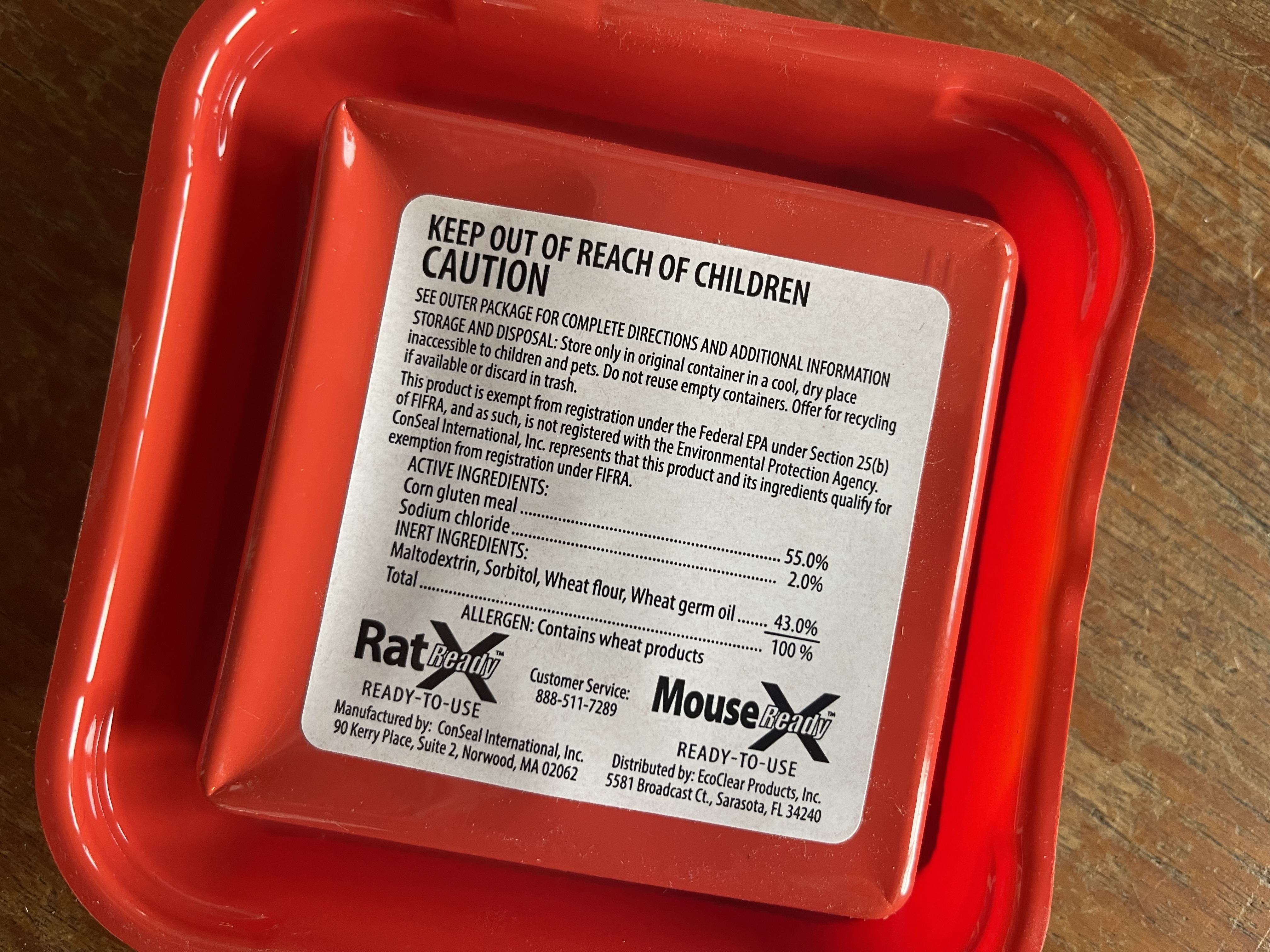
But pesticides can create broader problems - negative externalities - which have lead to regulations. The makers of this product claim they are expempt from at least some of thee regulations. 


Note the following text:

This project is exempt from registration under the Federal EPA under Section 25(b) of FIFRA, and as such, is not registered with the Environmental Protection Agency. ConSeal International, Inc. represents that this product and its ingredients quality for exemption from registration under FIFRA. 

- Pesticide.

- United States Environmental Protection Agency.

- Federal Insecticide, Fungicide, and Rodenticide Act. 

- Federal Insecticide Act.

- ConSeal.

Monday, February 20, 2017

From Mother Jones: Trump Expected to Sign Executive Orders Hitting the EPA

I'm posting this because it contains the following quote:
"I read the constitution of the United States, and the word 'environmental protection' does not appear there."


- Click here for the article.

Scott Pruitt will almost certainly be the next head of the Environmental Protection Agency. The Oklahoma attorney general's nomination is expected to sail through the Senate—possibly as soon as Friday—despite Democrats' protests that he is unfit to lead an agency that he has repeatedly sued. The administration has already imposed a freeze on the EPA's social media, halted its rulemaking, and reportedly mandated that all agency research be reviewed by a political appointee before being released to the public. But next week, once Pruitt is sworn in, the real frenzy will begin.
According to Reuters, President Donald Trump plans to sign between two and five environmental executive orders aimed at the EPA and possibly the State Department. The White House is reportedly planning to hold an event at the EPA headquarters, similar to the administration's rollout of its widely condemned travel ban after Defense Secretary James Mattis took office. While we don't know what, exactly, next week's orders will say, Trump is expected to restrict the agency's regulatory oversight. Based on one administration official's bluster, the actions could "suck the air" out of the room.
Trump may have hinted at the forthcoming orders in his unwieldy press conference on Thursday. "Some very big things are going to be announced next week," he said. (He didn't make clear whether or not he was referring to the EPA.)
Former President Barack Obama's array of climate regulations, including the Clean Power Plan limiting power plant emissions, are certainly high on conservative activists' hit list. So, too, is the landmark Paris climate deal, in which Obama agreed to dramatically cut domestic carbon emissions and provide aide to other countries for clean energy projects and climate adaptation. The EPA's rule that defines its jurisdiction over wetlands and streams is also a prime target. As attorney general, Pruitt launched lawsuits against a number of these regulations.
"What I would like to see are executive orders on implementing all of President Trump's main campaign promises on environment and energy, including withdrawing from the Paris climate treaty," said Myron Ebell, who headed Trump's EPA transition and recently returned to the Competitive Enterprise Institute, in an email to Mother Jones.

Thursday, February 11, 2016

From ScotusBlog: Carbon pollution controls put on hold

- Click here for the story.

Dividing five to four, the Supreme Court on Tuesday evening ordered the Obama administration not to take any steps to carry out its “Clean Power Plan,” a move that may stall the plan until after the president leaves office next January. The order — issued in identical form in individual responses to five separate challenges — will spare the operators of coal-fired power plants from having to do anything to begin planning for a shift to energy sources that the government considers to be cleaner. (An example of the five orders is this one, issued in a case filed by twenty-nine states.)
The plan, designed to make sharp reductions in carbon pollution from the smokestacks of generating plants fueled by fossil sources, is now under review by the U.S. Court of Appeals for the District of Columbia Circuit. It has put the case on an expedited schedule, with a hearing set for June 2. However, it may not finish its ruling until this fall, and then either side may try to move the case on to the Supreme Court.

The new orders will delay all parts of the plan, including all deadlines that would stretch on into 2030, until after the D.C. Circuit completes its review and the Supreme Court has finished, if the case does wind up there. There appears to be little chance for those two stages of review to be over by the time President Obama’s term ends next January 20.
Justice Department lawyers had tried to persuade the Supreme Court not to impose any delay, noting that no state would have to file a plan to implement the policy until this September, and any plant would find it easy to get an extension of time to file such a plan until 2018. The government lawyers also told the Court that actual implementation of the plan would not have to begin until 2022, and would have a final completion deadline of 2030.

Tuesday, June 30, 2015

What is the Clean Air Act?

Since Michigan v EPA involved questions about the propriety of how the Clean Air Act was implemented, it's worth linking to some background on the Act itself - in addition to some history of air pollution legislation.

1955 - Air Pollution Control Act. Provided funding for research into the study of the causes and health consequences of air pollution, in addition to how it could be controlled. The research was to be done for 5 years by the Public Health Service. It was amended in 1960 and 1962 to extend funding and to authorize the Surgeon General's Office to student the effects of motor vehicle exhaust.The act did not establish a mechanism for implementing any solution to the problem.

1963: Clean Air Act of 1963. Created emission standards that could be applied to "stationary sources" which is the fancy term for factories and industry. It highlighted high sulfur coal as a source of pollution. It furthered funding of research and investigations of suspected polluters. It was amended to establish standards for automobile emissions in 1965. It was also amended in 1966 to assist local air pollution control programs, in 1967 to create air control regions and establish timetables for implementing state pollution plans and in 1969 to fund research into low emission fuels.

1970: National Environmental Policy Act. Creates President's Council on Environmental Quality.

1970: Clean Air Act of 1970. This is the most important of the bunch.Establishes the National Ambient Quality Standards which focuses on the reduction of a set of pollutants including carbon monoxide and ozone. Amendments added in 1977 modified the act's goals.

1970: Richard Nixon establishes the Environmental Protection Agency with an executive order. It is established to implement the requirements contained in the Clean Air Act.

1990: Clean Air Act Amendments. Focuses on the reduction of acid rain and leaded gasoline.

- EPA: History of the Clean Air Act.
- Clean Air Act Implementation in Houston: An Historical Perspective 1970-2005.
- EPA: Understanding the Clean Air Act.
- Clean Air Timeline.

Wednesday, June 25, 2014

Ambiguous ruling on the EPA's regulatory power

The Supreme Court issued a ruling that largely upheld the Environmental Protection Agency's regulatory powers, thought the decision was complex and has been portrayed in different ways. This applies to aspects of both 2305 and 2306. Especially the sections on federalism, the bureaucracy and the Supreme Court'

- Click here for the actual decision: Utility Air Regulatory Group v. Environmental Protection Agency.
- Click here for ScotusBlog's coverage of the case.

The case stems from a lawsuit from Texas - specifically Attorney General (and gubernatorial candidate) Greg Abbott. It is the latest in a long line of such cases, given Texas being home to oil and gas and petrochemical production and manufacturing, and given the political clout these groups have in the state.

Texas' environmental agencies are considered to be largely weak - so any muscle comes from the national level. This helps explain the tension between the two levels of government. Much of this has played out in the federal courts where the Texas government - and/or interests within the state - sue the national government for overstepping its bounds and regulating matters that should be fully up to the states.

Recently the EPA has used its pre-existing authority to regulate conventional pollution to also regulate greenhouse gases. Texas has argued that since the Clean Air Act does not explicitly mention greenhouse gases - which at low levels aren't pollutants - the EPA cannot deny permits to new plants on the basis that they will produce more of them.

The court disagreed - but only partially.

Here's coverage:

- Everyone Declares Victory After Supreme Court's EPA Ruling.
- Another Loss for Texas in Its Challenge of EPA Regulations.


Friday, March 14, 2014

How to frame environmentalism so centrists and conservatives support it

2305's sections on public policy, public opinion and campaigning discuss the importance of framing. This is simply the attempt to influence how people think about a specific issue by condition the frames of reference that people use to think about that issue.

Public policy issues can be complex, meaning that aspects of it can be positive or negative and one's view point towards the policy can be tweaked by presenting it in a specific way.

An author in the American Prospect wonders if environmentalists - whose ends are primarily supported by the left - can entice centrists and conservatives to rethink opposition to environmental programs by rethinking the frames of reference they use to present the issue.

- Click here for the article.

The author suggest using terms like sustainability - which has been used to frame the debt issue:

Dr. John Roemer, a professor of political science and economics at Yale, wrote in a 2005 paper with Woojin Lee and Karine van der Straeten that “the Left might attempt to exploit global warming the way the Right has exploited racism.” He says that the issue is even more salient today, although the right is currently in a state of “cognitive dissonance” because of their anti-government ideology. His own upcoming book, Sustainability for a Warming Planet, uses terms like “intergenerational equity” and “sustainability” that are commonly used by centrists like David Brooks and Joe Scarborough, who worry that the federal debt is unfair to future generations and on an unsustainable course. Such leaders thrive on issues like the federal debt and sustainability, a leftist concept that is intellectually harmonious with stewardship, a right-wing one. By using the language of responsibility and intergenerational equity, as well as homespun wisdom about “living within our means,” the left could create a broad umbrella coalition encompassing concerned centrists.

And point out how candidates have framed the issue to make it more enticing to conservative voters. Hit their sweet spot:

In America, some left-wing candidates have won in heavily right-wing parts of the country by using conservationist rhetoric. Bernie Sanders won his Senate seat in Vermont—a rural, white state that holds the record for longest-consecutive streak voting Republican in presidential elections—by, according to David Sirota, “visiting hunting lodges to talk about protecting natural resources for hunting and fishing and establishing a connection with [hunters].” In Montana, a state that has voted Republican in all but one of the last ten presidential elections, Governor Brian Schweitzer won twice (the second time in a landslide) partially by wooing hunters and fisherman with land and stream access. In Wyoming, the most conservative state in the country, Governor David Freudenthal’s administration focused on a long-term strategy for resource extraction that included, among other things, preserving the state’s forests and regulating hydraulic fracking. The result: a re-election margin of 20 percent and a reputation as one of the most popular governors in the country with 66 percent approval among Republicans.

The message could be tied into religion and other conservative values as well:

In hindsight, the potency of the environmentalist message should not be surprising. Religious traditions have always stressed the importance of living in harmony with the environment, and the very idea behind conservatism is not radically re-inventing the world in which one lives, lest unintended consequences ensue.

The trick will be figuring out who sends this message out. Studies suggest that who relays a message is at least as important as the content of the message. It creates a frame of reference that tells the listeners whether the content of the message should be believed.


Sunday, January 26, 2014

Weekly Written Assignment #3

This week there are separate assignments for 2305 and 2306.

For GOVT 2305:

On Tuesday President Obama is scheduled to give his state of the union speech and all indications suggest that he will focus on inequality - which has been a focus of some of our class discussions and recent posts. I mentioned that Republicans have joined Democrats and Independents in seeing this as a problems that deserves to be on the public agenda.

But there are certain to be major differences in the conservative and liberal approach to the problem - as well as different positions on how serious the problem is.

Since we've spent a little time looking at the ideology and the role it plays in clarifying people
s positions on public issues, I want you to apply this to issue of inequality. What is the liberal approach to solving inequality? What is the conservative approach? Here is a related question: What do liberals and conservatives see as the underlying cause of inequality? Knowing this will help understand why each takes the positions on policy formation on the issue.

Also: How much does each group think the problem has a solution that government can implement successfully?

150 words minimum

For GOVT 2306:

We've spent a good but of time unpacking the tension that exists between the government of Texas and the government of the United States and have emphasized areas where this tension is acute. A very topical one is over environmental protection. The state government tends to discount its need, while the national government highlights it - at least rhetorically.

I'm a post a bit further below I pointed out how the state is attempting to push back against federal regulators and the EPA specifically - though other federal regulators are active in regulating Texas industry as well.

Maybe the best way to get a handle of dispute is to fully understand the constitutional disputes that underlie this conflict. In this assignment I want you to get familiar with the conflict over regulating the chemical industry in Texas - in order to protect the environment - and highlight how this can come down to conflict over different aspects of the constitution.

What are the constitutional roots of the conflict over environmental protection policy in the United States? How does this help explain the conflict between the US and Texas over environmentalism?

150 words minimum
Thursday, January 23, 2014

Texas to challenge the EPA - some more ....

In 2306 we've been discussing federalism and the conflict that can exist between the states and the national government in areas like environmental protection. The recent chemical spill in West Virginia has highlighted attention to the tension that exists in the state - with the national government wanting to increase regulations and the state government wanting to decrease it.

This tension is common in Texas as well.

The Tribune catches us up with the current status of the tension, click here for the story:

Rarely a fan of Washington's oversight, Texas appears destined for another clash with the U.S. Environmental Protection Agency over greenhouse gas limits — this time, for existing power plants.

The rules, which President Obama has instructed the EPA to propose by June 2015, have only been suggested, but Texas regulators have already weighed in. Their opinion? The idea, though still scant on details, is no good.

That’s according to a letter written by the Texas Commission on Environmental Quality and the Public Utility Commission of Texas. The letter, sent to EPA administrators after the agency asked for feedback, outlines several concerns, including those about the federal rule-making process, but it also touches on a hot-button issue in Austin: electric reliability.

Texas regulators say they fear that new regulations would make coal production less economical, speeding up plant retirements and straining the grid.

“Generators should not be penalized for increased [greenhouse gas emissions] needed to maintain system reliability,” the letter said. “The PUC and TCEQ urge the EPA to consider all aspects of grid reliability in developing [a greenhouse gas] rule for existing power plants.”

So a good way to think of the dispute - to put it in context - is to look at it as a conflict between the Environmental Protection Agency and the forces that control it, and the Texas Commission on Environmental Quality, along with the Public Utility Commission of Texas and the forces that control those two.

The former is responsive to national pressures, while the latter two are responsive to those in Texas. These are hardly the same. The interests of the energy sector are far stronger state wide than they are on the national level. Conversely, the interests of environmentalists are far stronger on the national level than within Texas. This reflects differences in the political culture of each level of government.

These disputes tend to wind up in the courts. The Texas government (through the attorney general's office) - along with Texas industry - commonly sues the EPA by arguing that the rules it issues violate the U.S. Constitution.

The simple question is whether the Constitution - as well as the Clean Air Act - give the EPA the authority to regulate air pollution - specifically - the production of greenhouse gases that also occur naturally.

Here's a bit from a related Texas Tribune story from October 2013:
At issue is whether the EPA can use the Clean Air Act, which gives it the authority to regulate emissions of toxic air pollutants and to limit emissions of greenhouse gases as well. In 2007, the court had ruled in the landmark case Massachusetts v. EPA that the EPA could do so for motor vehicles, which has led to stringent fuel-efficiency requirements for cars.

But Texas, joined by states like Mississippi, Alabama and South Carolina, and industry coalitions including the American Petroleum Institute, is arguing that the Clean Air Act was never meant to apply to anything other than air pollutants, because greenhouse gases like carbon dioxide and methane "[do] not deteriorate the quality of the air that people breathe." Attorneys representing the groups added that "carbon dioxide is virtually everywhere and in everything," and called the EPA's proposed regulations of greenhouse gases "absurd."

Of the nine petitions the group of states and industry leaders had filed to the Supreme Court regarding its challenge of climate change rules, the justices agreed to hear six, but only want to consider one question: "Whether EPA permissibly determined that its regulation of greenhouse gas emissions from new motor vehicles triggered permitting requirements under the Clean Air Act for stationary sources that emit greenhouse gases."

Tuesday, June 25, 2013

From the NYT: Obama to Outline Ambitious Plan to Cut Greenhouse Gases

Expect backlash from Congress, and attempts to implement this agenda through executive orders:
The plan, to be announced in a policy address at Georgetown University, is the most far-reaching effort by an American president to address what many experts consider the defining environmental and economic challenge of the 21st century. But it also could provoke a backlash from some in Congress and in states dependant on coal and other industries, who will say that it imposes costly, job-killing burdens on a still-fragile economy.

In a speech in Berlin last week, Mr. Obama called climate change “the global threat of our time” and promised swift action to avert it. The plan to be announced on Tuesday represents his first serious effort to engage the problem since he threw his support behind a Democratic cap and trade proposal in the House in 2009 to reduce carbon-dioxide emissions. That legislation died in the Senate in 2010.

None of what the president plans to propose will require action by Congress, which has shown no appetite for dealing with global warming and its attendant energy challenges in a comprehensive way. But some of what the president hopes to accomplish will likely face legal and political challenges, including the possible use of a rarely used law that allows Congress to overturn executive branch regulations.

Top-level White House aides and cabinet officers have been working on the climate plan for months to support the “conversation” on climate change that Mr. Obama promised shortly after he was re-elected last November.

Friday, April 19, 2013

Is the TCEQ a captured agency?

Something to chew on.

The Texas Commission on Environmental Quality is supposed to be Texas' version of the national Environmental Protection Agency, but since the governor appoints the TCEQ's commissioners, and he is staunchly pro-business, there are concerns that they protect the interests of business rather than the general public.

Some related stories:

- Agency of Destruction.
- TCEQ: Captured and Corrupted.
- Polluters and Penalties.

The Texas Legislature seems intent on limiting its jurisdiction:

- Texas House Strips TCEQ of Greenhouse Gas Authority.
- Bill Filed to protect buyers of facilities regulated by TCEQ.
- Greenhouse Gas Permits?

Was the fertilizer plant explosion in West, Texas due to lax regulations?

That question is making the rounds.

The Waco Tribune has a comprehensive look at the investigation thus far, and includes this:


Meanwhile, a hazy picture emerged Thursday of the fertilizer plant’s past regulatory issues. Because of the plant’s age, it was “grandfathered” and exempted from a TCEQ air permit until 2004. But it continued without the required permit until 2006, when the TCEQ received a complaint about strong ammonia smells in the neighborhood and served the company with a notice of violation.

That same year, the U.S. Environmental Protection Agency fined the facility $2,300, citing several deficiencies in its risk management plan. The plant got its TCEQ permit in late 2006 for the anhydrous ammonia storage, promising to mitigate any accidental releases of the substance offsite. Another permit for loading and storing dry fertilizer was granted in March 2007. The TCEQ had no records of inspections after January 2007.
The Dallas Morning News reports that Texas regulators did not consider the plant to pose a significant risk to the surrounding area.

The explosion came after years in which state and federal agencies overlooked the potential for what some say was a preventable catastrophe. “Last night’s tragic explosion points to the need for stricter regulations of plants that store and use large quantities of hazardous chemicals,” said Tom O’Connor, executive director of the National Council on Occupational Safety and Health, a union-affiliated nonprofit group.
Neil Carman, a Ph.D. chemist with the Sierra Club in Texas and a former state environmental inspector, said lax controls are putting people in danger in scores of Texas communities “A basic concern here is that the chemical ammonia, NH3, is very weakly regulated at the federal and state level, or else this accident would not have likely occurred,” Carman said.
Officials at the Environmental Protection Agency and the Texas Commission on Environmental Quality did not respond to questions about why they repeatedly approved the companies’ operations without addressing the risk of explosions.

The Huffington Post comments that one culprit is the reduced funds given to regulatory agencies to actually do their jobs:

According to the 2011 budget submitted to congress by OSHA, which provides most of the federal oversight for that industry, there are 7.5 million workplaces in the U.S. and only 2,218 inspectors to check them for safety violations. The number of employed nationally means that there is one inspector for every 57,984 workers. One analyst reported that means OSHA has the capacity to inspect a business work place once every 129 years. Fortunately, state level OSHA workers aren't as pressed and they can get to a facility every 67 years.

The Washington Post surveys a variety of issues related to fertilizer plants, including commentary on regulatory oversight:

. . . the operators of the West Texas facility thought an explosion was impossible. The Dallas Morning News obtained a copy of the facility’s internal safety review for fire or explosive risks. “The worst possible scenario, the report said, would be a 10-minute release of ammonia gas that would kill or injure no one.”

As for other oversight: The Occupational Safety and Health Administration tends to be understaffed and inspections are relatively infrequent. The Texas fertilizer industry has only seen six inspections in the past five years — and the West Texas Fertilizer Co. facility was not one of them.

Tuesday, April 16, 2013

More limits proposed on the ability of local governments to pursue environmental claims

In addition to the bill described below that would limit how counties can pay for legal representation in cases against poluuters, a separate bill would allow the Texas Attorney General "to settle environmental lawsuits filed by cities and counties without input or approval from local officials."

Like the previous legislation, the bill seems focused on limiting the activities cases in Harris County.

From MySA:
“It surprises me a little bit because there is no history of us settling cases in opposition to the attorney general or against the wishes of the attorney general,” said Rock Owens, who heads the environmental division in the Harris County Attorney's office, which historically has filed the most civil environmental lawsuits in the state.

Owens said the legislation would diminish an authority local governments have had for decades to punish environmental offenders, and also make for an uneven playing field because governments cannot afford to pay private attorneys on an hourly basis like the companies they sue.

While Harris County has been filing environmental cases for a long time, it only recently began recruiting outside counsel. Six cases have been assigned to private firms.

Not surprisingly, the Texas Association of Business is pushing these laws:
The powerful Texas Association of Business supports the bills, saying local government lawsuits have the potential to harm economic development statewide if left unchecked.

“These lawsuits do nothing but demand dollars from companies,” said Stephen Minick, vice president of governmental affairs for the TAB. “To have the county come in and attract money from these companies who are doing everything the state and federal government have asked them to do just seems to us to not be in the public interest.”

Minick said that while the association does not oppose municipal and county attorneys being able to file such civil cases, it believes that lawsuits seeking “absurd demands” for penalties “that the state would never pursue” actually harm a company's ability to help pay for cleanup and may deter other companies from buying and redeveloping contaminated land.


The Harris County Judge disagrees.

The conflict seems to stem from an ongoing conflict involving an old dumping ground dating back to 1965.

I wonder if this is also a way for the more conservative state government to restrict the power of the more liberal metropolitan areas in the state. This seems to be a trend.

From StateImpact Texas: Bill Would Stop Private Lawyers Who Help Counties Sue For Pollution

The bill is HB 3119, and it is still in a House committee which makes it unlikely it will pass, but the bill would change the ways counties pay for law firms they hire to sue companites they accuse of pollution. The bill seems focused specifically on Harris County:

Here's the report:
Some county governments have found that when it comes to suing corporations over polluted property, hiring a private law firm on a contingency fee basis is the way to go.

But against the backdrop of a multi-billion dollar dioxin case in Harris County, there’s an effort to outlaw those arrangements in pollution lawsuits. The House Committee on Environmental Regulation has scheduled a hearing today on a bill that would ban counties from using private firms, HB 3119.

. . . Harris County, which was the focus of the conservative group’s report, says contingency fee arranagements are vital to its efforts to litigate pollution cases.

“We don’t have money to go out and hire lawyers. You’re talking about, at a minimum, hundreds of thousands of dollars that we would have to spend up front just to go to court. With the contingency fee, we don’t have to do that. We only pay if we win,” said Terrence O’Rourke, special assistant to the Office of the Harris County Attorney.

The issue is nothing new to the county. In a case before the Texas First Court of Appeals, attorneys for two corporations challenged Harris County’s right to hire contingency fee lawyers in a case involving a dioxin-contaminated site along the San Jacinto River. In the 1960s, waste from a paper mill was dumped into ponds. It’s now an EPA Superfund site. Signs in the area warn that fish are contaminated and should not be eaten.

Lawyers for the companies argued in court that the case could result in $2 billion to $3 billion in civil penalties with 25 percent going to the private lawyers, according to coverage of the hearing by Law360. The companies’ lawyers reportedly said that the contingency fee arrangement created a profit incentive that would be unfair to their side, denying them a neutral prosecution of the case.

The Office of the Harris County Attorney portrays the fee arrangements differently. The county argues that contingent fee contracts are reviewed and approved by the Texas Comptroller and are governed by state law that caps payments according to the amount of work performed.

And the county points out that the big corporations fighting the suits often use very experienced, highly-paid attorneys.

Wednesday, April 10, 2013

Texas counties bear costs of illegal dumping of oil and gas waste - the state seems unconcerned

The oil and gas boom has imposed environmental costs on counties in the state. The existing regulatory environment is not strong enough to environmental rules, and there seem to be some confusion about the jurisdiction of counties, and that of the Railroad Commission. It seems that counties want to take a more aggressive stance towards polluters than the state.

Story in StateImpact Texas

Thursday, March 28, 2013

Today in federal rulemaking: The EPA issues cleaner gasoline rules

From the Washington Post:

The Environmental Protection Agency will move ahead Friday with rules requiring cleaner gasoline and cars nationwide, despite fierce protests from the oil industry and some conservative Democrats, according to several individuals briefed on the matter.

The proposed rules — which had been stuck in regulatory limbo since December 2011 in the face of intense political opposition — would cut the amount of sulfur in U.S. gasoline by two-thirds and impose fleetwide pollution limits on new vehicles by 2017.

The regulation enjoys support from auto companies, state regulators, environmental groups and equipment manufacturers. But oil industry officials and their congressional allies argue the proposed standards would raise gasoline prices and could result in greater carbon dioxide emissions because they will spur additional refining activity.
Opponents estimate the standards would force refiners to spend $10 billion to upgrade their facilities and an additional $2.4 billion in annual operating costs, adding 6 to 9 cents to the cost of a gallon of gas. Public health advocates say the ultimate cost would amount to less than a penny per gallon because of provisions giving refiners flexibility in complying with the standards.

For FAQ's about rulemaking by the EPA click here.


Saturday, January 5, 2013

Is the level of violent crime related to the level of lead in the environment?

There's evidence that a relationship exists between exposure to high levels of lead - it used to commonly be in paint and gas - and propensity to commit violent crime. The data correlate strongly.  

The lines are shifted a bit so they seem to overlap more than they normally would. The reasoning is likely that someone who was exposed to lead as a child would be more likely to commit violent crimes as an adult.

The question now is whether the relationship is spurious, and there is a different factor that drives the change - perhaps something that drives both independently. But researchers have isolated a molecule in lead that reduces IQ. Does that also increase the likelihood that someone will become a violent criminal? If so, that's your link.

Over the past few decades, laws have been passed limiting the amount of lead in the environment. Could these be taking effect? The prison population has been reduced recently, and there has a been a long term trend downward in the percent of people going to prison. A commentator calls this one of the major unreported public policy stories of the year.


Many factors are associated with this shift, but there's a definite shift in the tendency of younger males - the one's likely to commit violent crimes - to be sentenced to prison. Something seems to have shifted about 35 years ago - which was about the time leaded gasoline and lead paint were phased out.

Thursday, October 18, 2012

Opinions on the environment inverserly related to those on the economy

Why do people change their opinions about what sorts of problems are important years after year?

Currently, very few people tell pollsters that the environment is a top concerns for them, but this has not always been the case. In 2000, a high percentage of people claimed to be worried about the environment, but not now. What's changed is the economy. When the economy does well, people tend to worry about other things - like the environment. When it isn't, the more immediate pressing concerns drive out those that won't materialize until sometime in the future.

Tuesday, June 12, 2012

From KUHF: Revolving Door: Oil & Gas Companies Hire Former Texas Regulators

An ongoing story: "People who once worked for the state of Texas, but who quit to work — sometimes — for the very companies they used to regulate."

More detail from State Impact.

Tuesday, November 22, 2011

Environmental Interest Groups and the Obama Administration

Environmental groups have not been pleased with Obama Administration decisions they see as being too lenient on big business. An author writing in the New Yorker details how business and environmental groups have competed with each other in influencing the administration's decision about a proposed pipeline (by TransCanada) to carry tar sand from Canada to Port Arthur. The conflict between the two groups illustrates the "outsider" and "insider' tactics interest groups adopt whether they consider themselves to have or not have inside connections with decision makers.

Pro-pipeline groups were the White House and could adopt insider tactics: "The lineup promoting TransCanada’s interests was a textbook study in modern, bipartisan corporate influence peddling. Lobbyists ranged from the arch-conservative Grover Norquist’s Americans for Tax Reform to TransCanada’s in-house lobbyist Paul Elliott, who worked on both Hillary and Bill Clinton’s Presidential campaigns. President Clinton’s former Ambassador to Canada, Gordon Giffin, a major contributor to Hillary Clinton’s Presidential and Senate campaigns, was on TransCanada’s payroll, too."

Environmental groups had few internal connections with the administration so they adopted an outsider tactic to draw attention to their complaints: "On November 6th, exactly a year before the election, the protest returned to Washington. This time, twelve thousand people encircled the White House. President Obama was reportedly out, playing golf, but the message evidently got through to him. Four days later, he issued a statement saying that the decision on the pipeline permit would be delayed until at least 2013, pending further environmental review. In addition, in response to claims of conflict of interest, the State Department’s inspector general launched an investigation into the permit process. Since then, TransCanada, which previously insisted that no other pipeline route was feasible, has announced a new route through Nebraska."

The author concludes by comparing the focused agenda driven tactics employed by the environmnetal grousp here to the "the free-form, leaderless one waged by" the Occupy Wall Street movement.