Showing posts with label State of the Union. Show all posts

Thursday, January 5, 2017

On this day in History: Truman delivers his Fair Deal speech

The year is 1949. Much of what is passed by Congress with the backing of LBJ in the 1960s as the Great Society is introduced in this speech. It also starts setting in motion the shift in the ideological basis of the Democratic Party that would eventually lead to the the realignment of the South - including Texas - towards the Republican Party.

- Click here for the article.

On this day in 1949, President Harry S. Truman announces, in his State of the Union address, that every American has a right to expect from our government a fair deal.
In a reference to Franklin Roosevelt’s New Deal policies, Truman announced his plans for domestic policy reforms including national health insurance, public housing, civil rights legislation and federal aid to education. He advocated an increase in the minimum wage, federal assistance to farmers and an extension of Social Security, as well as urging the immediate implementation of anti-discrimination policies in employment. Truman argued for an ambitious liberal agenda based on policies first articulated by his predecessor, Franklin D. Roosevelt. However, the nation’s politics had shifted rightward in the years following World War II and inflation, economic conversion from wartime to peacetime industries and growing anti-communist sentiment provided major obstacles to Truman’s plan. To a growing contingency of conservatives and Southern Democrats in Congress, the Fair Deal smacked of socialism.
After his landslide re-election in 1948, Truman managed to convince Congress to pass several of his liberal reforms. It almost doubled the minimum wage—from 40 cents to 75 cents an hour—and established the Housing Act, which provided 800,000 new houses for the poor. Though Congress approved Truman’s extension of Social Security benefits, it rejected the idea of national health care, avoided passing any new civil rights legislation and failed to aggressively tackle concerns over fair labor practices.
Beginning in 1950, foreign affairs, particularly the Korean War and the Cold War, increasingly distracted Truman from domestic issues.

For more:

- Annual Message to the Congress on the State of the Union. January 5, 1949.
- Fair Deal.
- Conservative Coalition.
- Universal Health Care.
- Fair Employment Practice Committee.
- Labor Management Relations Act of 1947.
- Modern Liberalism in the United States.

Friday, January 15, 2016

The First SOTU

It was - as you hopefully guessed - delivered by George Washington.

- Click here for the text.

For comparison's sake with the one recently delivered, here are a few facts about it:

It was:

- delivered on January 8, 1790.
- given as a speech to a joint session on Congress.
- given at the opening of the second session of the 1st Congress.
- the shortest: 1,083
- delivered at a 20.4 education level.

Give recent attention to gun rights, I found this part interesting:

A free people ought not only to be armed, but disciplined; to which end a uniform and well-digested plan is requisite; and their safety and interest require that they should promote such manufactories as tend to render them independent of others for essential, particularly military, supplies.

The bearing of arms must be disciplined, and - as I read it - there should be a unique source of these arms. I'm not up on the history of that era as it pertains to arms, so I'm not clear at the moment about what that's all about. He does mention this in a section dealing with how the common defense is best provided for - so it seems connected to militias.

As far as other requests, keeping in mind that he has been president a year and he is in a position to make practical requests about items that Congress could provide him that would help him do his job, here's what he asked for:

- means to deal with "certain hostile tribes of Indians."
- executive positions - adequately compensated - that would assist " our intercourse with other nations."
- "Various considerations also render it expedient that the terms on which foreigners may be admitted to the rights of citizens should be speedily ascertained by a uniform rule of naturalization."
- "Uniformity in the currency, weights, and measures of the United States."
- "the expediency of giving effectual encouragement as well to the introduction of new and useful inventions from abroad as to the exertions of skill and genius in producing them at home."
- " . . . facilitating the intercourse between the distant parts of our country by a due attention to the post-office and post-roads."
- "the promotion of science and literature. Knowledge is in every country the surest basis of public happiness."

And there's this bit I want to highlight separately because it suggest that Washington was open to the possibility of establishing a national university at least in part to assist citizens in governing themselves.


To the security of a free constitution it contributes in various ways - by convincing those who are intrusted with the public administration that every valuable end of government is best answered by the enlightened confidence of the people, and by teaching the people themselves to know and to value their own rights; to discern and provide against invasions of them; to distinguish between oppression and the necessary exercise of lawful authority; between burthens proceeding from a disregard to their convenience and those resulting from the inevitable exigencies of society; to discriminate the spirit of liberty from that of licentiousness - cherishing the first, avoiding the last - and uniting a speedy but temperate vigilance against encroachments, with an inviolable respect to the laws.

Whether this desirable object will be best promoted by affording aids to seminaries of learning already established, by the institution of a national university, or by any other expedients will be well worthy of a place in the deliberations of the legislature.


This might be worth exploring in class. Some of these issue seem similar to those we deal with today.

From the Guardian: The state of our union is … dumber: How the linguistic standard of the presidential address has declined

The title speaks for itself.

If you click on the article, you'll that the following graphic is dynamic, so you can follow how the reading level for the state of the union had declined over time. The high point was James Madison at 25, the low point was George W Bush at 7. This might be worth a look as we look at the importance of education in a republic.

StateUnion2

- Click here for the article.

Some background on Article 2, Section 3, Clause 1 of the U.S. Constitution

The clause reads as follows:

"[The President] shall from time to time give to the Congress Information of the State of the Union...."

It's the opening clause of a chunk of text that helps define the nature of executive power, and especially the relationship between it and the legislature. It allows him to help set Congress' agenda. Obviously it gave the president the constitutional responsibility to give his speech this week - though notice there is nothing mandating that it be given in a speech - more on that below. Here it is in context:

He shall from time to time give to the Congress Information of the State of the Union, and recommend to their Consideration such Measures as he shall judge necessary and expedient; he may, on extraordinary Occasions, convene both Houses, or either of them, and in Case of Disagreement between them, with Respect to the Time of Adjournment, he may adjourn them to such Time as he shall think proper; he shall receive Ambassadors and other public Ministers; he shall take Care that the Laws be faithfully executed, and shall Commission all the Officers of the United States.

In 2305 we will spend time unpacking much of what is contained in this section. For now here is background and commentary on the SOTU address:

- Heritage Guide to the Constitution: State of the Union.
- The American Presidency Project: text of past addresses.
- CFA: Seven Facts about the State of the Union Address.

Friday, January 23, 2015

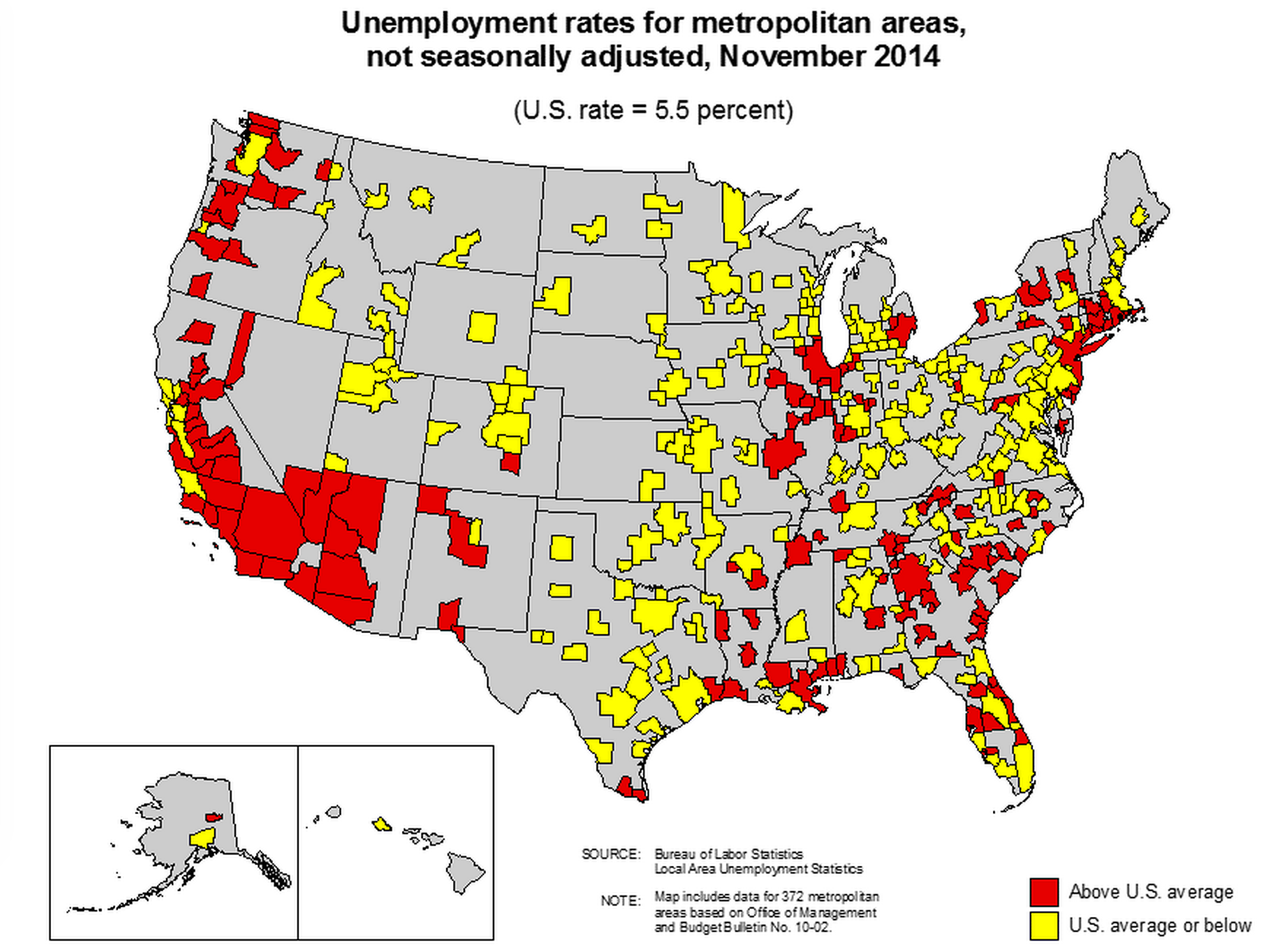
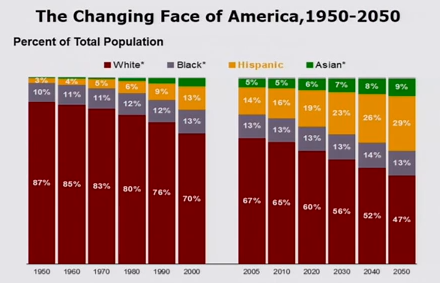
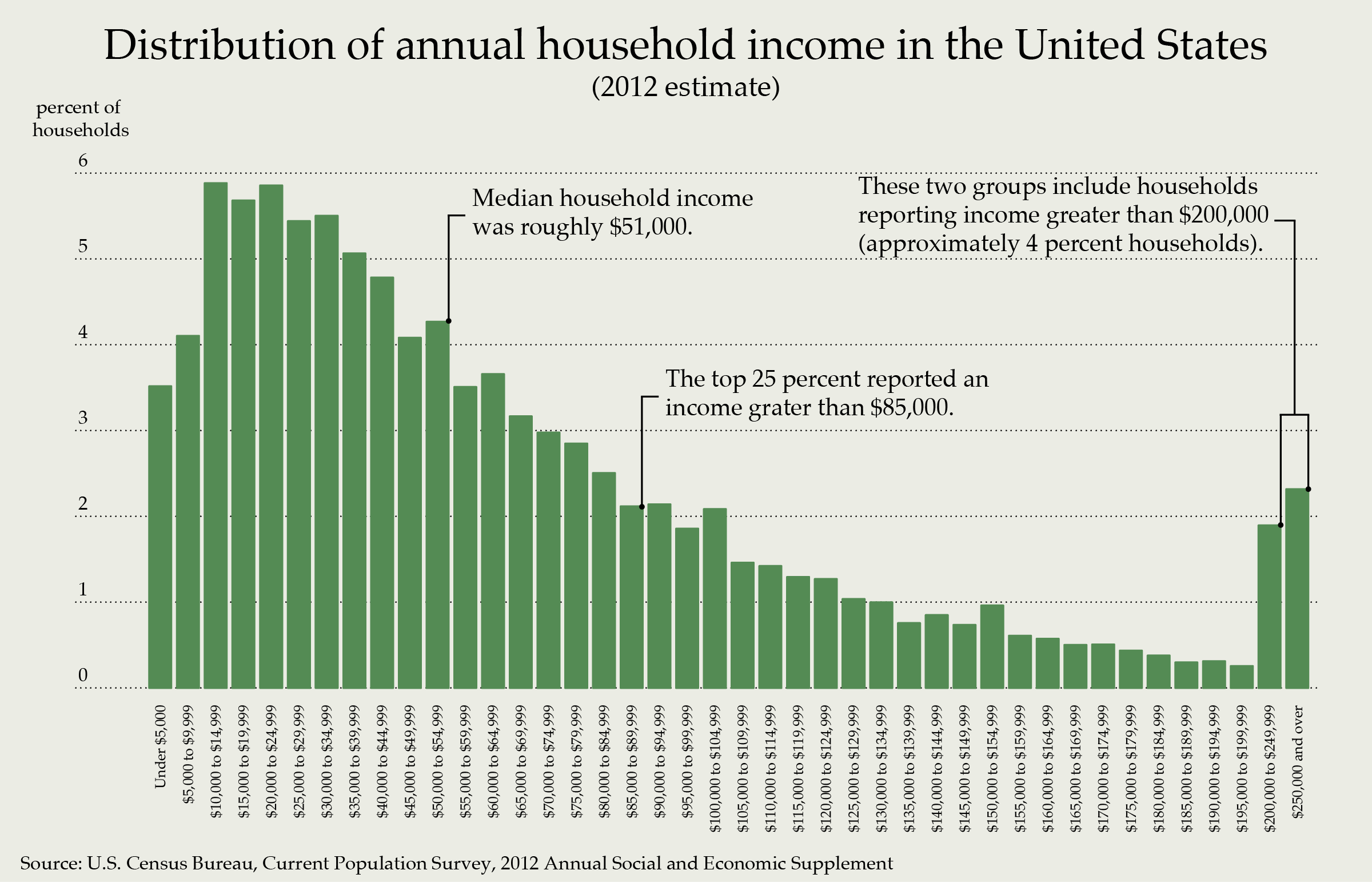
From Vox: The real state of the union, in 33 maps and charts

If you like maps and charts, you'll like this page.

- Click here for it.

It contains info about both the state of the union and the relative status of each state. So it's useful for both 2305 and 2306.

Here's a sampling:


Thursday, January 22, 2015

"middle-class populism"

That seems to be the phrase used most often to refer to the proposals the president made in Tuesday's speech - so it's the new hip political buzzword. It stems from the multiple proposals the president made the direct resources and benefits to the middle class - as opposed to the wealthy or the poor. These proposals include tax credits and no tuition for community college. Both parties seem attuned finally to the fact that middle class wages have stagnated for several decades.

The section on ideology discusses populism - here's are a few definitions, some positive, some negative:

- "A political philosophy supporting the rights and power of the people in their struggle against the privileged elite."
- "A political strategy based on a calculated appeal to the interests or prejudices of ordinary people."
- "An egalitarian political philosophy or movement that promotes the interests of the common people."
- "A political doctrine that appeals to the interests and conceptions (such as hopes and fears) of the general people, especially contrasting those interests with the interests of the elite."

The Tea Party is often described as a middle class populist movement as well, so perhaps these proposals are intended to defuse the movement a bit - perhaps bring some back into the Democratic fold. Obama is out of office in two years so any animosity towards the party that is based attitudes toward him will likely dissipate - assuming Democrats nominate a candidate that doesn't punch the same nerves as Obama has with that part of the electorate.

Here's a sampling of news items using the phrase "middle-class populism."

- Time: Barack Obama Is Ready to Rejoin the Battle.
- Vox: America just got its first glimpse at Hillarynomics — here's what it looks like.
- Michael Gerson: The reality conservatives must face.
- The Brooklyn Rail: WHITHER THE REPUBLICAN PARTY? The 2014 Election and the Future of Capital’s “A-Team”


From the Dish: Obama Has Changed The Debate

This might help 2305 students formulate answer to this week's written assignment. It touches on the ideological implications of Obama's SOTU speech, and how it might frame the issues of concern in the 2016 election.

- Click here for the post.

SOTU word graph

This think is pretty fun.

- Click here for it.

You can compare the frequency of words used in SOTU's over American history.

Tuesday, January 20, 2015

From RCP: Top 10 State of the Union Addresses

Here's the first of a few random posts related to the state of the union address.

Real Clear Politics lists its top ten speeches and explains why:

- Click here for the article.

#1? Lincoln's 1862 address - his second - click here for it.

Here's their description of it:

In 1862, Lincoln used his annual message to Congress to make a clear connection between the preservation of the Union and the abolition of slavery. "Without slavery the rebellion could never have existed; without slavery it could not continue," he argues.
The message came a little more than two months after Lincoln announced the Emancipation Proclamation (it would officially go into effect a month later, on January 1, 1863). It also took place in the wake of an electoral rebuke to his Republican Party in the November elections. As a result, Lincoln attempts to strike a conciliatory tone, acknowledging the "great diversity of sentiment, and of policy, in regard to slavery, and the African race amongst us." He pushes a plan of "compensated emancipation" that would compensate states that abolished slavery before 1900, making more of a practical and financial case for the policy than a moral case.
He concludes, however, by returning to his thematic centerpiece, contending that freedom for the slaves is integral to the survival of the nation.

Wednesday, January 29, 2014

Reaction to the State of the Union Speech

For general comments and links click here for a couple posts from the Dish:

- Live-Blogging The SOTU 2014


- SOTU 2014: Reax

Sunday, January 26, 2014

Weekly Written Assignment #3

This week there are separate assignments for 2305 and 2306.

For GOVT 2305:

On Tuesday President Obama is scheduled to give his state of the union speech and all indications suggest that he will focus on inequality - which has been a focus of some of our class discussions and recent posts. I mentioned that Republicans have joined Democrats and Independents in seeing this as a problems that deserves to be on the public agenda.

But there are certain to be major differences in the conservative and liberal approach to the problem - as well as different positions on how serious the problem is.

Since we've spent a little time looking at the ideology and the role it plays in clarifying people
s positions on public issues, I want you to apply this to issue of inequality. What is the liberal approach to solving inequality? What is the conservative approach? Here is a related question: What do liberals and conservatives see as the underlying cause of inequality? Knowing this will help understand why each takes the positions on policy formation on the issue.

Also: How much does each group think the problem has a solution that government can implement successfully?

150 words minimum

For GOVT 2306:

We've spent a good but of time unpacking the tension that exists between the government of Texas and the government of the United States and have emphasized areas where this tension is acute. A very topical one is over environmental protection. The state government tends to discount its need, while the national government highlights it - at least rhetorically.

I'm a post a bit further below I pointed out how the state is attempting to push back against federal regulators and the EPA specifically - though other federal regulators are active in regulating Texas industry as well.

Maybe the best way to get a handle of dispute is to fully understand the constitutional disputes that underlie this conflict. In this assignment I want you to get familiar with the conflict over regulating the chemical industry in Texas - in order to protect the environment - and highlight how this can come down to conflict over different aspects of the constitution.

What are the constitutional roots of the conflict over environmental protection policy in the United States? How does this help explain the conflict between the US and Texas over environmentalism?

150 words minimum

Thursday, January 23, 2014

From the Gallup Poll: In U.S., 67% Dissatisfied With Income, Wealth Distribution

Majorities of Republicans, Democrats and Independents agree, which suggests - but does not guarantee - that this will be on the agenda of Congress.

The only issue will be how this topic is addressed. What is the root cause of inequality? There will be disputes over this with liberal-ish Democrats more likely to blame outside factors and conservative-ish Republicans saying that a lack of individual initiative - probably exacerbated by misguided government programs - are the root cause.

Their relative solutions to the problem are bound to differ - and this difference will very likely (in my opinion) negate the passage/adoption of any actual policy proposals. But I could be wrong.

Poll numbers suggest that issue has legs

The partisan breakdown:


Satisfaction With Income and Wealth Distribution in the U.S., January 2014
Numbers over recent history:

Satisfaction With Americans' Opportunities to Get Ahead by Working Hard, 2001-2014 Trend
The bottom line according to the Gallup Poll:

Obama will almost certainly touch on inequality in his State of the Union address on Jan. 28. This will certainly resonate in a general sense with the majority of Americans who are dissatisfied with income and wealth distribution in the U.S. today. Members of the president's party agree most strongly with the president that this is an issue, but majorities of Republicans and independents are at least somewhat dissatisfied as well.

Although Americans are more likely to be satisfied with the opportunity for people to get ahead through hard work, their satisfaction is well below where it was before the economic downturn. Accordingly, improvement in the U.S. economy could bring Americans' views back to pre-recession levels.


Thursday, February 14, 2013

Wednesday, February 13, 2013

Some feedback on the SOTU Address

The NYT covers the speech here and The Dish links to various reactions here - including a few live-blogs.

The consensus opinion is that the speech targeted policies that would favor the middle class and that Obama spoke with some confidence without being overly partisan - all the while laying out a few potential landmines for Republicans: like his proposal that the minimum wage be increased. He laid out a case for governmental involvement in developing the middle class while the Republican response tried to argue against it. Might be a good point to raise in class. We can isolate the precise goal laid out in the speech and figure out whether the public or private sector is in a better position to achieve them.

A few pointed out that Joe Biden looked very Mardi Gras with his purple tie and green - Newtown - ribbon. He just needed a touch of gold somewhere.


There were no flareups involving Ted Nugent that I heard of - big disappointment. He looks like he regretted showing up:

US-POLITICS-STATE OF THE UNION-OBAMA

Tuesday, February 12, 2013

Sandy Hook v Ted Nugent

The State of the Union Address is tonight - which is how presidents fulfill the requirement that they provide information from time to time on the state of the union - and will feature several invited, symbolic guests.

The most interesting: survivors of the Sandy Hook shooting and ..... Ted Nugent.

I can't wait for the visuals.

Tuesday, January 24, 2012

Tax Reform and the State of the Union Address

Romney's revelation that he paid a 13.9% effective tax rate on his recent taxes may spur attention to tax reform. Both former TX Rep. Martin Frost and Andrew Sullivan think Obama should highlight tax reform (Bruce Bartlett's suggestions are here) in his State of the Union message tonight. This article reports that it will be a major component of the speech. Frost suggests that he can argue for lower rates, while cutting back on exemptions, and end up with a system that is both more equitable and collects more revenue.

In a related post, Sullivan wonders how and why the capital gains tax rate is so low compared with rates applied to earned income. The how should be interesting to us, and might be the subject of a written assignment some time in the near future. What political forces were able to drive down the capital gains rate at the expense of other tax rates?

Neat symbolism: Obama supports the "Buffet Rule" which simply states that the tax code should not force Warren Buffett's secretary should not have to pay a higher rate than her boss. Buffett's secretary will be at the speech tonight.

Wednesday, January 26, 2011

More signs of a Tea Party / Mainstream Republican Rift?

NYT reports on the two separate responses given to the SOTUS:

In the party’s official reply, which immediately followed President Obama’s speech, Representative Paul D. Ryan of Wisconsin, chairman of the House Budget Committee, said the country faced “a crushing burden of debt.” He vowed that Republicans, after assuming control of the House this year, would honor their pledge to provide Americans “a better choice and a different vision.”

“Americans are skeptical of both political parties, and that skepticism is justified — especially when it comes to spending,” Mr. Ryan said, striking a conciliatory tone as he vowed to work with the president to find cuts. “So hold all of us accountable.”

But Mr. Ryan, who was designated by Speaker John A. Boehner to respond to the president, did not have the last word. Representative Michele Bachmann of Minnesota, who founded the Tea Party Caucus last year, gave a response of her own in a message to the Tea Party Express, one of the movement’s largest groups of activists.

“For two years,” Ms. Bachmann said, “President Obama made promises, just like the ones we heard him make this evening, yet still we have high unemployment, devalued housing prices and the cost of gasoline is skyrocketing
.”

Tuesday, January 25, 2011