We might have to change our government notes again.
Key Terms: regressive taxes, unitary government, fiscal policy, local government, Texas constitution
- Click here for the article.
Texas' top three political leaders — Gov. Greg Abbott, Lt. Gov. Dan Patrick and House Speaker Dennis Bonnen — threw their support Wednesday behind a proposal to increase the sales tax by 1 percentage point in order to lower property taxes across the state.
But that's only if lawmakers agree to limit future local property tax increases.
The proposal would raise the state's sales tax from 6.25% to 7.25%, generating billions of additional dollars annually for property tax relief, if voters approve a constitutional amendment. But the idea will be a hard sell to Democrats, since the sales tax is considered regressive, meaning lower-income Texans end up paying a larger percentage of their paychecks than higher-income Texans.
"Today we are introducing a sales tax proposal to buy down property tax rates for all Texas homeowners and businesses, once Senate Bill 2 or House Bill 2 is agreed to and passed by both Chambers. If the one-cent increase in the sales tax passes, it will result in billions of dollars in revenue to help drive down property taxes in the short and long term," said a joint statement from the three Republicans.
Neither chamber has passed HB 2 or SB 2, which would require voter approval of property tax increases over 2.5%.
The House Ways and Means Committee was scheduled to take public testimony on the House's sales tax swap proposal this week but delayed hearing the bills. Rep. Dan Huberty, R-Houston, who authored House Joint Resolution 3 and House Bill 4621, is considering changing the legislation to use a fraction of the additional money generated by the sales tax for public schools — in order to get more Democrats on board.
The bills are intended to provide another revenue source to help significantly cut down local school property taxes, which make up more than half of the local property taxes levied in Texas.
If the Legislature approves the resolution, the constitutional amendment would go to voters to approve in November, and if voters sign on, the tax rate change would apply in January 2020.
Monday, April 15, 2019
Thursday, April 11, 2019
What is Medicare for all?
A couple explainers from Vox.
Cutting to the chase, lot's of different things. It's much more popular among liberals, sine it promotes equity. Less so among conservatives since it interferes with the market.
- The “pleasant ambiguity” of Medicare-for-all in 2018, explained.
- We read Democrats’ 9 plans for expanding health care. Here’s how they work.
As popular as Medicare-for-all is, the slightly more vexing question is what it actually means.
Historically, Medicare-for-all has meant single-payer health insurance, a national government-run program that covered every American and replaced private coverage entirely, similar to the government-run health care programs in Canada and some European countries.
Then-Rep. John Conyers (D-MI) first introduced the Expanded and Improved Medicare for All Act in 2003. Conyers has since been disgraced by sexual harassment allegations but the idea lives on. It’s now sponsored by Rep. Keith Ellison (D-MN) and it is still a single-payer proposal. So is Sanders’s Medicare-for-all bill, a cornerstone of his unexpectedly resonant 2016 presidential campaign.
But these days, other plans are falling under the Medicare-for-all umbrella. Some progressives, like Green, are even comfortable with the term being applied to the various proposals to allow all Americans buy into Medicare. Some of those plans used to be branded as a “public option”; they would not end private insurance that more than half of Americans get, usually through work, as a true single-payer would. But these plans would also not provide the same guarantee of universal coverage that a single-payer system does.
“For anybody who supports Medicare-for-all single payer, what better way to debunk the right wing lies than to allow millions and millions of Americans to voluntarily opt into Medicare and love it?” Green told me in our interview. “As a political strategy, having Medicare-for-all be a broad umbrella where any candidate can embrace some version of it... that moves the center of gravity in the Democratic party.”
In 2018, with control of Congress at stake, nobody is taking up arms to insist that their version should be orthodoxy. What we know for certain is that Medicare-for-all is popular, and so Democrats of all stripes want to campaign on it. Governing comes later.
- For more: what is a single-payer system?


From the Atlantic: Why Europeans Don’t Get Huge Medical Bills
For our look at economic policy, regulations, interest groups, ideology, and health policy
Several European countries have health insurance, just like America does. The difference is that their governments regulate what insurance must cover and what hospitals and doctors are allowed to charge much more aggressively than the U.S. does.When I described surprise medical bills to experts who focus on different Western European countries’ health systems, they had no idea what I was talking about. “What is a surprise medical bill?” said Sophia Schlette, a public-health expert and a former senior advisor at Berlin’s National Statutory Health Insurance Physicians Association. “Seriously, they don’t happen here.”
Almost all Germans are covered by a variety of health-insurance like “sickness funds,” which are financed through taxes. Almost all doctors and hospitals accept these plans. About 90 percent of Germans never see a bill for their doctor’s visit, and the rest are covered by private insurance, which usually reimburses whatever they get charged. According to the researchers Roosa Tikkanen and Robin Osborn at the Commonwealth Fund, there’s a flat copay for people who are hospitalized, capped at a maximum of 280 euros—or about $315 U.S. dollars—for a 28-day stay. And doctors, too, are not allowed to charge more than the payment rates that are negotiated between the sickness funds and the doctors’ associations. A very small number of the country’s physicians are private and don’t accept the sickness funds, but they have to tell patients how much they’ll charge before the patient is treated, removing the surprise element.
In France, there are no provider networks, so no doctor can be “out of network.” Doctors’ associations negotiate their fees with the universal public health-insurance program every few years. As a result, says Paul Dutton, a history professor at Northern Arizona University who has studied the French system, “I’ve walked into an office [in France] with my kids where it’s just a receptionist and a doctor. There’s not these back-office wars” over what to charge patients.
Tuesday, April 9, 2019
Bump Stock Ban
We followed this rabbit hole in GOVT 2305 this evening.
- A federal bump stock ban starts today. Here's what that means for owners.
- The US Supreme Court Is Letting The Trump Administration's Bump Stock Ban Take Effect.
- Federal Register: Bump-Stock-Type Devices.
- Wikipedia: Bureau of Alcohol, Tobacco, Firearms and Explosives.
- Firearms Policy Foundation.
- Hollis v. Lynch.
From Wikipedia: 1st United States Congress
We went through this in class today in order to figure out how the 1st Congress began to fill the empty vessel of executive power.
- Click here for it.
- Click here for it.
From the Texas Tribune Topics: Criminal Justice
For perusal in 2306.
- Click here for it.
A few standouts:
- Will Texas decriminalize marijuana this year? There is growing support.
- This Texas program lands poor people in jail. Getting rid of it has been too complicated — but that might be changing.
- Eight years on Texas' highest criminal court turned Elsa Alcala into a death penalty skeptic. How will the court change without her?
- What does race have to do with the death penalty in Texas?
- Built with rehabilitation in mind, Texas state jails are now viewed by lawmakers as a "complete failure"
For relevant Texas Statutes:
- Texas Penal Code.
- Texas Code of Criminal Procedure.
From the Texas Attorneyt General's Office:
- Penal Code Offenses by Punishment Range.
Meet FAA acting administrator Daniel Elwell
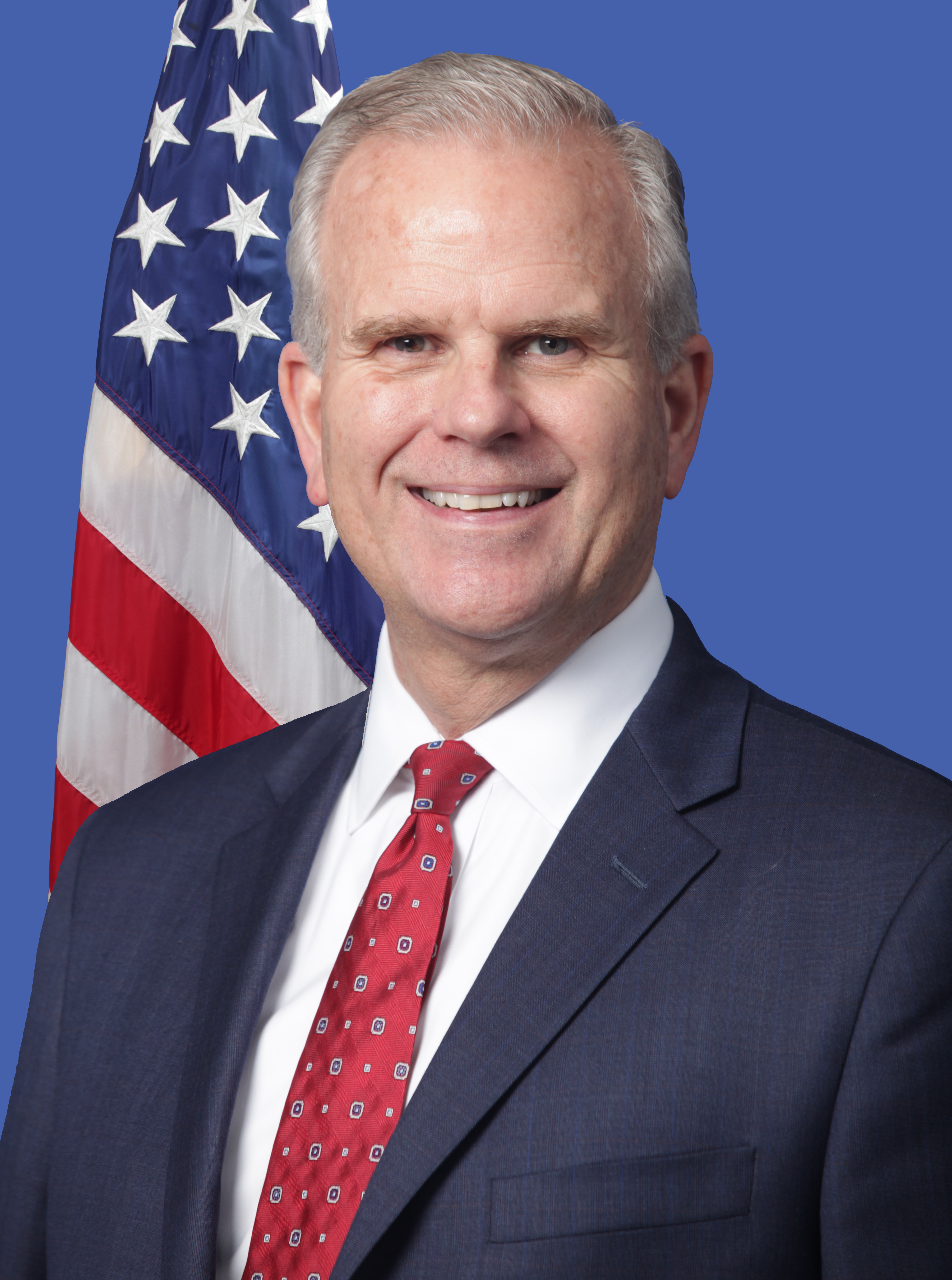
Background from Wikipedia.
Raised in San Diego, Elwell graduated with a Bachelor of Science degree in International Affairs from the United States Air Force Academy in 1983.[1] He moved on to Williams Air Force Base where he earned his pilot wings.[3]
Elwell was a Command Pilot for the U.S Air Force and U.S Air Force Reserve. Elwell fought in the Operation Desert Storm[4] in a combat capacity.[3] Elwell eventually reached the rank of Lieutenant Colonel. He retired soon after.
For 16 years, Elwell was a commercial pilot for American Airlines. Elwell also had a role of American Airlines's Managing Director for International and Government Affairs.[3] He also served served as a legislative fellow for the late Senator Ted Stevens.[3] While working for Senator Stevens, Elwell was part of other aviation safety programs in Alaska, including the Capstone Program in the Yukon–Kuskokwim Delta, as well as the installation of real-time weather cameras at remote airfields and mountain passes.[5]
Elwell was named Vice President of the Aerospace Industries Association[6] in 2008 where he stayed until 2013. Elwell was a civil aerospace manufacturer representative in this capacity where he was an advocate for various companies.[3]
Elwell joined Airlines for America (A4A) in 2013[4] where he was the Senior Vice President for Safety, Security, and Operations. Elwell left this role in 2015.[3]
Elwell also served as the Senior Advisor on Aviation to Secretary Elaine Chao.[7]
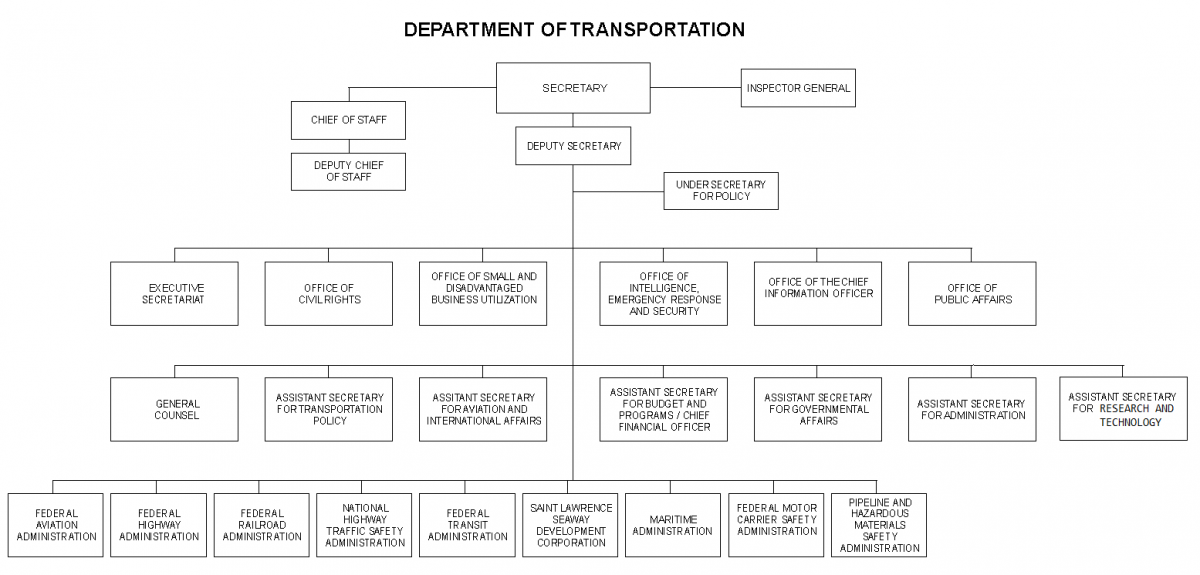
Has Boeing captured the Federal Aviation Administration?
Recent events have lead some to say so.
Key Terms: regulatory capture, interest groups, regulatory agencies, lobbying
- Regulatory capture may be responsible for Boeing's recent problems.
- Bad dog: When the regulatory watchdog gets captured by big business.
- The FAA Has Always Played Cozy With the Aviation Industry.
From the last article:
The FAA is unusual among federal agencies because it was originally established to regulate and promote an industry. This fostered the unusually cozy relationship between regulators and business that has persisted to the present, even as the agency’s official mandate became exclusively focused on safety beginning in the 1990s.
The idea of a federal regulator for aviation first took shape with the Air Commerce Act of 1926. This law empowered the secretary of commerce to issue and enforce traffic rules, certify aircraft, improve air safety and investigate the cause of accidents.
But the language of the legislation made clear the main objective was “to encourage air commerce by attracting capital, creating appropriate laws, and establishing civil airways and navigational facilities.” By the 1930s, the “Bureau of Air Commerce” had helped foster the rise of the aviation business.
For more:
- Wikipedia: FAA.
From Politico: The Forgotten Reason Congress Needs to See the Mueller Report
"Legislators have a responsibility to police obstruction of justice, according to the Constitution."
- Click here for the article.
. . . Congress has a responsibility, rooted firmly in the Constitution, to safeguard the integrity of the justice system, including to prevent obstruction of justice. Therefore, Mueller’s findings are as much about whether President Donald Trump has stepped on Congress’ toes as it is about whether he broke the law.
In contesting a subpoena from Congress, the White House likely will make its favorite defense, which is that the president, legally speaking, can’t obstruct justice. This “unitary executive” theory rests on Article II of the Constitution, which gives the chief executive the power to “take care that the laws be faithfully executed.” According to this view, this language means the president alone is in charge of which cases to pursue in the justice system: If he decides to stop an investigation, that is his prerogative, and his reasons for doing so are beyond the purview of investigators, Congress and the courts. A year before being confirmed as attorney general, Barr laid out an ancillary proposition in a long and rambling memo to Deputy Attorney General Rod Rosenstein, arguing the president can’t be investigated for obstruction based on something that is, on its face, a valid exercise of his power — like firing the FBI director. According to Barr, questioning the motives behind such an action would have disastrous consequences and open a Pandora’s box of potential inquisitions into “all exercises of prosecutorial discretion.”
The problem with this defense is that it conflates enforcement of the laws—a power that resides in the executive branch—with the administration of justice, which is constitutional responsibility that is shared by all three branches, including Congress. When it comes to the administration of justice—and those who would thwart the integrity of that process—Congress has a big role to play.
The idea of obstruction of justice has its origins in an 1819 Supreme Court case, McCulloch v. Maryland (a case you might be familiar with if you’re a Hamilton fan), that challenged Congress’ power to create a national bank. The court found that Congress’ authority to create a bank—even though not explicitly mentioned in the Constitution—stemmed from its power to create laws “necessary and proper” for executing its explicit powers, like collecting taxes, borrowing money and regulating commerce. Importantly, the court noted that under the same reasoning, Congress could similarly pass laws which are “necessary and proper” to execute the powers of the other branches, as well. As an example of the latter, the Supreme Court pointed out that Congress could pass laws to ensure the effective functioning of the courts, noting that crimes like “falsifying … a process of the court,” or perjury, were “conducive to the due administration of justice.” In other words, the court made clear that Congress has the constitutional authority to ensure that the justice system can function without malevolent interference: This is exactly what obstruction of justice is about.
As courts have observed in more recent cases, it makes sense that Congress would be entrusted with safeguarding the integrity of the judicial process. After all, Congress itself is responsible for creating all federal courts apart from the Supreme Court. Protecting the procedure through which cases are investigated, tried and adjudicated is what allows the judicial branch to function as a coequal branch—if defendants could derail cases, mislead investigators or lie to the court with impunity, courts would cease to have the ability to administer justice at all. This is why “process crimes”—the family of crimes that includes not only obstruction of justice, but false statements, perjury, witness tampering and contempt of court (a mechanism by which the judiciary can assert its own interest in fair administration of the laws)—are indispensable to the rule of law: They ensure that the integrity of the justice system is maintained from start to finish. If it’s Congress’ job to create rules that protect the courts’ ability to do their job, then it’s also Congress’ duty to get to the bottom of whether the president has tried to thwart those efforts.
Monday, April 8, 2019
From the Clarion-Ledger: COPY, PASTE, LEGISLATE You elected them to write new laws. They’re letting corporations do it instead.
Key Terms: watchdog, special interests, federalism, biased pluralism
- Click here for the article.
Each year, state lawmakers across the U.S. introduce thousands of bills dreamed up and written by corporations, industry groups and think tanks.
Disguised as the work of lawmakers, these so-called “model” bills get copied in one state Capitol after another, quietly advancing the agenda of the people who write them.
A two-year investigation by USA TODAY, The Arizona Republic and the Center for Public Integrity reveals for the first time the extent to which special interests have infiltrated state legislatures using model legislation.
USA TODAY and the Republic found at least 10,000 bills almost entirely copied from model legislation were introduced nationwide in the past eight years, and more than 2,100 of those bills were signed into law.
The investigation examined nearly 1 million bills in all 50 states and Congress using a computer algorithm developed to detect similarities in language. That search – powered by the equivalent of 150 computers that ran nonstop for months – compared known model legislation with bills introduced by lawmakers.
The phenomenon of copycat legislation is far larger. In a separate analysis, the Center for Public Integrity identified tens of thousands of bills with identical phrases, then traced the origins of that language in dozens of those bills across the country.
Model bills passed into law have made it harder for injured consumers to sue corporations. They’ve called for taxes on sugar-laden drinks. They’ve limited access to abortion and restricted the rights of protesters.
In all, these copycat bills amount to the nation’s largest, unreported special-interest campaign, driving agendas in every statehouse and touching nearly every area of public policy.
The investigation reveals that fill-in-the-blank bills have in some states supplanted the traditional approach of writing legislation from scratch. They have become so intertwined with the lawmaking process that the nation’s top sponsor of copycat legislation, a member of the Pennsylvania General Assembly, claimed to have signed on to 72 such bills without knowing or questioning their origin.
For lawmakers, copying model legislation is an easy way to get fully formed bills to put their names on, while building relationships with lobbyists and other potential campaign donors.
For special interests seeking to stay under the radar, model legislation also offers distinct advantages. Copycat bills don’t appear on expense reports, or campaign finance forms. They don’t require someone to register as a lobbyist or sign in at committee hearings. But once injected into the lawmaking process, they can go viral, spreading state to state, executing an agenda to the letter. those bills across the country.
From Governing: Mississippi Leads Nation in Filing Legislation Other People Wrote. Here's Why That Matters.
Key Terms: interest groups, dark money, federalism, policy diffusion
- Click here for the article.
A bill that critics fear could unleash a wave of “dark money” in political spending quietly slipped through the Mississippi Legislature this year and became law.
There were no rallies for or against the bill, which was loaded with jargon about non-profit organizations.
It only caused a stir by the time it reached the desk of Gov. Phil Bryant, who signed it with no hesitation.
Supporters of the bill say it protects the privacy of donors, yet acknowledged that donor privacy is not a problem in Mississippi.
Some did not realize it had originated outside of Mississippi, or that a nearly identical bill had been pushed through the Michigan Legislature months earlier.
That’s because House Bill 1205, like many Mississippi bills, is a model bill, meaning it was essentially copied from a bill in a different state.
Rather than lobby the U.S. Congress, partisan organizations, business interests, and religious groups with national agendas plant these bills in statehouses across the country.
A USA Today investigation found Mississippi — which has fewer than 3 million residents — has more model bills introduced in its Legislature than any other state in the country.
Bills about donor privacy, abortion, divesting from Iran and many other issues frequently come from outside Mississippi’s borders.
Most never end up becoming law.
But some do. They have restricted abortion rights and public benefits and have changed policies on drugs, charter schools and much more.
Thursday, April 4, 2019
Tuesday, April 2, 2019
From CNN Business: Facebook's Mark Zuckerberg calls for more regulation of the internet
For our upcoming look at economic policy, and the factors that lead to the development of regulations.
- Click here for the article.
Facebook chief executive Mark Zuckerberg, who has been under scrutiny for the social media company's role in spreading misinformation and inadequately policing content, is calling for regulators to play a "more active role" in establishing rules for the internet.
Zuckerberg called for stricter regulation of "harmful content, election integrity, privacy and data portability" in an op-ed published Saturday on his official Facebook account and in the Washington Post.
"I believe we need a more active role for governments and regulators," he wrote. "By updating the rules for the Internet, we can preserve what's best about it - the freedom for people to express themselves and for entrepreneurs to build new things - while also protecting society from broader harms."
Zuckerberg's missive was the most comprehensive the Facebook CEO has ever been on the issue of government regulation. His call comes as US federal prosecutors are reportedly probing Facebook's data sharing deals with a number of large technology companies. The US Federal Trade Commission is said to be in talks with Facebook over a possible record fine. And European officials continue to scrutinize the company.
Facebook was roundly condemned this month when it failed to stop a live stream by the suspect in the New Zealand terrorist attack that killed 50 people. The platform has also faced a litany of scandals, ranging from hate speech to privacy, and criticism over the spread of fake news, especially during national elections.
"Every day, we make decisions about what speech is harmful, what constitutes political advertising, and how to prevent sophisticated cyberattacks. These are important for keeping our community safe," he wrote. "But if we were starting from scratch, we wouldn't ask companies to make these judgments alone."
INS v. Chadha
The Supreme Court case that invalidated the legislative veto, and in the opinion of some, unleashed executive power.
- The Legislative Veto.
- Oyez.
- Wikipedia.
- The Legislative Veto.
- Oyez.
- Wikipedia.
From the Washington Post: How the Supreme Court weakened Congress on emergency declarations
On the evolving relationship between the three branches, and the imperial presidency.
- Click here for the article.
When the law under which President Trump has declared a national emergency was first enacted, in 1976, it was designed to require both Congress and the president to agree that a national emergency exists before the president could exercise emergency powers. Now that the Senate has joined the House in rejecting Trump’s emergency declaration, his declaration would be invalid — if not for a 1983 Supreme Court decision that destroyed the careful scheme Congress had designed for deciding whether emergency powers should be unleashed.
To understand how that Supreme Court decision dramatically affected the way the government works, consider what Congress had intended when it passed the National Emergencies Act. The law, created in the post-Vietnam and post-Watergate years, was one of many adopted in that era to constrain what had come to be called “the imperial presidency.” Congress decided that the awesome and dangerous power to declare emergencies required the agreement of both political branches of the government.
Rightly or wrongly (and over the vigorous dissent of Justice Byron White), the court concluded that Congress cannot act through a legislative veto but can act only by passing a new law. In the case of Trump’s declaration of a national emergency, that means Congress cannot simply disapprove, thus terminating the declaration, but instead must give Trump the chance to veto Congress’s disapproval, as he has promised to do. Instead of being able to end a presidential declaration of emergency with a majority vote in both the House and Senate, Congress must marshal an implausible two-thirds majority in each chamber to override the president’s veto.
Congress is often accused, justifiably, with fecklessly abdicating its institutional responsibilities by delegating vast, general powers to the president and the executive branch. Some critics of the National Emergencies Act have accused Congress of exactly that, in part because the act does not define what constitutes an emergency. But the criticisms are misplaced when it comes to the act in its original form.
Having resolved that deciding whether an emergency exists is ultimately a political judgment, Congress gave itself a crucial role in the process. The legislative veto sought to make Congress, not the courts, the appropriate institution to decide whether the president was right to declare an emergency. By their nature, emergencies are difficult to define; that challenge mattered less when Congress was empowered to react to specific circumstances and decide whether the president had appropriately declared an emergency.
From 538: Why Trump Hasn’t Seen A Post-Mueller Boost In The Polls
Possible evidence supporting the conclusions here.
- Click here for the article.
The completion of Robert Mueller’s investigation into Russian interference in the 2016 election was widely portrayed as a turning point in Trump’s presidency. But so far it’s had little effect on his approval rating.
As of Monday night, Trump’s approval rating was 42.1 percent and his disapproval rating was 52.8 percent, according to FiveThirtyEight’s approval rating tracker, which is based on data all publicly-available polls. Those numbers are little changed from where they were – 41.9 percent approval and 52.9 percent disapproval – on Saturday, March 23, the day before Attorney General William Barr issued a four-page letter on the Mueller report to Congress. (The Mueller report itself has not yet been released to the public or to Congress, although Barr has pledged to release a redacted version of it by mid-April.)
Trump’s approval rating is little changed since the Barr letter
While I’d urge a little bit of caution on these numbers – sometimes there’s a lag before a news event is fully reflected in the polls – there’s actually been quite a bit of polling since Barr’s letter came out, including polls from high-quality organizations such as Marist College, NBC News and the Wall Street Journal, Quinnipiac University and the Pew Research Center which were conducted wholly or partially after the Barr letter was published. Some of these polls showed slight improvements in Trump’s approval rating, but others showed slight declines. Unless you’re willing to do a lot of cherry-picking, there just isn’t anything to make the case that much has changed.
In writing about the Barr letter just after it came out, I ducked making any sort of prediction about its effect on Trump’s numbers, saying it might or might not approve his approval ratings. Truth be told, if I were forced to put money on one side or another, I’d probably have expected them to improve by more than a few tenths of a percentage point.
With the benefit of hindsight, though, maybe this shouldn’t have been any sort of surprise. There are at least six reasons for why you might not have expected to see much of a change in Trump’s numbers. Here they are – note that these aren’t mutually exclusive and aren’t listed in any particular order of importance.
- Click here for the article.
The completion of Robert Mueller’s investigation into Russian interference in the 2016 election was widely portrayed as a turning point in Trump’s presidency. But so far it’s had little effect on his approval rating.
As of Monday night, Trump’s approval rating was 42.1 percent and his disapproval rating was 52.8 percent, according to FiveThirtyEight’s approval rating tracker, which is based on data all publicly-available polls. Those numbers are little changed from where they were – 41.9 percent approval and 52.9 percent disapproval – on Saturday, March 23, the day before Attorney General William Barr issued a four-page letter on the Mueller report to Congress. (The Mueller report itself has not yet been released to the public or to Congress, although Barr has pledged to release a redacted version of it by mid-April.)
Trump’s approval rating is little changed since the Barr letter
Trump’s approval rating is little changed since the Barr letter
Trump approval and disapproval ratings in FiveThirtyEight polling average
| DATE | EVENT | APPROVE | DISAPPROVE |
|---|---|---|---|
| March 1 | Start of last month | 42.0% | 53.3% |
| March 21 | Day before Mueller report filed to Barr | 41.6 | 53.1 |
| March 23 | Day before Barr letter released | 41.9 | 52.9 |
| April 1 | Current | 42.1 | 52.8 |
While I’d urge a little bit of caution on these numbers – sometimes there’s a lag before a news event is fully reflected in the polls – there’s actually been quite a bit of polling since Barr’s letter came out, including polls from high-quality organizations such as Marist College, NBC News and the Wall Street Journal, Quinnipiac University and the Pew Research Center which were conducted wholly or partially after the Barr letter was published. Some of these polls showed slight improvements in Trump’s approval rating, but others showed slight declines. Unless you’re willing to do a lot of cherry-picking, there just isn’t anything to make the case that much has changed.
In writing about the Barr letter just after it came out, I ducked making any sort of prediction about its effect on Trump’s numbers, saying it might or might not approve his approval ratings. Truth be told, if I were forced to put money on one side or another, I’d probably have expected them to improve by more than a few tenths of a percentage point.
With the benefit of hindsight, though, maybe this shouldn’t have been any sort of surprise. There are at least six reasons for why you might not have expected to see much of a change in Trump’s numbers. Here they are – note that these aren’t mutually exclusive and aren’t listed in any particular order of importance.
From the Columbia Law Review: Article II Vests Executive Power, Not the Royal Prerogative
For our look at the presidency. This seems to be a challenge to our understanding on the inherent powers of the president.
- Click here for the article.
The abstract:
Article II of the United States Constitution vests “the executive power” in the President. For more than two hundred years, advocates of presidential power have claimed that this phrase was originally understood to include a bundle of national security and foreign affairs authorities. Their efforts have been highly successful: among constitutional originalists, this so-called Vesting Clause Thesis is now conventional wisdom. But it is also demonstrably wrong.
Based on an exhaustive review of the eighteenth-century bookshelf, this article shows that the ordinary meaning of “executive power” referred unambiguously to a single, discrete, and potent authority: the power to execute law. This enforcement role was constitutionally crucial. Substantively, however, it extended only to the implementation of legal norms created by some other authority. It wasn’t just that the executive power was subject to legislative influence in a crude political sense; rather, the power was conceptually an empty vessel until there were laws or instructions that needed executing.
There was indeed a term of art for the Crown’s non-statutory powers, including its various national security and foreign affairs authorities. But as a matter of well-established legal semantics, that term was “prerogative.” The other elements of prerogative—including those relating to national security and foreign affairs— were possessed in addition to “the executive power” rather than as part of it.
For more, click here.
Of special note:
Let's start with some background. Basically, the Executive Power Clause has three competing
interpretations.
- The cross-reference thesis. On this view, the clause has no standalone content. It simply refers to the more specific powers listed later in Article II.
- The law execution thesis. On this understanding, the clause grants exactly what its grammar suggests: the power to execute the laws.
- The royal residuum thesis. This view reads the clause to include all of the powers typically held by an eighteenth-century executive—particularly those relating to foreign affairs and national security—unless specifically revised or reallocated elsewhere in the Constitution.
- Zivotofsky II and the Vesting Clause Theory of Presidential Foreign Relations Power.
- prerogative.
Monday, April 1, 2019
From the Texas Tribune: After helping defeat the “bathroom bill” in 2017, business groups are back to oppose “discriminatory and divisive measures”
Business groups in Texas ...
- Click here for the article.
- Click here for the article.
In the spring of 2015, 80 companies and business groups banded together to create Texas Competes, a coalition with something of a novel mission: It would make the “economic case for equality,” fighting discriminatory proposals and convincing the state’s business-friendly leaders that doing what they considered the right thing for LGBTQ Texans was also the smart play economically.
This year, the group’s membership has swelled above 1,400 organizations and counts among its ranks dozens of Fortune 500 companies, including Amazon, Google and Facebook.
The group and its allies are now flexing that muscle to combat legislative proposals the business leaders consider threats to their economic success due to the disparate impacts they would have on Texas’ LGBTQ communities.
That opposition infrastructure was on full display Wednesday afternoon as a slate of business leaders, including representatives of Texas’ burgeoning tech industry and tourism officials from some of the state’s biggest cities, detailed their opposition to two priority Senate bills at a Capitol press conference that came alongside an open letter to state leaders.
Perhaps the group’s biggest success was the failure last session of a “bathroom bill” that would have restricted transgender Texans’ access to certain public facilities. This year, many groups have argued, proposals that may have seemed more innocuous at first blush would create “a bathroom bill 2.0” situation.
“It’s always been about more than bathrooms because a welcoming, inclusive Texas is a 21st century economic imperative,” said David Edmonson, Texas director for TechNet, a coalition of tech companies committed to inclusivity.
At issue this week are two bills that have been tagged as priorities for the lieutenant governor. One, Republican Sen. Brandon Creighton’s Senate Bill 15, was at its start a relatively uncontroversial measure aimed at gutting mandatory paid sick leave ordinances in cities like Austin and San Antonio. But the bill was rewritten before it passed out of committee, and protections for local nondiscrimination ordinances were stripped out. Although the new version of the bill doesn’t explicitly target LGBTQ Texans, advocacy groups immediately raised alarm bells about the shift.
The other bill, Republican Sen. Charles Perry’s Senate Bill 17, would protect professional license holders from losing their licenses for conduct or speech they say was motivated by “sincerely held religious beliefs.” Advocates and business leaders say the bill would grant huge swaths of Texas employees a “license to discriminate” against LGBTQ communities.
From the Texas Monior: Heavyweight lobby group tries again to reduce power of state’s anti-SLAPP law
For our look at interest groups in Texas, as well as free press and speech.
- Click here for the article.
The politically powerful Texans for Lawsuit Reform is again seeking to tamp down the state’s Texas Citizens Participation Act, better known as the anti-SLAPP law.
A SLAPP suit — shorthand for a “strategic lawsuit against public participation” — is an action to discourage the exercise of some First Amendment rights, including free speech. In 2011, the Texas Legislature passed the act to combat such lawsuits, which have been used to quash investigations by media groups and others seeking public records. The suits are intended to intimidate defendants with the potential cost of legal fees.
The move comes after a similar attempt in the 2017 session when a bill filed by state Rep. J.M. Lozano, R-Kingsville, failed to move past filing stage. TLR has contributed more than $400,000 to Lozano’s campaigns over five election seasons.
Texans for Lawsuit Reform sent out a 25-page memo early this year, noting that the state’s anti-SLAPP law, which it supported when it passed, has become a tool for individuals seeking protection not just from political efforts but also in cases of individual beefs. The special interest group and political action committee funded in part by builders and developers alleges that the law, one of the broadest in the U.S., has been applied too loosely in some cases.
TLR urged legislative intervention to limit the reach of the statute.
This session, bills that incorporate TLR’s ideas have been filed in the House and the Senate — in both cases by legislators who’ve received substantial donations from the lobbying group.
State Rep. Jeff Leach, R-Plano, has received $40,000 in donations over his four terms while state Sen. Angela Paxton, R-McKinney, received $90,000 from TLR in 2017 and 2018 in her first campaign for state office.
In 2011, the anti-SLAPP law was approved unanimously by both chambers, meaning that it could go into effect immediately.
The Texas law was backed from the outset by media groups and individuals who had been sued for defamation.
Many of those same groups, including the Texas Press Association, the Texas Association of Broadcasters and the Society of Professional Journalists, are now part of the Protect Free Speech Coalition, which is opposing measures to limit the law.
The Interest Groups in question:
- Texans for Lawsuit Reform.
- Texas Press Association.
- Texas Association of Broadcasters.
- he Society of Professional Journalists.
Thursday, March 28, 2019
From 538: Trump’s Approval Rating Is Incredibly Steady. Is That Weird Or The New Normal?
For out look at polling, and approval ratings.
- Click here for the article.

So what explains this lack of movement in recent presidents’ approval ratings?
For starters, Trump is arguably the most polarizing president ever — in his second year in office, an average of 87 percent of Republicans approved of the president while just 8 percent of Democrats did, the widest such gap that Gallup has ever found. But this kind of partisan split was almost as wide under Obama, though not until his final year in office.
As Democrats and Republicans move farther apart politically, the specifics of a president’s job performance may become secondary considerations for voters in forming an opinion of how he’s doing. “People are more likely to judge candidates and policies solely on the basis of their party,” said Christopher Federico, a professor of political psychology at the University of Minnesota. “If everything boils down to party, then there’s less room for other stuff that a president might be held responsible for — like a bad economy or increased casualties in a foreign military engagement — to move that president’s approval around.”
- Click here for the article.
So what explains this lack of movement in recent presidents’ approval ratings?
For starters, Trump is arguably the most polarizing president ever — in his second year in office, an average of 87 percent of Republicans approved of the president while just 8 percent of Democrats did, the widest such gap that Gallup has ever found. But this kind of partisan split was almost as wide under Obama, though not until his final year in office.
As Democrats and Republicans move farther apart politically, the specifics of a president’s job performance may become secondary considerations for voters in forming an opinion of how he’s doing. “People are more likely to judge candidates and policies solely on the basis of their party,” said Christopher Federico, a professor of political psychology at the University of Minnesota. “If everything boils down to party, then there’s less room for other stuff that a president might be held responsible for — like a bad economy or increased casualties in a foreign military engagement — to move that president’s approval around.”
For our look at the coalitional nature of the two parties.
Both from 538
- The Five Wings Of The Republican Party.
The Trumpists
Often join Trump on immigration policy and in attacking institutions; largely avoid criticizing him publicly on foreign policy and trade even if they don’t fully embrace his views on those issues; strongly defend him in almost every instance. Prominent examples: Kentucky Gov. Matt Bevin, Rep. Matt Gaetz of Florida, Fox News, Rep. Jim Jordan of Ohio, Rep. Mark Meadows of North Carolina, Rep. Devin Nunes of California, Sen. David Perdue of Georgia.
The Pro-Trumpers
Support the president as a default, but hold views similar to George W. Bush or Paul Ryan on policy issues and not truly aligned with most of the four aspects of Trumpism; occasionally disagree with Trump publicly, particularly on foreign policy, but usually with careful language. Prominent examples: Texas Gov. Greg Abbott, Charles and David Koch, Florida Sen. Marco Rubio, Senate Majority Leader Mitch McConnell.
Trump-Skeptical Conservatives
Generally aligned with Trump, but tend to break with him in somewhat noisy ways and generally by casting the president as insufficiently conservative. Prominent examples: Rep. Justin Amash of Michigan, Sen. Mike Lee of Utah, Sen. Rand Paul of Kentucky.
Trump-Skeptical Moderates
Generally aligned with Trump on policy, but wary of Trumpism; often criticize the president sharply and publicly, particularly his anti-institutionalism and his policies and remarks on racial issues. Prominent examples: Sen. Susan Collins of Maine, Rep. Will Hurd of Texas, Rep. Adam Kinzinger of Illinois, Sen. Lisa Murkowski of Alaska, Sen. Mitt Romney of Utah
Anti-Trumpers
Never really embraced Trump as the leader of the GOP and seem open to supporting a primary challenger to him. Prominent examples: Gov. Charlie Baker of Massachusetts, conservative activist Bill Kristol, former Gov. John Kasich of Ohio.
- The Six Wings Of The Democratic Party.
The Super Progressives
Very liberal on economic and identity/cultural issues, anti-establishment. (Anti-establishment is a very fuzzy term, but in this piece, what I’m referring to is people who see part of their role as not just attacking Republicans, but also highlighting what they see as shortcomings of the Democratic Party itself.) Prominent examples: Ocasio-Cortez , Rep. Ilhan Omar of Minnesota, Rep. Mark Pocan of Wisconsin, Rep. Ayanna Pressley of Massachusetts, Rep. Rashida Tlaib of Michigan
The Very Progressives
Very liberal on economic issues, fairly liberal on identity issues, skeptical of the Democratic establishment. Prominent examples: Bill de Blasio, Sen. Jeff Merkley of Oregon, Bernie Sanders, Elizabeth Warren.
The Progressive New Guard
Liberal on both economic and identity issues but also somewhat concerned about the “electability” of candidates and the appeal of ideas to the political center; generally rose to prominence after Barack Obama was elected president. Prominent examples: Stacey Abrams, Cory Booker, Pete Buttigieg, Julian Castro, Kamala Harris, Jay Inslee, Beto O’Rourke.
The Progressive Old Guard
Solidly center-left on both economic and identity issues, but very concerned about the “electability” of candidates and the appeal of ideas to the political center; generally rose to prominence before Obama was elected president. Prominent examples: Joe Biden, Cuomo, Dianne Feinstein, Nancy Pelosi, Chuck Schumer.
The Moderates
More conservative and business-friendly than other Democrats on economic policies; somewhat liberal on cultural issues; anti-establishment. Prominent examples: Rep. Josh Gottheimer of New Jersey, Rep. Conor Lamb of Pennsylvania, Rep. Abigail Spanberger of Virginia.
Conservative Democrats
Skeptical of liberal views on both economic and cultural issues, often supportive of abortion limits, generally from conservative-leaning areas. Prominent examples: Louisiana Gov. John Bel Edwards, West Virginia Sen. Joe Manchin.
From the Texas Tribune: Advocates say the timing is right for independent oversight of Texas prisons
More on checks and balances, executive agencies, interest groups, and bill making.
- Click here for the article.
After a recent slew of damning headlines regarding conditions within Texas prisons, reform advocates and lawmakers are hopeful that the timing is right to get legislation passed creating independent oversight of the Texas Department of Criminal Justice.
State Rep. Jarvis Johnson, D-Houston, and state Sen. Borris Miles, D-Houston, filed identical bills in their respective chambers last week calling for a governor-appointed, independent ombudsman's office to oversee and investigate complaints against the prison agency. The criminal justice department currently has an ombudsman within the agency, but Johnson and Miles say detaching it from the Texas Department of Criminal Justice would free it to more objectively report findings to lawmakers without repercussions.
“You just can’t have the fox watching the henhouse,” Johnson said. “They’re not doing their job.”
Under the bills, the ombudsman’s office would move under the purview of the Texas Commission on Jail Standards, a separate agency overseen by a board appointed by the governor. The commission would provide office space, human resources and budgetary support to the ombudsman's office.
The ombudsman’s office documented resolving over 35,000 issues reported by inmates, their family members and the general public in its latest report — detailing work from October 2016 to September 2017. Complaints ranged from visitation inquiries, access to and denial of medical care and allegations of unprofessional prison staff conduct.
Miles first filed Senate Bill 188 on Nov. 14, and Johnson filed House Bill 363 a day later. The bills mirror those filed by the same legislators in 2017. The Senate bill never received a committee hearing. The House version was passed through the House Committee on Corrections, but only after a complete overhaul that included removing the creation of an independent ombudsman.
Johnson said for the 2019 session, he’s adjusted his approach and has made the bill a top priority for his legislative agenda. Miles and Johnson filed the bills early for this upcoming session, unlike in 2017 when they waited until session had already started. And the Democrats picked up 12 additional seats in the house, potentially providing a little more blue oomph for the bill.
“This time I’m coming back with a lot more energy and emphasis on it,” he said. “There’s a better chance of it passing when you go after it 100 percent.”
Advocacy groups also said that they are optimistic that the timing is right for the idea, since the Texas Department of Criminal Justice has endured a difficult year in the public eye. The Houston Chronicle reported in February that suicide attempts in Texas prisons have more than doubled in the last four years. And over the summer, the agency faced a scandal over a short-lived quota system in which prison officers were punished if they didn't hand out enough disciplinary measures. Four prison workers were indicted in the fallout from that scandal on allegations that they planted a screwdriver in an inmate's cell.
From Vox: Maryland just became the sixth state to raise the minimum wage to $15 an hour
More on policy diffusion and interest groups, among other topics.
- Click here for the article.
Maryland is now the third state to phase in a $15 minimum wage so far this year, and the sixth overall. In February, New Jersey and Illinois did so, too.
While Hogan’s veto was not surprising (he has always opposed a $15 minimum), it’s a striking position in a state where the $15 minimum wage is so popular with voters in Maryland and across the country.
The law will benefit about 573,000 workers in Maryland who currently earn less than $15 —about 22 percent of the state’s workforce, according to the National Employment Law Project.
Advocates for the wage hike didn’t get everything they wanted in the bill. For example, it won’t eliminate the lower wage for tipped workers, which is $3.63, and future changes to the minimum wage aren’t tied to inflation. The bill also continues to let businesses pay agricultural workers less than the minimum wage, and allows employers to pay young workers less, too.
But the push for a $15 wage is gaining support across the country, and has even reached Congress. For the first time ever, lawmakers on Capitol Hill are considering a bill that would raise the federal minimum wage to $15 an hour — another sign that the public pressure is paying off.
It all started with frustrated McDonald’s workers in Illinois
Passing the $15 minimum wage bill is still a major win for the fast-food workers whose movement helped 5 million workers get pay raises in 2019.
Within five years, they’ve transformed an improbable proposal into a popular policy — one that would address, in part, the slow wage growth American workers are experiencing.
The workers’ movement, called Fight for $15, organized strikes and ralliesall across the country. But they saw little success until 2016, when California became the first state to hike hourly wages to $15, followed by Massachusetts, New York, and Washington, DC.
Business groups, meanwhile, are not happy about the fight for $15. And neither are their Republican allies in Congress. They’ve long pushed back against any effort to raise the wage floor at the federal level, claiming it would destroy small business and trigger massive job losses.
AC in Texas Prisons
All from the Texas Tribune
- Texas officials say it would cost $1 billion to cool prisons – but they’ve grossly overestimated AC costs before.
- A state report says a Texas inmate died from heat last year. Prison officials contest that finding.
- After $7 million legal fight over air conditioning, Texas prison system touts new heat safety policies.
- Texas spent $7 million to fight against A/C in a prison. It may only cost $4 million to install.
Tuesday, March 26, 2019

From the NYT: Justices Display Divisions in New Cases on Voting Maps Warped by Politics
The court again considered whether partisan gerrymandering is unconstitutional.
The cases are Rucho v. Common Cause, and Lamone v. Benisek.
- Click here for the article.
The Supreme Court returned to the subject of partisan gerrymandering on Tuesday, appearing largely divided along ideological lines as it considered for a second time in two years whether drawing election maps to help the party in power ever violates the Constitution.
Justice Brett M. Kavanaugh, the court’s newest member and the one who may possess the decisive vote, expressed uneasiness about the practice.
“Extreme partisan gerrymandering is a real problem for our democracy,” he said. “I’m not going to dispute that.”
He added, though, that recent developments around the nation — including state ballot initiatives establishing independent redistricting commissions, proposed legislation in Congress and State Supreme Court rulings — may make action from the United States Supreme Court less necessary.
Have we really reached the moment, even though it would be a big lift for this court to get involved, where the other actors can’t do it?” he asked.
Much could hang on Justice Kavanaugh’s opinion: A ruling that limited partisan gerrymandering could transform American politics, reshaping House maps in several states, often but not always to the benefit of Democrats.
Justice Kavanaugh was an exceptionally active participant in Tuesday’s arguments, asking probing questions of both sides and displaying particularly detailed familiarity with the geography and voting districts of Maryland, his home state. But his record as an appeals court judge provides few hints about how he will approach the issue.
The other justices seemed largely split along the usual lines, with the more conservative ones wary of announcing constitutional limits on partisan gerrymandering and the more liberal ones prepared to try.
There was certainly no consensus on how to fashion a legal standard that would separate acceptable partisanship from the kind that is unconstitutional. Justice Stephen G. Breyer proposed a numerical test, but it did not seem to gain traction with his colleagues.
For More:
- Supreme Court weighs crackdown on gerrymandering.
- Proportionality and the Oral Arguments.
From Vox: House Democrats officially unveil their first bill in the majority: a sweeping anti-corruption proposal
HR1 - For The People Act - was the first bill introduced in the House by the Democratic majority.
- Click here for the article.
Here are the major components of it:
Campaign finance
- Public financing of campaigns, powered by small donations. Under Sarbanes’s vision, the federal government would provide a voluntary 6-1 match for candidates for president and Congress, which means for every dollar a candidate raises from small donations, the federal government would match it six times over. The maximum small donation that could be matched would be capped at $200. “If you give $100 to a candidate that’s meeting those requirements, then that candidate would get another $600 coming in behind them,” Sarbanes told Vox this summer. “The evidence and the modeling is that most candidates can do as well or better in terms of the dollars they raise if they step into this new system.”
- Support for a constitutional amendment to end Citizens United.
- Passing the DISCLOSE Act, pushed by Rep. David Cicilline and Sen. Sheldon Whitehouse, both Democrats from Rhode Island. This would require Super PACs and “dark money” political organizations to make their donors public.
- Passing the Honest Ads Act, championed by Sens. Amy Klobuchar (MN) and Mark Warner (VA) and introduced by Rep. Derek Kilmer (D-WA) in the House, which would require Facebook and Twitter to disclose the source of money for political ads on their platforms and share how much money was spent.
- Disclosing any political spending by government contractors and slowing the flow of foreign money into the elections by targeting shell companies.
- Restructuring the Federal Election Commission to have five commissioners instead of the current four, in order to break political gridlock.
- Prohibiting any coordination between candidates and Super PACs.
Ethics
- Requiring the president and vice president to disclose 10 years of his or her tax returns. Candidates for president and vice president must also do the same.
- Stopping members of Congress from using taxpayer money to settle sexual harassment or discrimination cases.
- Giving the Office of Government Ethics the power to do more oversight and enforcement and put in stricter lobbying registration requirements. These include more oversight into foreign agents by the Foreign Agents Registration Act.
- Creating a new ethical code for the US Supreme Court, ensuring all branches of government are impacted by the new law.
Voting rights
- Creating new national automatic voter registration that asks voters to opt out, rather than opt in, ensuring more people will be signed up to vote. Early voting, same-day voter registration, and online voter registration would also be promoted.
- Making Election Day a holiday for federal employees and encouraging private sector businesses to do the same, requiring poll workers to provide a week’s notice if poll sites are changed, and making colleges and universities a voter registration agency (in addition to the DMV, etc), among other updates.
- Ending partisan gerrymandering in federal elections and prohibiting voter roll purging. The bill would stop the use of non-forwardable mail being used as a way to remove voters from rolls.
- Beefing up elections security, including requiring the director of national intelligence to do regular checks on foreign threats.
- Recruiting and training more poll workers ahead of the 2020 election to cut down on long lines at the polls.
Monday, March 25, 2019
From the Texas Tribune: Medical cannabis expansion has high support in the Texas Legislature. But Dan Patrick might stand in the way.
For our look at criminal law, the lieutenant governor, and interest groups in Texas.
- Click here for the article.
. . . a broad coalition of lawmakers plus some powerful lobbyists support expanding access to medical cannabis in Texas. But bills to do so face a major obstacle: Lt. Gov. Dan Patrick, the Senate's presiding officer, who can single-handedly block any legislation from coming up for a vote in the upper chamber.
In a statement to The Texas Tribune, Patrick spokesperson Alejandro Garcia said the lieutenant governor is “strongly opposed to weakening any laws against marijuana [and] remains wary of the various medicinal use proposals that could become a vehicle for expanding access to this drug.”
House Speaker Dennis Bonnen hasn't publicly expressed a position on expanding the Compassionate Use Act, but he voted against the bill in 2015. According to a person familiar with his thinking, he does not plan to get in the way of the chamber if there is support for amending the program.
Klick, who did not respond to request for comment, is one of a handful of lawmakersthis session who has put forth a bill to expand the list of patients eligible for the drug. If passed, her measure would give Texans with multiple sclerosis, epilepsy and spasticity access to medical cannabis.
In addition to Klick’s bill, state Sen. Donna Campbell, R-New Braunfels, filed a bill that would increase the cap on THC levels in medical cannabis legally grown in Texas from 0.5 percent to nearly 1 percent, and allow physicians on the state's Compassionate Use Registry to decide which patients need it rather than restricting it to those with certain conditions. Two other measures filed by Democrats would drastically expand the list of debilitating medical conditions that qualify for the drug.
It’s not unusual for the more conservative upper chamber to stall marijuana-related bills. A Compassionate Use Act expansion bill in 2017 from state Sen. José Menéndez, D-San Antonio, never received a hearing.
“I don’t understand why politicians are trying to get between the doctor and the patient on something that doesn’t do anything but help the patient,” said Menéndez, who also filed a bill this session that would expand the list of debilitating medical conditions that qualify for medical cannabis to include illnesses like terminal cancer, autism, Crohn's disease and post-traumatic stress disorder. “Why are we sticking our heads in the sand?
From the Texas Tribune: Justice Department reaches agreement with Harris County to ensure polling place accessibility for disabled voters
For our look at federalism, elections, and civil rights.
- Click here for the article.
Harris County on Tuesday agreed to make its voting locations more accessible to people with disabilities, settling a lawsuit with the U.S. Department of Justice in which the federal agency alleged that the county was violating the Americans with Disabilities Act.
The 2016 lawsuit alleged many of Harris County’s more than 750 voting places had architectural barriers — like steep ramps or gaps in walkways— that made them inaccessible to voters with mobility or vision disabilities. Under the settlement, Harris County will have to change its current voting program to comply with the ADA.
“I commend Harris County for its decision to enter into this agreement in order to achieve our shared goal of making polling places accessible to all eligible voters,” said U.S. Attorney Ryan K. Patrick in a statement.
As part of the settlement, the county will have to provide curbside voting, create a better system to choose accessible polling places and identify accessibility barriers at current poling places and find temporary solutions — such as mats or ramps— for elections. Harris County is required to conduct accessibility surveys of nearly two thirds of its polling places.
From WalletHub: 2019’s Most & Least Federally Dependent States
More on fiscal federalism.
- Click here for the article.
One big point of difference among state economies is the tax burden of the average citizen. This number varies greatly. But what are the reasons behind why some states tax their residents more or less?
If a state can afford not to tax its residents at high rates, there are multiple explanations. One is that their economic policies are sound and the state economy is doing well. But another is that the state gets disproportionately more funding from the federal government than states with harsher tax codes.
Americans have looked at federal assistance programs with growing scrutiny. According to a 2018 Rasmussen report, 61% of American adults think there are too many people receiving government financial aid. On the other hand, only 9% think not enough people are receiving funds. Regardless of overall trends, though, it is true that some states receive a far higher return on their federal income-tax contributions than others.
Just how big is this difference? And to what extent does it change our perception of state and local tax rates around the country? WalletHub sought to answer those questions by comparing the 50 states in terms of three key metrics. Read on for our findings, commentary from a panel of experts, and a detailed explanation of our methodology.
From Governing: Momentum for Fixing Marijuana's Banking Problem Is Higher Than Ever
The national government is catching up with the states.
- Click here for the article.
New Jersey will likely be the next to legalize recreational marijuana, which would make it the 11th state (plus the District of Columbia) to do so. Medical marijuana is legal in an additional 22 states, meaning that more than half the country permits some form of the drug.
And yet, most growers and sellers can’t get a bank account for their business.
Because the drug is still illegal under federal law, any bank that handles marijuana money can be charged with money laundering. This forces the industry to deal with large amounts of cash, making the businesses targets for violent crime and making it difficult for states to track and collect the tax revenue they're owed.
But, there appears to be more momentum than ever before for addressing this issue.
This month, the SAFE Banking Act was introduced in Congress. It would prevent federal banking regulators from punishing banks for working with legal cannabis businesses.
This is the second time a bill like this has surfaced, but this year, there are 138 bipartisan cosponsors in the House. That’s a notable improvement from 2017 when there were only 95 cosponsors. The SAFE Banking Act is scheduled for committee markup this week, meaning it’s already made it farther in the legislative process than the previous version.
Advocates of the bill, including state treasurers, are optimistic.
“I definitely think it has more momentum this time,” says Illinois State Treasurer Michael Frerichs, who leads the National Association of State Treasurers' bipartisan group supporting the act. “We understand there will always be some opposition to marijuana. ... But we think attitudes are changing.”
Still, even if it passes the Democratic-controlled House, it’s unclear how much traction the legislation would have in the Republican-controlled Senate.
In the meantime, states are seeking out their own solutions.
From Governing: Articles on Fiscal Federalism.
- Inside Trump's Budget: 6 Things State and Local Governments Should Know.
- President Trump's 2020 budget proposes major cuts for the Environmental Protection Agency, Medicaid, food stamps, cash welfare, public housing, transportation, clean energy and economic development.
- State and local organizations are noticeably quiet in response.
- It would run a $1 trillion federal deficit for the next four years.
- The Week in Public Finance: The 10 States That Give More to the Feds Than They Get Back.
WHO GIVES AND WHO GETS?
Most states get more money back from the federal government than they pay out. But 10 states, shown below in red, give more than they receive.

- How Much Do States Rely on Federal Funding?
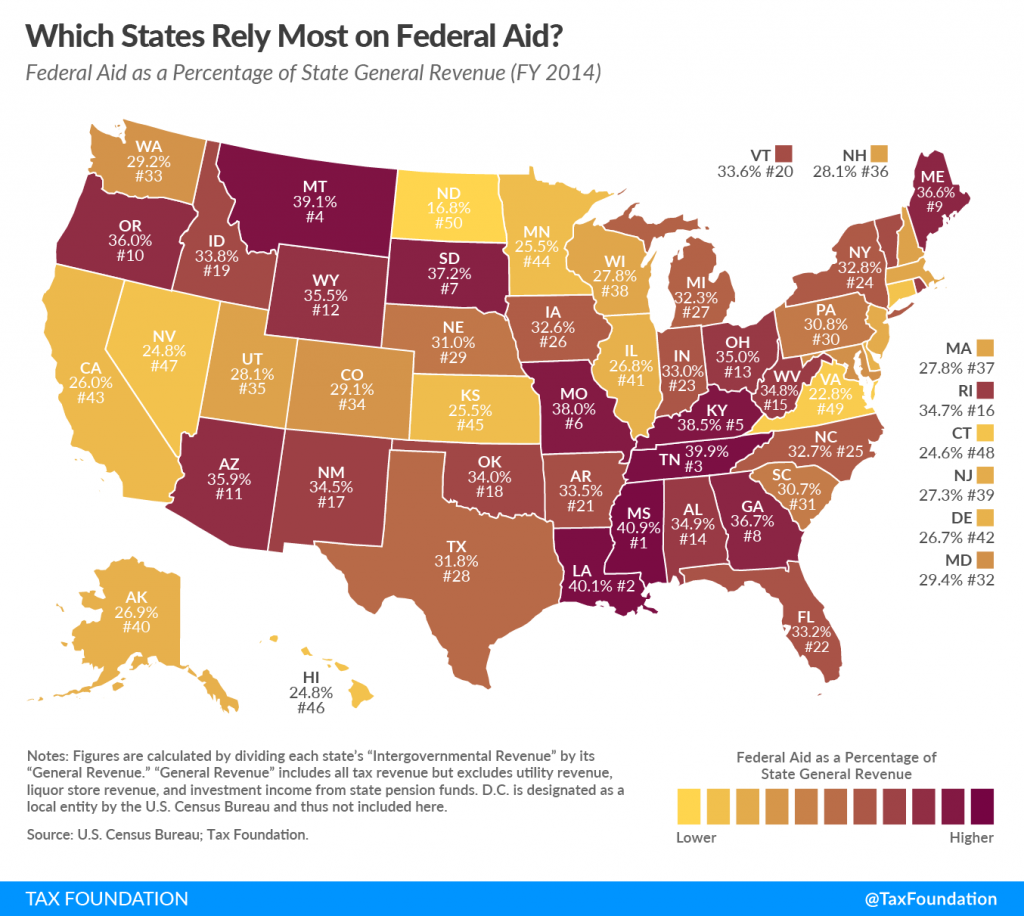
- President Trump's 2020 budget proposes major cuts for the Environmental Protection Agency, Medicaid, food stamps, cash welfare, public housing, transportation, clean energy and economic development.
- State and local organizations are noticeably quiet in response.
- It would run a $1 trillion federal deficit for the next four years.
- The Week in Public Finance: The 10 States That Give More to the Feds Than They Get Back.
WHO GIVES AND WHO GETS?
Most states get more money back from the federal government than they pay out. But 10 states, shown below in red, give more than they receive.
- How Much Do States Rely on Federal Funding?
From Governing: Scott Walker's New Gig: Urging States to Call a Constitutional Convention
An Article V Convention.
- Click here for the article.
A national group says its campaign to convene an unprecedented U.S. constitutional convention to balance the federal budget has a new leader: former Republican Gov. Scott Walker.
The Center for State-led National Debt Solutions on Monday announced Walker will serve as its national honorary chairman.
It marks one of the first efforts by Walker to re-enter the political fray since his November election loss to Gov. Tony Evers.
In 2017, Wisconsin became the 28th state to request an Article V convention -- so named for the article of the U.S. Constitution that sanctions the process.
According to the Constitution, two-thirds of the states (34) must request such a convention for one to occur. Walker will lead an effort to get six more states to make the request. Any constitutional amendments proposed during a convention would have to be ratified by three-fourths of states (38).
The center will focus on 10 states to make a convention a reality, according to a statement.
Walker spokesman Tom Evenson declined in an email Monday to say how much Walker will be paid for the job or whether it will involve lobbying.
"Gov. Walker will help guide the overall 10-state strategy and raise national awareness of the balanced budget amendment effort," Evenson said.
The center's president, Loren Enns, said in a statement that adding Walker to the effort will make an Article V convention a reality.
"With Governor Walker's involvement, the national campaign for a balanced budget amendment finally has the high-profile leader it has lacked," Enns said.
The concept of an Article V convention is controversial, with proponents calling it perhaps the only way to rein in federal debt and deficits. Critics fear a "runaway" convention at which other far-reaching proposals could surface -- even ones that undermine basic constitutional freedoms.
Subscribe to:
Posts (Atom)