- Click here for the article.
. . . Article II, Section 4, says the president “shall be removed from Office on Impeachment for, and Conviction of, Treason, Bribery, or other high Crimes and Misdemeanors.” In contrast to the prescriptive definition of “treason” in Article III, Section 3, the term “bribery” is not defined there or elsewhere in the constitutional text. Some of Trump’s defenders have taken advantage of that silence by attempting to apply the standard in the modern federal criminal bribery statute, arguing that impeachment for bribery is off the table unless there is a quid pro quo. They claim that Trump’s conduct falls short of that standard because he did not explicitly link the withheld aid to the requested investigation of a political rival.
In fact, Trump’s conduct almost certainly satisfies the modern statutory standard for bribery. As Randall Eliason has explained, a quid pro quo “need not be stated in express terms; corrupt actors are seldom so clumsy, and the law may not be evaded through winks and nods.” We have little doubt that a prosecutor would be able to establish a quid pro quo based on what was said on the call and the surrounding facts and context. (As an aside, Trump’s conduct also likely qualifies as extortion. As James Lindgren has explained at length, historically there has been a substantial overlap between the concepts of extortion and bribery, and around the time of the Founding, the terms were often used to describe the same conduct.)
But even if Trump’s actions do not satisfy the modern criminal standard for bribery, the argument from Trump’s defenders is misplaced—because the federal statute isn’t the relevant statement of the law in the context of impeachment.
The Founders had no intent of tying the constitutional definition of bribery to federal criminal statutory law. On the most basic level, no federal criminal code existed at the time that the Constitution was drafted. Beyond that, the Framers had no reason to believe that Congress would enact federal criminal statutes in the future. As Laurence Tribe and Joshua Matz explain in their comprehensive book on impeachment, “To End a Presidency,” criminal law was understood to be the province of the states, and there was very little federal criminal law at all until the mid-20th century. To the extent there was federal criminal law, it followed the common law model. That is why the concept of high crimes and misdemeanors can’t be limited by federal statutes. The same goes for bribery—as there was no general federal bribery statute at all until 1853.
As Zephyr Teachout describes in her study “Corruption in America,” the statutory definition of bribery—and its interpretation by courts—has evolved dramatically over the course of the nation’s history, from a broad conception in the early days of the Republic to today’s more narrow definition, which requires a clear quid pro quo and a very specific “official act.” Indeed, the idea of an explicit quid pro quo as a necessary element of a bribe is a recent development, borrowed from contract law in the later half of the 20th century.
Thursday, October 3, 2019
Wednesday, October 2, 2019
From Vox: Cities are considering safe injection sites. A federal judge just said they’re legal.
For our look at federalism, and the idea that states and cities can serve as laboratories of democracy.
- Click here for the article.
Several American cities are rallying around a new response to the opioid epidemic: safe spaces for using heroin.
The concept has gained traction in New York City, Philadelphia, San Francisco, and other cities across the US. The thinking is to allow supervised drug consumption sites where people can use drugs with sterile injection equipment and the supervision of trained staff, who are ready with the opioid overdose antidote naloxone if anything goes wrong. The sites may also link people to addiction treatment on request.
The idea: While in an ideal world, no one would use dangerous and potentially deadly drugs, many people do. So it’s better to give these people a space where they can use drugs with some sort of supervision. It’s a harm reduction approach.
The US Department of Justice, under President Donald Trump, has become a vocal opponent of supervised consumption sites (also known as safe injection sites, medically supervised consumption sites, and many other names). This year, the Justice Department sued Safehouse, the nonprofit spearheading a safe injection site in Philadelphia, to stop it.
On Wednesday, a federal judge ruled that Philadelphia’s safe injection site did not violate federal law. The federal government argued that the site would violate the federal law by promoting illegal activity, citing the federal “crackhouse statute” that targets properties where drugs are used. Safehouse argued its goal is, in fact, to help people who use drugs and over time get them to reduce risky behaviors and perhaps get into addiction treatment.
US District Judge Gerald McHugh agreed with Safehouse. “The ultimate goal of Safehouse’s proposed operation is to reduce drug use, not facilitate it,” he wrote in his opinion.
The move means Safehouse can, barring appeals, move forward with its plan. It also signals to other cities that their proposals for safe injection sites may be on sturdy legal ground too.


From Vox: The Harvard admissions case that could end affirmative action, explained
For our look at the equal protection clause, strict scrutiny, test cases, de facto discrimination, civil trials, and civil rights - at the very least.
- Click here for the article.
On Tuesday, Federal District Court Judge Allison Burroughs ruled that Harvard’s race-conscious admissions process is fair, and that it doesn’t discriminate against Asian-American applicants.
On the surface, the ruling is a huge win for affirmative action, as it upholds the university’s practice of considering a person’s race in the application process to create a more diverse student body. But the plaintiffs — an anonymous group of Asian Americans who were rejected from Harvard — have argued that Harvard caps the number of spots available to Asian students like them. Interestingly, the organization representing them is led by a white man. So yeah, it’s complicated.
The plaintiffs are planning to appeal the case, and if it ends up in front of the US Supreme Court, conservative justices like Neil Gorsuch and Brett Kavanaugh might end up outlawing affirmative action altogether.
Links today
- An Originalist Defense of Social Security.
- What Would the Founding Fathers Make of Originalism? Not much.
- From Oyez: National Labor Relations Board v. Jones & Laughlin Steel Corporation.
- The Original Meaning of the Equal Protection Clause.
- Established Churches in Early America.
- Immigrant Legal Resource Center: Public Charge.
- What Would the Founding Fathers Make of Originalism? Not much.
- From Oyez: National Labor Relations Board v. Jones & Laughlin Steel Corporation.
- The Original Meaning of the Equal Protection Clause.
- Established Churches in Early America.
- Immigrant Legal Resource Center: Public Charge.
- Texas Tribune: Fearing deportation, immigrants are dropping Medicaid over misinformation about Trump's new policy.
- Texas Tribune: Turnout among young Texas voters exploded in 2018. Groups want to make it even bigger in 2020.
- Wikipedia: Medicaid History.
- USCIS: Public Charge Provisions of Immigration Law: A Brief Historical Background.
- Texas Tribune: Gov. Greg Abbott selects former appeals court judge Jane Bland for Texas Supreme Court - Bland lost her Houston appeals court seat in the November 2018 election.
- Texas Tribune: Texas vs. the Feds — A Look at the Lawsuits - Since President Obama took office in 2009, the state of Texas has sued his administration at least 48 times. Here's a look at each of those cases.
- https://www.theverge.com/2019/10/1/20756701/mark-zuckerberg-facebook-leak-audio-ftc-antitrust-elizabeth-warren-tiktok-comments
- https://www.theverge.com/2019/7/24/20707013/ftc-facebook-settlement-data-cambridge-analytica-penalty-privacy-punishment-5-billion
https://en.wikipedia.org/wiki/Economic,_social_and_cultural_rights
Tuesday, October 1, 2019
From Lawfare: Does Giuliani’s Work in Ukraine Violate the Appointments Clause?
Interesting question
- Click here for the article.
President Trump’s personal lawyer—former New York City Mayor Rudy Giuliani—appears to have played a pivotal role in orchestrating the president’s designs with respect to Ukraine. Assuming the part of an unofficial diplomat, Giuliani reportedly met with a Ukrainian prosecutor and with a senior aide to Ukrainian President Volodymyr Zelensky in order to press for an investigation of former Vice President Joe Biden. In doing so, Giuliani appears to have sidelined the national security officials who manage U.S.-Ukraine relations, expressing views that do not reflect U.S. policy. Giuliani also may have facilitated the premature recall of U.S. Ambassador Marie Yovanovitch from her post in Kyiv. And while he kept Trump apprised of his activities, Giuliani apparently left other officials guessing about his agenda and the source of his authority.
Among many other legal issues, these developments raise a question about the Appointments Clause: Was it lawful for the president to dispatch an envoy to interface with a foreign government on his behalf, without first seeking the Senate’s advice and consent?
Some might suspect that the president’s reliance on Giuliani was unlawful. After all, the Constitution requires Senate confirmation for a broad range of diplomatic appointments—not only “Ambassadors” but also “other public Ministers.” Giuliani was not an ambassador, but if he was a “public Minister” in his role, then the unilateral manner in which Trump selected him would violate the requirement of Senate advice and consent.
From the Texas Tribune: What is Texas' Castle Doctrine and what does it mean in the Amber Guyger case?
An odd take on the Castle Doctrine, which is covered in 2306's chapter on criminal justice in Texas.
- Click here for the article.
On Monday, State District Court Judge Tammy Kemp allowed jurors to consider what's called the "Castle Doctrine" in the murder trial of former Dallas police officer Amber Guyger, who shot and killed 26-year-old unarmed Botham Jean in his apartment after mistaking it for her own.
Jean lived one floor above Guyger and worked at the accounting firm PricewaterhouseCoopers. Guyger, who was fired after the 2018 shooting, had just completed a nearly 14-hour work shift.
Closing arguments were heard on Monday. The jury is expected to resume deliberations Tuesday.
What is the Castle Doctrine?
The Castle Doctrine is a term used to refer to Senate Bill 378, passed in 2007, that says if you’re in your “castle” — home, car or business — any deadly force used is presumed to be reasonable.
The jury has to interpret any force used as reasonable unless the state proves it otherwise beyond a reasonable doubt, said Pete Schulte, a Dallas-based lawyer.
According to Schulte and Fort Worth law firm Barnett Howard & Williams, a person can claim self-defense if:
- They believed someone was on their property illegally.
- They reasonably believed the deadly force was immediately necessary.
- They did not provoke the person against which the deadly force was used.
- They weren’t engaged in criminal activity (other than a minor traffic offense) at the time the deadly force was used.
From 1922: LABOR LAWS THAT HAVE BEEN DECLARED UNCONSTITUTIONAL
A report from the Bureau of Labor Statistics prior the Supreme Court's decision to allow the national government to pass labor laws under the commerce clause.
- Click here for the study.
- Click here for the study.
From Vox: Elon Musk broke US labor laws on Twitter - An administrative judge says Tesla tried to sabotage efforts to unionize factory workers in California.
More on the implied powers.
- Click here for the article.
Elon Musk’s tweets have gotten him into trouble.
A California judge ruled Friday that the Tesla CEO and other company executives have been illegally sabotaging employee efforts to form a union.
The administrative judge, Amita Tracy, pointed to 12 company actions that violated US labor laws. That includes letting security guards harass workers who were passing out union pamphlets in the parking lot, banning employees from wearing pro-union T-shirts and buttons, repeatedly interrogating union organizers, and eventually firing one of them.
Then there is the matter of Musk’s tweets. The judge said several anti-union messages he posted on Twitter in May 2018 were illegal too.|
These are known as unfair labor practices. And what is the financial penalty for this? There isn’t one.
That’s because the law that governs collective bargaining doesn’t let judges fine companies that break the law. Basically, Tesla just has to stop sabotaging union efforts and hire back the fired employee, plus pay him lost wages. Musk has to also read a notice to his employees saying that they have a right to unionize and that the company will not interfere with that. (Tesla has not yet responded to Vox’s request for comment.)
If Tesla doesn’t comply, the National Labor Relations Board, an independent federal agency that enforces collective bargaining laws, would have to petition a federal appeals court to enforce the order.
So this is more like a slap on the wrist.
Still, it’s a big victory for workers who build Tesla’s luxury electric cars. Since 2016, a group of them have been trying to form a labor union at the company’s factory in Fremont, California, which employs about 12,000 people. The organizers had complained about high injury rates and low wages and wanted to join the United Auto Workers union, which represents workers at GM, Ford, and Fiat Chrysler. Right now, Tesla is the only large US automaker without a unionized workforce.
- Wikipedia: U.S. Labor Law.
From Vox: Jeff Bezos says Amazon is writing its own facial recognition laws to pitch to lawmakers
A good look at how interest groups - in this case a corporation - can influence legislation. They can write it thtmselves.
- Click here for the article.
Amazon CEO Jeff Bezos says his company is developing a set of laws to regulate facial recognition technology that it plans to share with federal lawmakers.
In February, the company, which has faced escalating scrutiny over its controversial facial recognition tech, called Amazon Rekognition, published guidelines it said it hoped lawmakers would consider enacting. Now Amazon is taking another step, Bezos told reporters in a surprise appearance following Amazon’s annual Alexa gadget event in Seattle on Wednesday.
“Our public policy team is actually working on facial recognition regulations; it makes a lot of sense to regulate that,” Bezos said in response to a reporter’s question.
The idea is that Amazon will write its own draft of what it thinks federal legislation should look like, and it will then pitch lawmakers to adopt as much of it as possible.
“It’s a perfect example of something that has really positive uses, so you don’t want to put the brakes on it,” Bezos added. “But, at the same time, there’s also potential for abuses of that kind of technology, so you do want regulations. It’s a classic dual-use kind of technology.”
He did not provide details on what’s in the proposed legislation.
Bezos’s revelation comes a few months after Andy Jassy, CEO of Amazon Web Services, which sells the Rekognition software, told Recode’s Code Conference audience that he hoped federal regulation happened soon.
Amazon’s Rekognition software lets its customers match photos and videos of people’s faces with databases of other face photos, such as those of criminals, in real time. (Amazon has marketed the tech to both corporations and law enforcement agencies.)
A few sites recent.y visited
- From Vox: Jeff Bezos says Amazon is writing its own facial recognition laws to pitch to lawmakers.
- Wikipedia: Freedom suit.
- Definition: arbitrary.
- Colonial Period: Punishment.
- The Loyalists Rebuttal to the Declaration of Independence.
- Wikipedia: Freedom suit.
- Definition: arbitrary.
- Colonial Period: Punishment.
- The Loyalists Rebuttal to the Declaration of Independence.
What are high crimes and misdemeanors anyway?
A good way to study the difference between the originalist and pragmatist perspective on interpreting the US Constitution, especially in light of the push to impeach Trump.
- Claremont Institute: HIGH CRIMES AND MISDEMEANORS.
- Constitutional Rights Foundation: High Crimes and Misdemeanors.
- Impeachment: What did the Founders mean by “High Misdemeanors?”
- Claremont Institute: HIGH CRIMES AND MISDEMEANORS.
- Constitutional Rights Foundation: High Crimes and Misdemeanors.
- Impeachment: What did the Founders mean by “High Misdemeanors?”
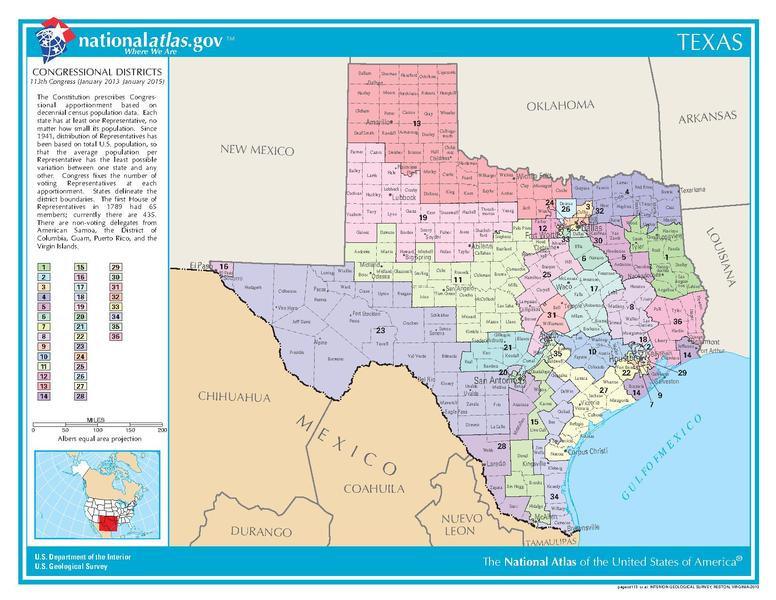
From Wikipedia: United States congressional delegations from Texas
This should help provide background for the story below.
- Click here for the page.
The districts at issue are:
- 10
- 21
- 22
- 23
- 24
- 31
- Click here for the page.
The districts at issue are:
- 10
- 21
- 22
- 23
- 24
- 31
From Roll Call: Democratic polls show competitive House races in Texas
An emerging theme in various media sources.
- Click here for the article.
A handful of Republican-held House seats in the Texas suburbs represent fertile ground for competitive races in 2020, according to recent Democratic polling.
The surveys in six GOP districts, shared first with CQ Roll Call, are a sign that Democratic outside groups are willing to spend resources in the Lone Star State, where party leaders believe they can make gains next year. The polls were commissioned by House Majority Forward, the nonprofit arm of House Majority PAC, a super PAC tied to the chamber’s Democratic leadership.
Three of the districts surveyed have GOP incumbents running for reelection, including Reps. Michael McCaul in the 10th District, Chip Roy in the 21st and John Carter in the 31st. Polls were also conducted in three open-seat races in the 22nd, 23rd and 24th districts. Republicans won all six seats in 2018, all by margins of 5 points or less.
The surveys, conducted by Public Policy Polling, tested a generic Democrat against a generic Republican in each of the districts.
Respondents backed a generic Republican candidate over a Democratic one in four of the six races. In the 10th, 21st and 22nd districts, 49 percent supported a GOP candidate, compared to 46, 44 and 45 percent respectively for a Democrat. Fifty-one percent backed a Republican in the 31st District, compared to 44 percent for a Democrat.
For 2305 students, this fits with the chapters on public opinion, the media, parties, interest groups, elections, and Congress.
Relevant terminology:
- polling
- party leaders
- House Majority Forward
- House Majority PAC
- super PAC
- incumbents
- open seats
- Public Policy Polling
- generic candidates
- margin of error
- demographics
- suburbs
- DCCC
- job approval
Thursday, September 26, 2019
Wednesday, September 25, 2019
From Lawfare: How Companies Can Help Make Police Facial Recognition Systems More Transparent
For 2305, the next big issue in search and seizures.
- Click here for the article.
As facial recognition becomes an increasingly common law enforcement tool, the risks it can pose are becoming increasingly clear. Recently, police in Hong Kong are weaponizing the technology to identify protesters, who are using everything from face masks to laser pointers to try to avoid government retaliation for taking to the streets.
It may seem implausible that police in America would use facial recognition to identify and target protesters—but this has actually already happened. Several years ago, Baltimore police used a social media monitoring company, Geofeedia, to scan social media photos of people at a constitutionally protected protest of the death of Freddie Gray in police custody. Police used this information to find out if any protesters had outstanding warrants, and, according to the Baltimore Sun, arrested them “directly from the crowd.” Social media companies responded to this news by cutting off Geofeedia’s ability to scrape their photo data.
To the best of the public’s knowledge, law enforcement agencies have not tried to harness social media and online photo databases for facial recognition since the Geofeedia incident. But both technology companies and civil liberties advocates need to prepare for this possibility. Major companies that maintain personal photos through photo storing and sharing services—such as Facebook, Google, Apple, Amazon, Dropbox and Yahoo—should consider adding information on facial recognition to their annual transparency reports detailing many of their interactions with the government, including how the companies responded to government demands to turn over content.
Companies should also alert the public if the government issues orders to access these photo databases to conduct facial recognition scans. Given many companies’ proactive attitudes toward increasing transparency about government surveillance demands, publishing information on facial recognition would meaningfully expand their work to protect and better inform users.
The rapidly growing use of facial recognition makes it all the more important for companies to take such a step now: Already, at least one in four police departments possesses the capability to use facial recognition surveillance, and the FBI conducts an average of 4,000 facial recognition searches every month.
- Geofeedia.
From Lawfare: The Impeachable Offense
"Other high Crimes and Misdemeanors"
This is the third, catchall phrase in the formula designating impeachable offenses. The reader will hardly need to be told that it must generate, and has generated, great difficulties of interpretation. Some definite things can be said about its extent, but we will be left with an area of considerable vagueness. Let us take the definite things first.
It would be well to start with the one and only discussion of the phrase at the 1787 Constitutional Convention. The day was September 8, 1787, just nine days before the Constitution was signed and transmitted for the adherence of the states. The impeachment provision, as reported out by the last of the convention committees (except the final one charged only with polishing the style of the Constitution), listed "treason and bribery" as the only grounds for impeachment and removal. The colloquy we need to look at was brief, taking perhaps five minutes:
The clause referring to the Senate, the trial of impeachments agst. the President, for Treason & bribery, was taken up.
Col. Mason. Why is the provision restrained to Treason & bribery only? Treason as defined in the Constitution will not reach many great and dangerous offences. Hastings is not guilty of Treason. Attempts to subvert the Constitution may not be Treason as above defined— As bills of attainder which have saved the British Constitution are forbidden, it is the more necessary to extend: the power of impeachments. He movd. to add after "bribery" "or maladministration". Mr. Gerry seconded him—
Mr Madison So vague a term will be equivalent to a tenure during pleasure of the Senate.
Mr Govr Morris, it will not be put in force & can do no harm— An election of every four years will prevent maladministration.
Col. Mason withdrew "maladministration" & substitutes "other high crimes & misdemeanors"
On the question thus altered
From the Texas Tribune: New Texas prison program aims to help women leave the system with jobs waiting for them
For 2306, a look at the evolving nature of criminal justice in Texas.
- Click here for the article.
More than 12,000 women were incarcerated in Texas prison facilities as of August 2018, and nearly 11,000 were released from state custody in the preceding year, according to TDCJ. Texas has a relatively low recidivism rate compared with other states, with about 20% of those leaving state prisons being reincarcerated within three years. That number is 15% for women. (More than 40% are rearrested within the same time frame.)
But the increasing number of women in a male-dominated prison system has raised criticism over a lack of opportunities at women’s prisons. This year, state lawmakers passed multiple bills to improve gender-specific services, including a measure requiring the agency to adopt more educational, vocational and reentry programs geared toward women.
With the creation of STRIVE, an acronym for Strength Through Restoration, Independence, Vision and Empowerment, prison officials said they chose women they determined would have a higher risk of ending up back in prison without additional support. It’s free for the women, and officials said the agency hired a couple of new employees, though it’s mostly run with existing staff and equipment. As the program grows — the agency aims to double it by the end of the year — officials said women in state prisons will be eligible if they aren’t in high-security custody or other treatment programs.
From Texas Monthly: Is John Cornyn Vulnerable? For many years, taking on the senior Texas senator seemed like a fool’s errand. But in 2020, Cornyn looks less than invincible.
For both 2305 and 2306.
- Click here for the article.
. . . to most people—including many Texas Democrats—Cornyn’s run for reelection in 2020 seemed like just another sure thing, one last ride before the 67-year-old hung up his spurs and started raking it in as a lobbyist or a rainmaker for some big-deal law firm. Cornyn is certainly still the favorite at this point in the race, but in the last few months, his invincibility has come to look, well, less sure. In fact, a few things have happened that might be responsible for turning fat-cat Republicans into fraidy-cat Republicans.
The first shock came with Beto O’Rourke’s surprisingly narrow loss to Cruz in 2016. And then the polls started rolling in. In February, a Quinnipiac poll showed that voters actually liked Cruz better than Cornyn—51 to 43 percent. This September, another Quinnipiac survey showed that 23 percent of Texas voters said they would definitely consider voting for Cornyn, while 35 percent said they definitely would not. Thirty percent were leaning toward supporting him, while 13 percent were still undecided. You could almost hear the huhs among ambitious Democrats.
Unlike Cruz, Cornyn has a squishy base. Cornyn started out as a Bush Republican, but as time passed and politics changed, he tacked right and then further right like virtually all Texas Republicans. But perhaps Cornyn wasn’t convincing enough as he shifted: Despite his Trumpian voting record, he’s drawn a tea party opponent in the primary. State senator Pat Fallon, of Prosper, is hitting Cornyn in the same way some of the Democratic presidential candidates are attacking front-runner Joe Biden: “What would happen in Texas if we can finally have a candidate—a new one—that energized the right?” Fallon said in a speech on September 9, before announcing he was exploring a run. “That gave everybody in this room something to believe in.”
Fallon is probably not much of a threat, but Cornyn’s fealty to President Trump, which probably looked like a good idea early on, might create other problems for Half of all Texans are not fans of the president, according to most polling. If you are a Republican, maybe you are okay with the border wall, but perhaps those family separations make it hard to sleep at night. Maybe you’re worried about labor shortages that Trump’s anti-immigration policies could create in your business. And what about the trade policies that threaten to cut into profits generated in ports from Laredo to Houston?
From Wikipedia: September 2019 Israeli legislative election
A look at an election run by proportional representation.
- Click here for it.
Snap legislative elections were held in Israel on 17 September 2019 to elect the 120 members of the twenty-second Knesset. Following the previous elections in April, incumbent Prime Minister Benjamin Netanyahu failed to form a governing coalition, the first such failure in Israeli history.[1] On 30 May, the Knesset voted to dissolve itself and trigger new elections, in order to prevent Blue and White party leader Benny Gantz from being appointed Prime Minister-designate.[2] This election was the first time that the Knesset voted to dissolve itself before a government had been formed.
For more: Knesset.
From Vox: The sudden Democratic shift in favor of impeaching Trump, explained
Things are about to get interesting.
- Click here for the article.
All of a sudden, President Donald Trump’s impeachment is looking likelier than ever.
Grappling with the latest revelations that Trump tried to pressure the president of Ukraine to investigate Joe Biden’s family, more and more House Democrats are concluding that Trump abused his powers of office — and that it’s time, at long last, for an unambiguous impeachment inquiry.
Their number includes Speaker Nancy Pelosi, who announced Tuesday afternoon that “the House of Representatives is moving forward with an official impeachment inquiry.”
See also: Impeaching the president, explained.
From the Austin American Statesman: State ethics agency rebukes Travis County judge
For 2306.
- Click here for the article.
County Court-at-Law Judge John Lipscombe’s actions, which included draping black fabric over his courtroom doors, “cast public discredit on the judiciary” and was inconsistent with the proper performance of his duties, the State Commission on Judicial Conduct concluded.
“Judge Lipscombe’s decision to publicly protest Justice Kavanaugh’s confirmation in this manner was influenced by partisan interests” in violation of the state’s ethics code for judges, according to a public admonition that was signed Aug. 8 and made public Thursday.
The agency, which investigates complaints against judges at all levels, said news stories about the one-day closing of Court-at-Law No. 3 resulted in five complaints.
A message left Thursday afternoon at Lipscombe’s court was not returned.
According to the public admonition, the agency’s lowest level of rebuke behind a reprimand and a warning, Lipscombe said he became concerned after watching the contentious confirmation process for Kavanaugh.
“I became more and more disgusted and concerned for the future of the Supreme Court ... not because he comes from a political party different from mine, but because of his character and conduct,” Lipscombe told the Commission on Judicial Conduct, according to the admonition.
Lipscombe, a Democratic judge since 2011, said he believed Kavanaugh’s conduct during his confirmation hearing, when he angrily sparred with Democrats on the Senate Judiciary Committee, besmirched the Supreme Court’s reputation.
“I had a personal obligation to show my disapproval and demonstrate my utmost respect for the judiciary,” Lipscombe said, according to the commission.
On Oct. 8, 2018, two days after Kavanaugh was confirmed, Lipscombe said he closed his court, which had 107 matters on its docket with 69 defendants scheduled to appear, and contacted the president of the Austin Criminal Defense Lawyers Association to ask for word of the closing to be spread among attorneys.
- Click here for the article.
A state ethics agency has rebuked a Travis County judge who closed his courtroom last year to protest the U.S. Senate confirmation of Brett Kavanaugh, President Donald Trump’s nominee to the U.S. Supreme Court.
County Court-at-Law Judge John Lipscombe’s actions, which included draping black fabric over his courtroom doors, “cast public discredit on the judiciary” and was inconsistent with the proper performance of his duties, the State Commission on Judicial Conduct concluded.
“Judge Lipscombe’s decision to publicly protest Justice Kavanaugh’s confirmation in this manner was influenced by partisan interests” in violation of the state’s ethics code for judges, according to a public admonition that was signed Aug. 8 and made public Thursday.
The agency, which investigates complaints against judges at all levels, said news stories about the one-day closing of Court-at-Law No. 3 resulted in five complaints.
A message left Thursday afternoon at Lipscombe’s court was not returned.
According to the public admonition, the agency’s lowest level of rebuke behind a reprimand and a warning, Lipscombe said he became concerned after watching the contentious confirmation process for Kavanaugh.
“I became more and more disgusted and concerned for the future of the Supreme Court ... not because he comes from a political party different from mine, but because of his character and conduct,” Lipscombe told the Commission on Judicial Conduct, according to the admonition.
Lipscombe, a Democratic judge since 2011, said he believed Kavanaugh’s conduct during his confirmation hearing, when he angrily sparred with Democrats on the Senate Judiciary Committee, besmirched the Supreme Court’s reputation.
“I had a personal obligation to show my disapproval and demonstrate my utmost respect for the judiciary,” Lipscombe said, according to the commission.
On Oct. 8, 2018, two days after Kavanaugh was confirmed, Lipscombe said he closed his court, which had 107 matters on its docket with 69 defendants scheduled to appear, and contacted the president of the Austin Criminal Defense Lawyers Association to ask for word of the closing to be spread among attorneys.
Great Stink
A fun - if a bit gross - look at the development of London's sewage system. An underappreciated part of local government.
Monday, September 23, 2019
Thursday, September 19, 2019
Viewed in class today
- Definition: zeal.
- Definition: impulse.
- Separate Car Act.
- Plessy v Ferguson.
- Presidential election results.
- Scott v Sanford.
- police power.
- Fisher v UT.
- Loving v Virginia.
- Craig v Boren.
- Dyer Anti-Lynching Bill.
- Guadalupe-Blanco River Authority
- Pure Food and Drug Act.
- Controlled Substances Act.
From 538: Just How Many Swing Voters Are There?
For our upcoming look at voting.
- Click here for the article.
It’s a long time until the 2020 general election, but there’s a good chance it will be competitive. After all, we live in a politically polarized era where most presidential elections are decided by relatively narrow margins (since 1988, in the single digits). Which means if the margins are as slim as they were in 2016, the race could come down to swing voters, or voters that tend to switch their support between the two major parties from year to year.
So we were curious: Just how many swing voters are there? A number of researchers have tried to tackle this question, and it turns out, there’s a pretty big range of answers.
That’s because defining who is and isn’t a swing voter isn’t easy, as it’s a small group. But estimates I previously made based on a couple of data sets suggest that there were around 10 million voters who shifted from voting for one major party in 2012 to the other in 2016, which accounted for roughly 7 percent of all votes cast. In the grand scheme of things, that’s not a lot of people, but these voters probably did play a role in helping President Trump get elected because around three-quarters of those voters swung toward him rather than Hillary Clinton.
From 538: How To Win An Election
FYI
- Click here for the article.

The article compiles polling info about things most people agree with:
98 percent believe adults should watch swimmers rather than reading or talking on the phone. (American Red Cross Water Safety Poll, 2013)
99 percent think it’s wrong for employees to steal expensive equipment from their workplace. (NBC News Poll, 1995)
95 percent think it’s wrong to pay someone to do a term paper for you. (NBC News Poll, 1995)
98 percent would like to see a decline in hunger in the world. (Harris Survey, 1983)
97 percent would like to see a decline in terrorism and violence. (Harris Survey, 1983)
98% would like to see an end to high unemployment. (Harris Survey, 1982)
95 percent would like to see an end to all wars. (Harris Survey, 1981)
95 percent would like to see a decline in prejudice. (Harris Survey, 1977)
95 percent don’t believe Magic 8 Balls can predict the future. (Shell Poll, 1998)
96 percent think the Olympics are a great sports competition. (Atlanta Journal-Constitution Poll, 1996)
- Click here for the article.
The article compiles polling info about things most people agree with:
98 percent believe adults should watch swimmers rather than reading or talking on the phone. (American Red Cross Water Safety Poll, 2013)
99 percent think it’s wrong for employees to steal expensive equipment from their workplace. (NBC News Poll, 1995)
95 percent think it’s wrong to pay someone to do a term paper for you. (NBC News Poll, 1995)
98 percent would like to see a decline in hunger in the world. (Harris Survey, 1983)
97 percent would like to see a decline in terrorism and violence. (Harris Survey, 1983)
98% would like to see an end to high unemployment. (Harris Survey, 1982)
95 percent would like to see an end to all wars. (Harris Survey, 1981)
95 percent would like to see a decline in prejudice. (Harris Survey, 1977)
95 percent don’t believe Magic 8 Balls can predict the future. (Shell Poll, 1998)
96 percent think the Olympics are a great sports competition. (Atlanta Journal-Constitution Poll, 1996)
From Wikipedia: Wilderness Road
Prior to the Natchez Trace ...
- Click here for the article.
The Wilderness Road served as a great path of commerce for the early settlers in Kentucky, as well as for coffles of slaves being transported through Tennessee to the new plantations in Mississippi and Louisiana. Horses, cattle, sheep and hogs herded in the other direction found waiting markets in the Carolinas, Maryland and Virginia. Hogs in groups of 500 or more were driven down the Road to market. Beef in Eastern markets had become a main source of income for farmers in Kentucky.[21]
A postal road was opened in 1792 from Bean Station, Tennessee through Cumberland Gap to Danville, Kentucky. This was due largely to the efforts of Governor Isaac Shelby of Kentucky. This connection of Kentucky to the East was a great advantage. Frontier settlers considered the postal riders heroes and waited eagerly for their arrival for news from settlements along the trails as well as getting their mail and newspapers
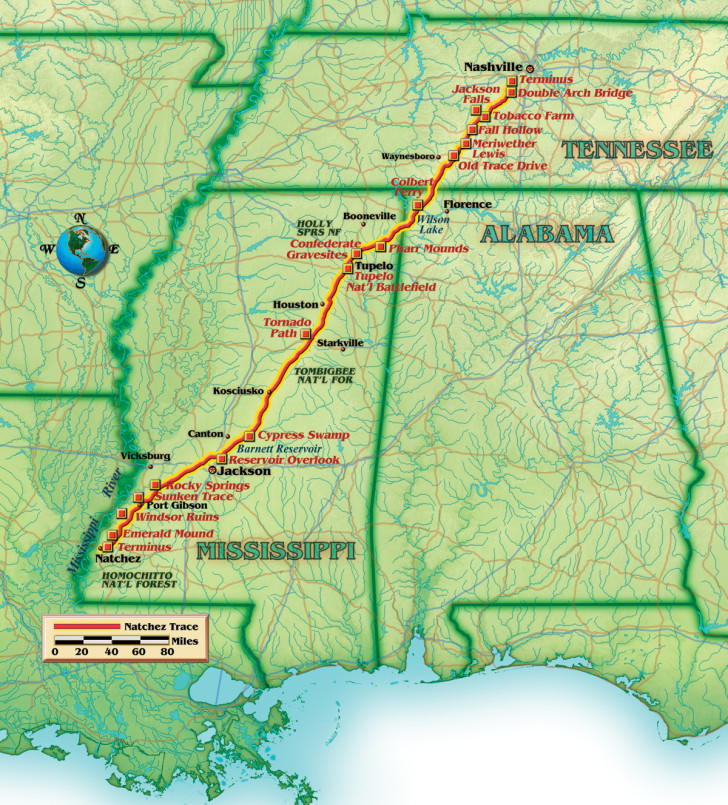
From Wikipedia: Natchez Trace
More on early roads in the US.
- Click here for the article.
Even before the 1803 Louisiana Purchase, President Thomas Jefferson wanted to connect the distant Mississippi frontier to other settled areas of the United States. To foster communication with what was then called the Southwest, he directed construction of a postal road to be built between Daniel Boone's Wilderness Road (the southern branch of the road ended at Nashville) and the Mississippi River.
The U.S. signed treaties with the Chickasaw and Choctaw tribes to maintain peace, as European Americans entered the area in greater numbers. In 1801 the United States Army began trail blazing along the Trace, performing major work to prepare it as a thoroughfare. The work was first done by soldiers reassigned from Tennessee and later by civilian contractors. To emphasize American sovereignty in the area, Jefferson called it the "Columbian Highway." The people who used it, however, dubbed the road as "The Devil's Backbone" due to its remoteness, rough conditions, and the frequently encountered highwaymen found along the new road.
By 1809, the trail was fully navigable by wagon, with the northward journey taking two to three weeks. Critical to the success of the Trace as a trade route was the development of inns and trading posts, referred to at the time as "stands."
- Click here for the article.
Even before the 1803 Louisiana Purchase, President Thomas Jefferson wanted to connect the distant Mississippi frontier to other settled areas of the United States. To foster communication with what was then called the Southwest, he directed construction of a postal road to be built between Daniel Boone's Wilderness Road (the southern branch of the road ended at Nashville) and the Mississippi River.
The U.S. signed treaties with the Chickasaw and Choctaw tribes to maintain peace, as European Americans entered the area in greater numbers. In 1801 the United States Army began trail blazing along the Trace, performing major work to prepare it as a thoroughfare. The work was first done by soldiers reassigned from Tennessee and later by civilian contractors. To emphasize American sovereignty in the area, Jefferson called it the "Columbian Highway." The people who used it, however, dubbed the road as "The Devil's Backbone" due to its remoteness, rough conditions, and the frequently encountered highwaymen found along the new road.
By 1809, the trail was fully navigable by wagon, with the northward journey taking two to three weeks. Critical to the success of the Trace as a trade route was the development of inns and trading posts, referred to at the time as "stands."
Tuesday, September 17, 2019
Monday, September 16, 2019

Texas Tribune: Federal judge orders Galveston County to have defense lawyers at bail-setting hearings
For our look at federalism, due process, equal protection, etc....
- Click here for the article.
Add Galveston to the list of Texas counties that have been court ordered to change their bail practices.
A federal district judge on Wednesday issued a temporary injunction in a 2018 lawsuit where attorneys for inmates have called Galveston County’s money bail system discriminatory against poor criminal defendants. The court’s order doesn’t target the entire pretrial system — which has largely changed since the suit was filed after federal rulings against Harris County. But it requires poor arrestees to have a lawyer at their first court appearance, where their bail is set to determine the monetary or other conditions under which an arrestee can be released from jail before trial.
The ACLU of Texas, which represents Galveston County inmates in the lawsuit, said in a statement after the order that it was the first court in the country to conclude that the Sixth Amendment, which guarantees a right to counsel, requires defense attorneys to be provided at initial bail-setting hearings.
“It’s a matter of basic fairness that you should get a lawyer before a judge decides whether to lock you in jail,” said Trisha Trigilio, senior staff attorney for the ACLU of Texas. “Unsurprisingly, without lawyers to advocate for their release, many people wind up in jail who shouldn’t be there. And even a short time in jail can have devastating repercussions on someone’s life.”
From the Texas Tribune: Texas wasn’t a battleground state until young people made it one
For 2305 and 2306
- Click here for the article.
When I was born in 1996, George W. Bush was already a year into his first term as governor of Texas. In my lifetime, Texas politics has been entirely dominated by conservative giants who governed with unchecked power, while progressives seemed to lose more and more ground. I have never known a Texas that sounded more like Ann Richards and Barbara Jordan than it did like Fox News and Karl Rove.
Few national campaigns, funders or candidates bothered to show up here, underscoring their preconceived notion that Texas was never in play to begin with. As a result, the infrastructure necessary to register and turn out voters has consistently lagged behind heavily courted states like Iowa, New Hampshire and Virginia.
But for the first time in decades, Texas politics are changing.
The Democratic Party’s decision to host this week’s presidential debate in Houston is the latest indicator of what so many of us have been saying for years: Texas is the largest battleground state in the country. But the part too often glossed over is that the Lone Star State is only in play because of young voters.
In Texas, 43% of us are under the age of 30, and 63% are people of color. Our state is getting younger and more diverse every day and in 2018, those young folks showed up to flex their electoral power. Youth turnout tripled in Texas between 2014 and 2018, a surge that helped flip 12 seats in the Texas House of Representatives, two in the Senate, and brought Democrat Beto O’Rourke within striking distance of Republican U.S. Sen. Ted Cruz. When young people showed up to vote, the conversation about Texas started to change.
But showing up has never been inevitable. Texas has some of the strictest voting laws in the country, laws that disproportionately block access to the ballot box for young people and people of color. That’s why groups like MOVE Texas, Texas Rising, JOLT Action and Battleground Texas invest so heavily in civic education, voter registration and voter turnout programs that empower young Texans vote — many for the first time. But we are not just turning folks out to vote for one election; we are creating a habit of civic participation that will create life-long voters and fundamentally change who decides elections in this state.
From the Houston Chronicle: Effort to lift age for buying tobacco to 21 faces court challenge
age discrimination?
- Click here for the article.
San Antonio is one more than 280 cities and counties across the nation that have raised the minimum age to purchase tobacco products to 21. At least five states have similar laws.
The San Antonio City Council, in a 9-2 vote, passed the ordinance in January. It went into effect Oct. 1, but the city gave retailers a three-month grace period to comply. The city will begin enforcing the law next week, when inspectors and underage decoys will conduct begin random visits to stores to ensure they are complying.
Stores that violate the ordinance face fines of up to $500, while young adults caught purchasing, using or possessing tobacco face no penalties.
That disparate treatment is the basis of the challenge brought by convenience store owners, who argue the ordinance unfairly singles them out. The lawsuit, brought by the trade groups Association of Convenience Store Retailers, South Texas Merchants Association Cooperative and Texas Food and Fuel Association, asks the court to declare the ordinance “unconstitutional and void” because their “members were deprived equal protection” under federal and state laws.
“Without any enforcement provision for the (purchase, use and possession) of tobacco products by persons aged 18 to 20, (the ordinance) is clearly biased against one class for the benefit of another,” the lawsuit said.
Among those who oppose the ordinance is Anwar Tahir, owner of an independent West Side convenience store and president of the Association of Convenience Store Retailers in San Antonio. Tahir projects his store would lose as much as 4 percent of its profit because of the law.
“This is an unequal thing. They are penalizing the retailer only,” Tahir said. “It’s unfair. You cannot penalize one party and on the consumer side there is no law enforcement. We are saving their life, but we are not enforcing the law on them.”
Viewed in class today
- Judge temporarily blocks plans to drain four Texas lakes and accompanying dams.
- Hear how this Texas school district found itself at risk of returning to a segregated past.
- Analysis: Texas redistricting is hard enough when politicians trust the mapmakers.
- Griswold v. Connecticut.
- Lemon v. Kurtzman.
- Title VII of the Civil Rights Act of 1964.
- Texas just raised the smoking age to 21. Who is exempt and what are the penalties?
- Abbot says he has sued the Obama administration 25 times.
Friday, September 13, 2019
Thomas Nast
More on the media personalities that highlighted the five points - specifically the political corruption that underlay it.
- Wikipedia.

- more on Tammany Hall here.
- Wikipedia.
- more on Tammany Hall here.
How the Other Half Lives
An example of the media - especially the increased use of cameras - as an agenda setter. This book highlighted living conditions in the five points.
- Wikipedia
- Jacob Riis.

- Wikipedia
- Jacob Riis.
From Wikipedia: Conscription in the United States
This stems from the discussion of the draft riots in the video in the five points area below.
- Click here for it.
The constitutionality of the draft was the subject of Arver v US. As mentioned in 2305, the draft is an implied, not enumerated power.
- Click here for it.
The constitutionality of the draft was the subject of Arver v US. As mentioned in 2305, the draft is an implied, not enumerated power.
Uncovering the Real Gangs of New York SD
A look at how the rise of gangs led to the professionalization of police and fire departments in NYC.
The story also highlights the role the media plays in exposing corruption.
The story also highlights the role the media plays in exposing corruption.
Wednesday, September 11, 2019
Web sites visited today
- Rideshare Drivers United.
- Colorado Amendment 64.
- Health Care Rankings.
- Reynolds v. Sims.
- Health Insurance Coverage in the United States: 2018.
- xkcd.
- Harrison Keller will be Texas' next higher education commissioner.
- fuct.
- Armed Career Criminal Act.
- Freedom of movement under United States law.
- TCEQ.
- Colorado Amendment 64.
- Health Care Rankings.
- Reynolds v. Sims.
- Health Insurance Coverage in the United States: 2018.
- xkcd.
- Harrison Keller will be Texas' next higher education commissioner.
- fuct.
- Armed Career Criminal Act.
- Freedom of movement under United States law.
- TCEQ.


From Vox: The cracks in the GOP’s gerrymandering firewall
For both 2305 and 2306.
- Click here for the article.
Nearly a decade ago, Republicans swept into office in state legislatures and in the House of Representatives, and went about remaking American politics — despite a Democrat in the White House. Almost immediately after the GOP captured several pivotal state governments in 2010, they began a frenzy of gerrymandering that seemed to guarantee Republican majorities for the rest of the decade.
But as we approach the 2020 elections, it appears that cracks are finally showing in the GOP’s gerrymandering wall.
Last week, for example, a panel of three North Carolina judges struck down state legislative maps that, in the words of that court, were “carefully crafted” to ensure that “in all but the most unusual election scenarios, the Republican party will control a majority of both chambers of the General Assembly.”
Under the gerrymandered maps, Republican state Senate candidates “won a minority— 49.5%—of the two-party statewide vote, but still won 29 of 50 seats (58%).” GOP state House candidates “won a minority—48.8%— of the two-party statewide vote, but still won 65 of 120 seats (54%).”
The panel was, in its own words, made up of judges with “differing ideological and political outlooks.” Yet all three agreed that the maps must fall. The state legislature has until September 18 to “enact Remedial Maps for the House and Senate legislative districts for the 2020 election ... in conformity with this Order.” Republicans do not plan to appeal the decision in the case, Common Cause v. Lewis, so the 2020 election will likely be the first in nearly a decade where Democrats have a fighting chance to take control of the state legislature in North Carolina.
Common Cause is just the latest in a series of court decisions and ballot initiatives that either undercut Republican gerrymanders or that seek to prevent either party from drawing similarly gerrymandered maps in the future. Court decisions in Florida, Pennsylvania, and Virginia have weakened Republican gerrymanders, while ballot initiatives in Michigan and Ohio seek to prevent either party from gerrymandering those states ever again.
From Oyez: 2019-2020 Term
A look at some cases that will be argued before the U.S. Supreme Court during their upcoming term.
- Click here for the list.
- Click here for the list.
From Vox: California just passed a landmark law to regulate Uber and Lyft
For 2306 - an example of policy diffusion and federalism.
- Click here for the article.
California just disrupted the gig economy.
Senate lawmakers passed a controversial bill, known as AB 5, on Tuesday evening, after months of uproar from businesses and gig companies like Uber and Lyft. The bill will require businesses to hire workers as employees, not independent contractors, with some exceptions. That will give hundreds of thousands of California workers basic labor rights for the first time.
And despite an aggressive lobbying campaign, Uber and Lyft are not exempt.
Lawmakers voted 29-11 in favor of AB 5, and now the bill heads back to the state assembly for lawmakers to vote on amendments to the bill. Then it heads to Gov. Gavin Newsom for his signature. He has signaled that he will sign it.
“This is a victory to savor,” tweeted Nicole Moore, an Uber driver and organizer with Rideshare Drivers United.
The new law will crack down on a business model championed and cherished by Silicon Valley — a striking turn of events for the celebrated tech industry. Uber, Lyft, and other app-based gig companies rely on hundreds of thousands of independent contractors to give rides, deliver food, and complete other tasks.
Reclassifying them as employees would change everything.
Gig workers would get labor protections and benefits that all employees get, such as unemployment insurance, health care subsidies, paid parental leave, overtime pay, workers’ compensation, paid rest breaks, and a guaranteed $12 minimum hourly wage. And, perhaps more importantly, they could unionize.
Friday, September 6, 2019
From the US News and World Report: A Quest to Make Every Vote Count - Lawrence Lessig says the current electoral system is unconstitutional – and he’s suing to change it.
This is the subject of next week's 2305 written assignment.
- Click here for the article.
IT'S A FACT THAT DRIVES liberals crazy, and has become a preoccupation for President Donald Trump: Hillary Clinton, the Democrats' choice, crushed Trump at the ballot box, winning the popular vote by a margin of roughly 3 million, but Trump cruised to a win in the Electoral College, sweeping up 304 of 538 votes.
It was the second time in recent history that the winning presidential candidate, a Republican, took office even though more people voted for the Democrat. It's also a system Harvard law professor Lawrence Lessig believes is a Constitutional offense – and practically guarantees another popular-vote loser will again become commander-in-chief in the very near future.
Every four years, the presidential election "focuses on 14 [swing] states, to the total exclusion of the rest of the country," says Lessig, who ran an under-the-radar campaign for president as an independent in 2016. "Those 14 states are not representative of America. They're older, whiter and their industries" like mining and farming "are representative of 19th-century industries."
That's why his organization, Equal Citizens, launched a project called Equal Votes to sue in four states last week, arguing that the winner-take-all electoral-college system violates the Constitution's equal-protection clause and undermines the democratic principle of fair representation.
- For more, click here.
From the Texas Tribune: Gov. Greg Abbott issues eight executive orders aimed at stopping potential mass shooters
This is the subject of next week's 2306 written assignment.
- Click here for the article.
Gov. Greg Abbott issued eight executive orders Thursday in response to last month’s mass shootings in El Paso and Odessa.
“Texas must achieve several objectives to better protect our communities and our residents from mass shootings,” Abbott said in a statement. “I will continue to work expeditiously with the legislature on laws to keep guns out of the hands of dangerous criminals, while safeguarding the 2nd Amendment rights of law-abiding Texans.”
The orders focus largely on strengthening law enforcement’s ability to respond to and prevent future shootings, mainly through improving reporting channels and closing "information gaps" when members of the public or law enforcement agencies worry that a person might be a threat to commit violence. But, Abbott's office added in a news release, "legislative solutions are still needed."
The governor also plans to release a report of recommendations next week from meetings of the Texas Safety Commission, which Abbott formed after the El Paso shooting.
For the Texas Tribune: Three Texas House special elections draw 27 candidates
For 2306 specifically, but it fits within the overall topic of elections in both classes.
- Click here for the article.
Twenty-seven candidates have filed for a trio of Nov. 5 special elections to fill state House seats, including one that Democrats are aiming to flip, according to the secretary of state's office.
The filing deadline was 5 p.m. Wednesday.
The most closely watched contest will be in House District 28, where Rep. John Zerwas is stepping down at the end of the month to join the University of Texas System. The Richmond Republican won reelection last year by 8 percentage points, and Democrats were already targeting HD-28 as they push to capture the House majority next year.
Democrats in HD-28 have coalesced around Elizabeth "Eliz" Markowitz, who was the only Democrat to file. Markowitz, a Katy teacher, unsuccessfully ran last year for State Board of Education District 7, which overlaps with HD-28.
Six Republicans, meanwhile, filed for the seat, making it likely that there will be a runoff featuring one of them and Markowitz, who will not have to split the Democratic vote. The GOP contenders are:
- Anna Allred, a Houston anesthesiologist from the same doctor group as Zerwas
- Gary Gates, a Rosenberg businessman who has unsuccessfully run for several other offices, most recently railroad commissioner in 2016
- Gary J. Hale, a Katy business owner who has his own intelligence firm and is a retired intelligence official with the Drug Enforcement Administration
- Tricia Krenek, a Katy attorney and former member of the Fulshear City Council
- Sarah Laningham, a Richmond woman who works in sales and unsuccessfully ran for House District 14 in 2018
- Clinton D. Purnell, a Katy man who works in logistics and customs compliance
The other two special elections are happening in safely Democratic districts, though they too have drawn large fields that all but guarantee runoffs. In House District 148, 15 candidates — 12 Democrats, two Republicans and one independent — filed to succeed Houston Democratic Rep. Jessica Farrar, who like Zerwas, is leaving the House on Sept. 30. In House District 100, five Democrats have lined up to replace former Rep. Eric Johnson, D-Dallas, who vacated the seat earlier this year after winning the Dallas mayoral race.
Just so we know, here is the constitutional language establishing how vacancies in the legislature are filled:
(Article 3,) Sec. 13. VACANCY IN LEGISLATURE. (a) When vacancies occur in either House, the Governor, or the person exercising the power of the Governor, shall issue writs of election to fill such vacancies; and should the Governor fail to issue a writ of election to fill any such vacancy within twenty days after it occurs, the returning officer of the district in which such vacancy may have happened, shall be authorized to order an election for that purpose.
(b) The legislature may provide by general law for the filling of a vacancy in the legislature without an election if only one person qualifies and declares a candidacy in an election to fill the vacancy.
(Amended Nov. 6, 2001.)
The amendment in question added section b.
Proposition 9: Canceling special election if legislative candidate is unopposed
FOR 557,707 67.6%
AGAINST 267,724 32.4%
For analysis of the amendment, click here.
Here is the statutory language related to special elections.
Wednesday, September 4, 2019
The 2019 city of Houston elections
- City of Houston homepage: November 5, 2019 General Election.
- Ballotpedia: City elections in Houston, Texas.
- Ballotpedia: Mayoral election in Houston, Texas.
- Ballotpedia: City elections in Houston, Texas.
- Ballotpedia: Mayoral election in Houston, Texas.
Tuesday, September 3, 2019
From the Texas Tribune: Analysis: After botching one shot at peace, the Texas GOP establishment tries again
For 2306 - A look at both the Texas Legislature and political parties, in addition to interest groups and law enforcement.
- Click here for the article.
Gov. Greg Abbott’s Thursday morning endorsement of state Rep. Dustin Burrows of Lubbock is a signal that the Republican establishment in Texas is trying to close ranks in advance of the 2020 elections.
Burrows and House Speaker Dennis Bonnen met in June with a Republican activistwho has since accused them of offering long-sought media passes to the House floor in return for help defeating 10 Republican House incumbents.
Bonnen has denied that allegation from Michael Quinn Sullivan, who heads a group called Empower Texans, a platform from which he regularly goads the state’s elected Republicans as insufficiently conservative.
For more:
- Texas House Republican Caucus.
- Dustin Burrows resigns as Texas House GOP Caucus chairman amid allegations of targeting Republicans.
- The Speaker and the Creeper: Everything You Need to Know About the Craziest Texas Political Scandal in Years.
- Analysis: Dennis Bonnen, Michael Quinn Sullivan and the Texas political roller coaster.
From the Texas Tribune: Analysis: Dumping Texas voters’ favorite shortcut might hurt down-ballot candidates — and Democrats
For both 2305 and 2306.
- Click here for the article.
The state’s decision to kill straight-ticket voting could cut turnout in down-ballot races in the 2020 elections — even if more voters show up to the polls.
Sure, those additional voters will cast ballots for president and U.S. Senate. But voter interest and knowledge gets thinner and thinner as the ballots go on and on.
Without straight-ticket voting — where voters register support for all of their parties’ candidates with a single vote — down-ballot candidates will have to win with the support of the relatively few voters who make it past the marquee contests.
- Straight ticket voting.
- Down ballot races.
- Roll off, or undervote.
Example: 2018 Texas General Election.
Friday, August 30, 2019
The 116th Congress
For 2305, a few links for background:
- Wikipedia: 116th United States Congress.
- Ballotpedia: 116th United States Congress.
- Congress.gov: congressional activity.
- C-Span: Members of the 116th Congress.
- Wikipedia: 116th United States Congress.
- Ballotpedia: 116th United States Congress.
- Congress.gov: congressional activity.
- C-Span: Members of the 116th Congress.
The Hartford Convention
In 1814 the Federalists once again tried to change the constitution, though not as radically as they were able to do in 1787. It was an attempt to roll back some of the policies of the Democrat- Republicans, This attempt failed, and ultimately led to the end of the Federalist Party.
- click here for the Wikipedia article on the convention.
Here's a list of their proposals:
- Prohibiting any trade embargo lasting over 60 days;
- Requiring a two-thirds Congressional majority for declaration of offensive war, admission of a new state, or interdiction of foreign commerce;
- Removing the three-fifths representation advantage of the South;
- Limiting future presidents to one term;
- Requiring each president to be from a different state than his predecessor. (This provision was aimed directly at the dominance of Virginia in the presidency since 1800.)
From Vox: Here are the states that treat workers the best — and the worst
For our look at federalism - state control of policy - in both 2305 and 2306.
- click here for the article.

- OxFam: BEST AND WORST STATES TO WORK IN AMERICA 2019
- click here for the article.
- OxFam: BEST AND WORST STATES TO WORK IN AMERICA 2019
Elections in Israel 2015
A great example of proportional representation.
The electoral system most commonly used in western democracies.
Proposed amendments to the Texas Constitution that didn't pass the legislature
Texas Disaster Reinvestment Board Bonds Amendment (2019)
Texas Generate Reoccurring Oil Wealth (GROW) Fund Amendment (2019)
Texas Legacy Fund Amendment (2019)
Texas Mental and Behavioral Health Research Fund Amendment (2019)
Texas Power to Invest and Manage Public Funds Amendment (2019)
Texas Property Tax Exemption for Surviving Spouse of Military Member Amendment (2019)
Texas Property Tax Freeze for Surviving Spouse of Disabled Person Amendment (2019)
Texas Provide for Daylight Saving Time Referendum Amendment (2019)
Texas Year-Round Standard or Daylight Saving Time Measure (2019
Thursday, August 29, 2019
A few links related to amendments to the Texas Constitution
2306 students might find these helpful for your essay.
- Texas 2019 ballot measures.
- Constitutional amendments proposedfor November 2019 ballot.
- Analyses of proposed constitutional amendments.
I'll add more as the semester progresses.
- Texas 2019 ballot measures.
- Constitutional amendments proposedfor November 2019 ballot.
- Analyses of proposed constitutional amendments.
I'll add more as the semester progresses.
Wednesday, August 28, 2019
From thre Texas Tribune: A new Texas law criminalizes sending unwanted nudes. Lawyers say it might be difficult to enforce.
More confusion over new laws passed by the legislature this spring.
- Click here for the article.
A few years ago, Dallas resident and mother Brandy Davis was reentering the online dating scene. After matching with a "seemingly nice" man, the two exchanged phone numbers. Then, one afternoon while Davis was at work, the man sent her an unrequested nude photo of himself.
"I remember thinking, 'If this is going to come unexpected like this, it could come at a time when my son has my phone,'" Davis testified during a May Senate hearing. "I was appalled ... because nobody should be subjected to that."
House Bill 2789, signed by Texas Gov. Greg Abbott in May, aims to put an end to experiences like Davis'. The law goes into effect Sept. 1 and makes the electronic transmission of sexually explicit material a Class C misdemeanor, with a maximum $500 fine, when the recipient hasn't provided consent. The law will make Texas one of the first states to take a stand against sending sexually explicit images, which about 40% of women report receiving without consent.
The law won't apply just to texts, but also to what's sent over other platforms like email, dating apps and social media.
The Eleven Year Tyranny
Comparisons are being made ....
- Click here for the article.
The Eleven Year Tyranny was a period of political unrest in England lasting from 1629 to 1640. This was started because King Charles I thought he did not need Parliament to rule his country. Charles’ problem stemmed from personal hubris; he felt that God had chosen him to lead a nation and that he needed absolutism to rule efficiently. This can be linked to Paradise Lost as Satan felt that he was better than God and that he should rule Heaven.
In 1628, Parliament passed the Petition of Right, which limited the amount that the king can spend. This meant that the King needed the consent from parliament before spending any funds for unusual causes. King Charles I believed that this violated God’s decision to make him the King, and that Parliament was just trying to secure more power for themselves. This distaste for each other continued to fester as the separation between the King and Parliament grew. On March 2, 1629 King Charles I dissolved Parliament, and then had them arrested and labeled as traitors to the crown. With this dismissal he assumed all rights to military action and to make any policies that he wanted to. The advantage for the King for this dismissal was that he now had excess funding to go toward his military, instead of funding Parliament. This gave him an edge in public approval because he increased military support in Germany for the War. To the uneducated commoners of England, this was seen as unforeseen prosperity during war. Conversely, things were actually getting worse because the majority of the King’s decisions were failures. This eventually caused political unrest in England.
For more:
- Personal Rule.
- Prorogation.
From Vox: Boris Johnson just suspended Parliament over Brexit. Here’s what’s going on.
This cannot happen under our Constitutional system.
- Click here for the article.
Who had “proroguing Parliament” on their Brexit bingo card?
On Wednesday, British Prime Minister Boris Johnson asked Queen Elizabeth II to suspend — otherwise known as “prorogue” — Parliament until October 14, in what very much looked like an attempt to prevent members of Parliament (MPs) from blocking a no-deal Brexit before the October 31 deadline.
The queen has approved Johnson’s request, which was mostly a formality anyway. (There was practically no chance that the queen, who stays above the political fray, would deny Johnson’s request, though technically she could have.) Now Parliament will be suspended for five weeks, from September 9 at the earliest, or September 12 at the latest, until October 14.
Here’s what this means in practice: Members of Parliament will now have a very narrow window to a) debate, scrutinize, and pass a Brexit deal if there’s one on offer; or b) stop the UK from exiting the European Union without an agreement in place on October 31.
Leaving the EU without a deal is something Johnson has said he’s willing and ready to do, but MPs largely oppose that route because of the potential economic fallout.
Johnson has denied that putting Parliament on a five-week break as the United Kingdom is in the middle of a national crisis over Brexit has anything to do with the national crisis over Brexit. In a letter to lawmakers, the prime minister said this legislative session had to end, as it’s one of the longest in history.
“I therefore intend to bring forward a new bold and ambitious domestic legislative agenda for the renewal of our country after Brexit,” Johnson wrote. “There will be a significant Brexit legislative programme to get through but that should be no excuse for a lack of ambition!”
Not many MPs are buying Johnson’s excuse. Some are accusing him of flinging the UK into a constitutional crisis.
Monday, August 26, 2019
From the Texas Monthly: Here’s What Texas DAs Think of the New Hemp Law that Effectively Decriminalized Pot
For 2306:
- Click here for the article.
. . . the five most populous counties—Harris, Dallas, Travis, Tarrant, and Bexar—have announced that they’re dismissing hundreds of charges and will decline to prosecute minor marijuana possession in the future. While the reactions of prosecutors in the big cities have garnered most of the headlines, Texas Monthly reached out to prosecutors for every county in Texas seeking to find out how they plan to cope with this new legal landscape.
Officials with 93 of Texas’s 254 counties responded to inquiries. (Officials from the remaining 161 counties either did not respond or declined to comment.) There was a patchwork of responses to the new law from prosecutors across the state. One clear pattern: Urban counties seem to be more eager to drop misdemeanor pot prosecutions than their rural and suburban counterparts. Nine of the state’s twelve most populous counties—representing nearly 15 million people, or more than half of Texas’s total population—will no longer prosecute low-level marijuana cases, and some have pledged to dismiss pending cases.
Perhaps reluctant to shed a tough-on-crime approach popular among Texas conservatives, some officials in smaller counties were critical of their urban peers dismissing cases. Bill Helwig, DA of Yoakum County, a square patch of West Texas with population 8,500, said the new law likely won’t affect how marijuana cases are prosecuted there. “We’re a very conservative county, and I believe that rural counties may view the situation from a slightly different set of glasses,” he said.
Kendall County DA Nicole Bishop, whose county just north of San Antonio has a population of about 45,000, likewise intends to continue misdemeanor marijuana prosecutions. Her office also will request restitution from any defendants who insist on lab testing, including seeking more severe punishment in plea deals. “I will not act as an unelected legislator by unilaterally deciding what laws I deem worth it to enforce,” she said. “I will not abandon my sworn duty to follow the law.”
Yet the new law could disproportionately strain the resources of these smaller counties, which are more likely to lack the equipment and the funds to outsource testing. In Beaumont’s Jefferson County, for example, the crime lab recently requested nearly $500,000 for new equipment, employees, and training for distinguishing marijuana from hemp, according to the Beaumont Enterprise. Steve Houston, the DA in Brewster County in far West Texas, said the Legislature created another unfunded mandate for local governments. “It requires testing, and they didn’t provide funding for testing,” Houston told Texas Monthly. “I’m not paying for a bunch of testing.”
From the Texas Tribune: Gov. Greg Abbott selects former appeals court judge Jane Bland for Texas Supreme Court
For 2306
- Click here for the article.
Jane Bland, a former Republican appeals court judge in Houston who lost her seat in November amid a Democratic rout of urban-area appeals courts, is Gov. Greg Abbott’s pick for a vacancy on the Texas Supreme Court, he announced Monday.
Bland will assume the Place 6 seat of Justice Jeff Brown, a Republican who was confirmed late last month to the federal bench, after he formally resigns to begin his new post. Since the Legislature is not in session, she does not require confirmation by the Texas Senate, but will have to stand for election in 2020.
“Jane Bland is an experienced and proven legal expert whose respect for the Constitution is unmatched,” Abbott said. “As she assumes her new role on the Supreme Court, the people of Texas can rest assured that she will uphold the rule of law and be a good steward of the justice system. I am honored to appoint Jane to the highest court in Texas and am grateful for her service to our great state.”
Bland served as a judge for more than 20 years before becoming a partner at Vinson & Elkins, one of the state’s top law firms and a major contributor to Texas Supreme Court justices’ campaigns. A graduate of the University of Texas at Austin and the University of Texas School of Law, Bland became a trial court judge in Harris County in 1997, and was elevated to the appellate bench by an appointment from Gov. Rick Perry in 2003.
Subscribe to:
Posts (Atom)