Showing posts with label Ronald Reagan. Show all posts

Thursday, April 2, 2015

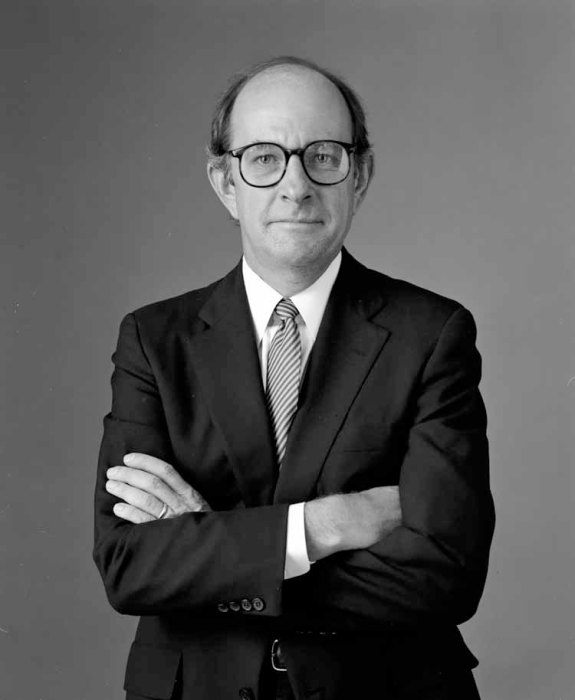
Meet Michael Deaver

This builds on the previous post about the importance of managing a president's image. Though all president's have paid attention to their image - Lincoln is said to have grown his beard after it was suggested to him by an 11 year old girl - the best modern practitioner of the art is considered to have been Michael Deaver, Ronald Reagan's deputy chief of staff.

From Wikipedia:

Deaver worked primarily on media management forming how the public perceived Reagan, sometimes by engineering press events so that the White House set the networks' agenda for covering the president.

It was argued by some - click here for the argument - that the Reagan White House was more interested in visuals than commentary because "nobody heard what you said."

From his obituary in the Guardian:


His characteristic gesture was to hold up two joined hands, the thumbs pointing downward, to simulate the framing of a television image or still photograph. One contribution he made to Reagan's triumphs was his gift for choosing the pictures behind Reagan's head. Deaver said as much himself. "I've always said the only thing I did is light him well," he told the Los Angeles Times in 2001. "My job was filling up the space around the head. I didn't make Ronald Reagan. Ronald Reagan made me."
His most brilliant single idea was to place Reagan, in Normandy for the 50th anniversary of D-day, on the clifftop above Omaha beach where some of the US invasion forces had disembarked, in 1944. There Reagan talked to an American woman whose father had died in battle. Less successful was his choice of a military cemetery at Bitburg, Germany. Reagan was supposed to greet the West German chancellor, Helmut Kohl, but Deaver's planning had slipped up. Forty-nine members of the Waffen SS are buried there.

Here's his obituary in the Washington Post.

Here are samples of his work:


Thursday, July 21, 2011

Are Democrats the New Party of Reagan?

This is a bit provocative.

Parties do tend to shift positions and philosiphies over time.

Saturday, March 19, 2011

Richard Wirthlin

Richard Wirthlin, a pollster who worked with Ronald Reagan died recently. Both 2301s and 2302s ought to read up on him as he is credited (if that's the proper word) with developing the field of campaign polling.

From the Huffington Post:

He first polled for Ronald Reagan when the future president was seeking reelection as California's governor in 1970. As recounted to author David Moore for his book, The Super Pollsters, Wirthlin had not previously been "a strong Reagan supporter," at least not "until I met him." Although he initially thought of Reagan as "a two-bit, B-grade actor, four degrees to the right of Atilla the Hun," Wirthlin's view changed after he spend two hours alone with Reagan explaining the results of a poll on policy issues.

He soon became a trusted adviser, chief strategist of Reagan's successful 1980 presidential campaign and the pollster who reportedly met with Reagan in the White House every month to brief him on his latest surveys. Reagan later described Wirthlin as "the best in the business ... when he speaks, I listen."

Former colleagues interviewed by The Huffington Post spoke of Wirthlin as a trailblazer in the then-emerging field of campaign polling. "When we started in this business," recalled former Wirthlin Worldwide Executive Vice President Vince Breglio, "there really only were three firms operating in the political realm."

. . .

Wirthlin's former employees and colleagues credit him with a series of innovations that continue to influence the practice of campaign polling today. These include:

The right direction/wrong track question. Colleagues credit Wirthlin with being the original author of the question that asks whether things in the country are "generally going in the right direction" or have gotten "pretty seriously gotten off on the wrong track." Most national media polls now track that question as a leading indicator of support for incumbent officeholders. As Wirthlin explained in a 2004 op-ed, the question helped inspire Reagan's now famous rhetorical question, "Are you better off than you were four years ago?"

Nightly tracking polls. David Moore credits Wirthlin with the first systematic use of the nightly tracking poll, in which a relatively small number of respondents are polled every day and their results are averaged in "rolling samples" of those interviewed on the day before.

Dial group tests. Newhouse says Wirthlin was the first campaign pollster to do what is now called "dial testing," the process of wiring up focus group respondents to mechanical dials that they use to constantly rate a presidential speech or debate.

Other innovations may have been less about invention than application within the realm of campaign-sponsored polling. Breglio credits Wirthlin with the first extensive application of advanced statistical techniques such as multiple regression and factor analysis. Republican pollster Steve Lombardo never worked for Wirthlin, but nonetheless sees his most "powerful and lasting" contribution as his pioneering measurement of political values. "He forced us to go beyond surface attitudes and to find the key 'value' that was driving that attitude. His feeling was that core values like beliefs in fairness or freedom were often at the core of public opinion, and that only by peeling back that onion could we begin to understand how to change attitudes."

Wednesday, March 3, 2010

Thursday, June 4, 2009

Did He or Didn't He?

Paul Krugman traces blame for the current economic crisis back to Ronald Reagan:

“This bill is the most important legislation for financial institutions in the last 50 years. It provides a long-term solution for troubled thrift institutions. ... All in all, I think we hit the jackpot.” So declared Ronald Reagan in 1982, as he signed the Garn-St. Germain Depository Institutions Act.

He was, as it happened, wrong about solving the problems of the thrifts. On the contrary, the bill turned the modest-sized troubles of savings-and-loan institutions into an utter catastrophe. But he was right about the legislation’s significance. And as for that jackpot — well, it finally came more than 25 years later, in the form of the worst economic crisis since the Great Depression.

Robert Sheer disagrees:

Ronald Reagan's signing off on legislation easing mortgage requirements back in 1982 pales in comparison to the damage wrought 15 years later by a cabal of powerful Democrats and Republicans who enabled the wave of newfangled financial gimmicks that resulted in the economic collapse.

Reagan didn't do it, but Clinton-era Treasury Secretaries Robert Rubin and Lawrence Summers, now a top economic adviser in the Obama White House, did. They, along with then-Fed Chairman Alan Greenspan and Republican congressional leaders James Leach and Phil Gramm, blocked any effective regulation of the over-the-counter derivatives that turned into the toxic assets now being paid for with tax dollars.


I don't know enough to weigh in on the merits of this issue, but I wonder whether Krugman's comments indicate a change in how Reagan's legacy is treated. So far there does not seem to be much of an effort to pin the policies he pushed -- loose credit, lower taxes, fewer regulations -- to have marked the turning point leading to the sizable debt levels, both public and private, that we have now. Perhaps liberals will start that offensive now, in much the same way that conservatives attempted to reshape how FDR and the New Deal were viewed.

Saturday, November 17, 2007

The Southern Stragegy

A controversy brewing among New York Times editorialists touches on the southern strategy which we've touched on in 2301. The controversy concerns whether Reagan's use of the term "states rights" before a crowd in Philadelphia, Mississippi at the beginning of his 1980 presidential bid was catering to the audience's racist views. Recall the town's history in order to understand the background.

A New Republic article places this controversy in historical context. Both parties spent time trying to lure southern racists. Democrats did so with Jim Crow in the late 19th Century, but gave it up when they nominated Al Smith in 1928. The article suggests that Republicans have yet to fully reject this group and points to Bush's 2000 primary race in South Carolina as an example.

It's a good overview of racial politics.

Tuesday, June 12, 2007

The Great Communicator

Tuesday marked the 20th anniversary of Ronald Reagan's "Tear Down this Wall" speech in Berlin. The speech has been argued to have focused attention on the Soviet Union and contributed to a series of events that led to the actual tearing down of the wall two years later.

It is one of the better examples of presidential oratory in the past few decades.

Here's commentary:

20 Years After "Tear Down This Wall"
Seizing the Moment
The speech itself.