Monday, April 6, 2015

What is the Obama Doctrine?

In 2305's section on foreign policy a variety of "doctrines" are mentioned. Wikipedia's page on "foreign policy doctrine" defines a doctrine as "a general statement of foreign policy," and that the purpose of a doctrine is to "provide general rules for the conduct of foreign policy through decisions on international relations. These rules allow the political leadership of a nation to deal with a situation and to explain the actions of a nation to other nations."

A number have existed over American history - click here for Wikipedia's list.

Every president since the end of World War 2 - when the United States became a dominant player in foreign policy - has had his own "doctrine" and President Obama is no exception. An analysis of the recent Iran deal makes more sense in light of the doctrine.

Here's background on it:

- Wikipedia: Obama Doctrine.
- President Explains The 'Obama Doctrine,' Defends Iran Deal.
- Heritage: The Obama Doctrine.
- Foreign Policy: The Obama Doctrine.
- Politico: The Obama Doctrine?
- Iran and the Obama Doctrine.

Who has nuclear weapons?


For more:

- Nuclear Weapons: Who Has What at a Glance.
- The Nuclear Weapons States - Who Has Them And How Many.
- Nine Nations Have Nukes — Here's How Many Each Country Has.

The proliferation of nuclear weapons

I'll post a few items on last week's announcement of a nuclear deal with Iran.

- Click here for an outline about the deal from the State Department: Parameters for a Joint Comprehensive Plan of Action Regarding the Islamic Republic of Iran's Nuclear Program.

In order to put this into context - since this is all about the expansion of nuclear weapons - here's background on the historical conflict involving nuclear proliferation.

- The Development and Proliferation of Nuclear Weapons.
- Timeline of Nuclear Diplomacy With Iran.
- Wikipedia: Treaty on the Non-Proliferation of Nuclear Weapons.

Sunday, April 5, 2015

From the Economist: The present past: 150 years after the end of the civil war, the states that were once Confederate remain distinct

The British Magazine tries to figure out why politics in the South is so different than everywhere else.

The conclude that the answer is in the regions religiosity.

- Click here for the article.

Religion is a better explanation of southern exceptionalism. The civil war divided most of America’s Protestant sects, says Mark Noll of the University of Notre Dame. Both the Presbyterian and Methodist churches split into northern branches, which opposed slavery, and southern branches, which did not. Even after slavery ended, theological divisions persisted. In the north, which saw mass immigration from all over the world in the decades after the war, Protestant churches had to find some accommodation with Jews, Catholics and, eventually, non-believers.
In the South the share of those born outside America (which was low to begin with) actually fell after the civil war. New migrants moved west or north but rarely south. Because of this, southern churches could hold more traditional views without challenge. Those tented revival meetings that were such a feature of southern Protestantism were not intended to win converts so much as to purify and strengthen beliefs that were already there.
The Southern Baptist movement, which is strongly associated with the “values voters” who favour the Republicans, has its origins in support for slavery. Southern Baptists have long since updated their views on race, as the many black Southern Baptist pastors attest, but the movement’s social conservatism endures. And southerners are unusually observant: Utah is the only non-southern state where church attendance is as high as in Dixie.
When piety is grafted on to a small-government political philosophy—57% of southerners think the government does “too much” and only 37% think it should do more, according to Gallup—it explains much of why the South remains different. The link between the war and the appeal of the Reagan revolution is harder to make, but it is not implausible that antipathy towards the federal government may be connected to the loss of a quarter of all white male southerners aged 16 to 45, who were maimed or killed in a war against it.
If this is right, then there are two possible futures for what was once the Confederacy. The continuing in-migration of large numbers of northerners, including many African-Americans, may transform the rest of the South the way it has already transformed Virginia and Florida, which are both swing states these days. Or the South might continue to expand its cultural and religious reach westwards, as it has into Oklahoma, Arizona and New Mexico. Or both. Apologists for the old South like to point out that the last action of the war, a skirmish in Texas, resulted in a Confederate victory. It’s not over yet.

Saturday, April 4, 2015

From the Texas Tribune: Water Ruling Cuts State's Power in Droughts

California recently responded to a crisis in the availability of water by placing limits on usage.

Texas Courts of Appeals have made it difficult for that to occur in Texas should our drought get that bad.

- Click here for the article.
A state appeals court has sided with farmers, ranchers and other longstanding water rights holders in a Brazos River case with widespread implications for future water battles in drought-prone Texas.
Upholding a lower court’s ruling, the 13th Court of Appeals in Corpus Christi on Thursday ruled that Texas cannot give special treatment to cities or power generators over more “senior” water rights holders on parched rivers – even if the state declares it necessary to protect the “public health, safety and welfare.”
As it stands, the decision would require some cities, power generators or others with more “junior” river rights to pay up or go thirsty when severe drought strikes.
The Texas Farm Bureau, which challenged a Texas Commission on Environmental Quality policy giving cities preferential treatment in certain water squabbles, applauded the ruling.

“It’s a clear win for private property rights,” said Regan Beck, assistant general counsel for the group. “The rules that TCEQ is trying to promulgate would really do away with the priority system as we know it.”
The TCEQ said it was "disappointed" in the decision and planned to appeal it to the Texas Supreme Court.

Prioritizing access for cities and power plants is "essential for public health, safety and welfare throughout the state, especially during these times of record drought," Terry Clawson, its spokesman, said in a statement.

Friday, April 3, 2015

From Oyez: Shifting Scales: How the Robert's Court is interpreting the 4th Amendment

- Click here for it.

We haven't spend enough time on searches and seizures this semester - other things have got in the way - but here's a good way to not only catch up to it, but see how the extent of these protections vary depending on the composition of the Supreme Court and how they interpret the specific cases that come to it.

Best Law Review Article Title Ever: UP IN SMOKE: THE RELIGIOUS FREEDOM RESTORATION ACT AND FEDERAL MARIJUANA PROSECUTIONS

- Click here to access it.

Vox refers to it to explain why RFRA will probably not let you start a marijuana church - unless you are Rastafarian.

- Click here for the article here.

. . . just like religious freedom laws have been around for decades, so have long-shot attempts to smoke marijuana by claiming religious beliefs. A 2013 look at these cases by Montana lawyer John Rhodes, published in the Oklahoma City University Law Review, found that these claims have almost always failed, except in situations involving Rastafarians, a religious group that considers marijuana a sacrament.
Defendants claimed they used marijuana for religious purposes, but judges by and large didn't buy it. One court told a defendant that his "professed beliefs have an ad hoc quality that neatly justif[ies] his desire to smoke marijuana." Other courts weren't as blunt, but they generally discarded non-Rastafarian religious beliefs as phony, according to Rhodes.
When it came to Rastafarian defendants, courts only allowed their marijuana use in limited settings. Judges found the government had a compelling interest to restrict pot in public settings, and they didn't allow criminal operations that sell the drug.
Based on these precedents, it's very unlikely that members of Indiana's First Church of Cannabis will have any luck trying to use marijuana under their new religion.
"I would predict that Indiana officials will eventually come down on folks who are smoking pot in this church," Douglas Laycock, a law professor at the University of Virginia, wrote to me in an email, "and that the Indiana RFRA will not provide them with a defense."

Thursday, April 2, 2015

Framing effects on polling results on RFRA

Looking ahead to a future discussion in 2305 on public opinion and polling - and sticking with our look at RFRA - Vox responds to an argument that polls show that small majority of Americans support these laws by pointing out that attitudes about religious freedom's impact on discriminatory behavior are influenced by how the questions are worded.

- Click here for the post.

What is a framing effect? The idea that our decisions are impacted by the way that choices are presented. In other words, people can be enticed to make answers that contradict each other if questions present the same issue in different ways.

Here's a definition from the 538 glossary in the NYT: 
How a survey question is structured can change the way individuals respond. In a well-known example from the General Social Survey, researchers found that people responded much more positively when asked about assistance to the poor than when asked about welfare, even though the questions are logically equivalent. These framing effects often work by drawing particular ideas or emotions to the fore, or by presenting a short vignette before asking respondents for their opinion.

Regarding RFRA, people tend to favor both religious freedom and the ability of individuals to be treated equally. People seem to support whichever position is emphasized in the question asked by the pollster:

- According to a March edition of the Marist poll, 54 percent of Americans agreed with "allowing First Amendment religious liberty protection or exemptions for faith based organizations and individuals even when it conflicts with government laws."

- Consider a June 2014 Public Religion Research Institute poll that asked, "Do you think that a small-business owner in your state should be allowed to refuse to provide products or services to individuals because they are gay or lesbian if it violates their religious beliefs?" Eighty percent of respondents said no.
- . . . a September 2014 Pew poll showed a much closer split. That poll asked, "If a business provides wedding services, such as catering or flowers, should it be allowed to refuse those services to same-sex couples for religious reasons, or required to provide those services as it would to all other customers." Forty-seven percent said they should be allowed to refuse, and 49 percent said they should not be allowed to refuse.

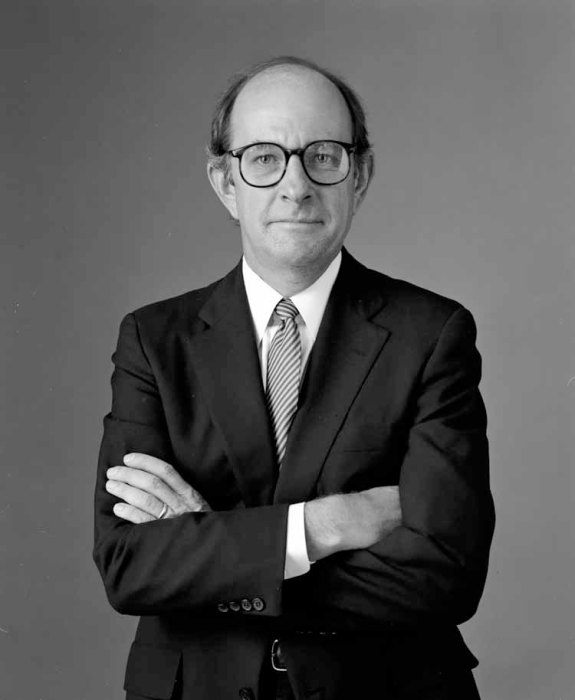
Meet Michael Deaver

This builds on the previous post about the importance of managing a president's image. Though all president's have paid attention to their image - Lincoln is said to have grown his beard after it was suggested to him by an 11 year old girl - the best modern practitioner of the art is considered to have been Michael Deaver, Ronald Reagan's deputy chief of staff.

From Wikipedia:

Deaver worked primarily on media management forming how the public perceived Reagan, sometimes by engineering press events so that the White House set the networks' agenda for covering the president.

It was argued by some - click here for the argument - that the Reagan White House was more interested in visuals than commentary because "nobody heard what you said."

From his obituary in the Guardian:


His characteristic gesture was to hold up two joined hands, the thumbs pointing downward, to simulate the framing of a television image or still photograph. One contribution he made to Reagan's triumphs was his gift for choosing the pictures behind Reagan's head. Deaver said as much himself. "I've always said the only thing I did is light him well," he told the Los Angeles Times in 2001. "My job was filling up the space around the head. I didn't make Ronald Reagan. Ronald Reagan made me."
His most brilliant single idea was to place Reagan, in Normandy for the 50th anniversary of D-day, on the clifftop above Omaha beach where some of the US invasion forces had disembarked, in 1944. There Reagan talked to an American woman whose father had died in battle. Less successful was his choice of a military cemetery at Bitburg, Germany. Reagan was supposed to greet the West German chancellor, Helmut Kohl, but Deaver's planning had slipped up. Forty-nine members of the Waffen SS are buried there.

Here's his obituary in the Washington Post.

Here are samples of his work:


Here's the image we talked about in 2305 yesterday


It flew by my facebook feed this morning so I figured I should post it here.

Here's background on the photo op.

He was arguing against proposals made in the Senate that would have limited his direct control of the personnel in the newly created Department of Homeland Security. Democrats were concerned that this was an attempt to limit civil service protections for federal employees. Republicans wanted to ensure the entire agency was directly controllable by the president.

Images like this are argued to be able to overcome negative coverage by the national media.

Click here for a 2004 assessment of W. Bush's relationship with the press.

For Obama's click on these. Apparently its a bit tense:

- Why reporters are down on President Obama.
- The Presidency and the Press.
- The president and the press.
- In Obama’s war on leaks, reporters fight back.
- Is Obama at war with journalists?
- Obama Administration Has Gone To Unprecedented Lengths To Thwart Journalists, Report Finds.

The upcoming Supreme Court gay marriage cases

The big difference between the RFRA of 1993 and those of 2015 is not in the bill, but in the politics surrounding the bill. Its easier to to argue for - and get support for - the ability of elders in a Native American church to use otherwise illegal drugs in a religious ceremony that to get support for gay marriage, which has exploded on the political scene recently.

A major driver of this issue is the fact that the Supreme Court is about to consider whether the 14th Amendment must be read to guarantee the right of same sex couples to be married across the nation. Most commentators argue that the court is likely to argue that will decide that they can, and the sexual orientation will join race, citizenship, and gender - among other - as a protected category.

(In my opinion, these state RFRA laws are intended to compensate for this possibility and allow for exceptions to compliance with the consequences of the Supreme Court ruling due to religious views.)

Since these cases will be heard by the court before the end of the semester, and will involve a variety of issue we cover in class, we should look at the cases soon.

Here they are:

- Obergefell v. Hodges
- Tanco v. Haslam
- DeBoer v. Snyder
- Bourke v. Beshear

Scotusblog has a special section devoted to the same-sex marriage controversy. Click here to access it.

From Politico: Here Are the Real Republican Primaries

The author coins a few terms - prior to state primaries where delegates to the national conventions are selected - Republican candidates have to navigate the following. These are "the real 2016 contests." 

- Click here for the article.

The Laura Ingraham Primary: There are other top radio talkers, but few are more effective in their crusades than Laura Ingraham, the lawyer and best-selling author. She’s both unrelenting and effective, and she has proven unusually influential with a fervent fan base numbering in the millions.
The Memoir Primary: As a general rule, nobody reads political memoirs anymore—not even their authors. But on those few occasions when a political book is well-crafted and does sell well, it can be a telling sign of genuine grass-roots enthusiasm.

The Ben Carson Primary: Book sales aside, every Republican knows—even Ben Carson knows—that despite his remarkable performance in recent polls, the only scenario in which the accomplished neurosurgeon is the GOP nominee begins with: “All the other candidates are in a plane that disappears over the Bermuda Triangle.”

Wednesday, April 1, 2015

What is the nature of RFRA in Texas?

Click here to find out.

This is the church at issue in Boerne v Flores


Just in case you were curious.

From the Washington Post: Answering five questions about Indiana’s new discrimination law

This might be useful for 2306.

Texas Tribune: After 18-Hour Debate, House Gives Early Approval to Budget

After 18 hours of debate that veered from polite disagreements to an angry outburst, the Texas House tentatively passed a $210 billion two-year budget early Wednesday morning with a 141 to 5 vote.

With more than 350 proposed amendments before them, members of the House began at noon Tuesday and ended at nearly 6 a.m. Wednesday. After both the House and the Senate have passed a budget, a conference committee made up of members of both chambers will hash out a compromise version. The Senate Finance Committee is expected to vote out its budget to the full Senate next week.
"This is just another step in the process,” said House Appropriations Chairman John Otto, R-Dayton, and the chamber's lead budget writer. “It is not the final product.”

The 5 "no" votes on the budget were Republican state Reps. Matt Rinaldi, Matt Schaefer, David Simpson, Tony Tinderholt and Molly White.
Democrats concentrated their efforts on directing more funding toward public education, while Tea Party Republicans tried to defund economic incentive fund programs. Yet three areas expected to draw hot debate — abortion, vouchers and in-state tuition for illegal immigrants — were largely sidestepped as members pulled down their amendments.

The Battle over the Public Integrity Unit

The Public Integrity Unit investigates public corruption statewide, but since its run out of the Travis County's District Attorney's office - which tends to be run by a Democrat - Republicans in statewide office have attempted to control it.

Senate Bill 10 would move it to the Texas Attorney General's office, which may make it less likely to investigate state office holders. That's the concern of critics anyway.

Here's content on the controversy:

- Tribpedia: Public Integrity Unit.
- Wikipedia: Ronnie Earle.
- Texas Legislature Online: SB 10.
- Interview with Rice prof Mark Jones.
- Bill to move Public Integrity Unit stalled in Senate.

Update: Analysis: Moving Integrity Unit Won't Curb Conflicts.

Some state lawmakers are unhappy with the public integrity unit, which is housed in the Travis County district attorney’s office. They want to take its state money away and give some other office the job of prosecuting state officials for ethics and campaign finance violations. Republicans, who control state government and therefore are more likely these days to be charged with corrupting it, contend the Travis County gang is packed with Democrats who have partisan motives for their prosecutions. When Democrats ruled the land, their rap was that the Travis County gang was trying to undermine anyone in state politics who wasn’t part of the Travis County gang.
Maybe they were all correct and the unit ought to be moved. Relocation of it is front and center this legislative session.

But relocation is like putting someone new into the dunking booth: It’s difficult to remain independent while policing the same public officials who provide your funding. It is hard to justify spending on independent prosecutors when you think those prosecutors are not doing their jobs.

Moving the unit simply means lawmakers can get mad at someone else for a while.

Tuesday, March 31, 2015

From Politico: I Was Alabama’s Top Judge. I’m Ashamed by What I Had to Do to Get There. How money is ruining America’s courts.

For our upcoming look at state judiciaries and the issues associated with electing judges.

- Click here for the article.
I felt trapped. I had made it to the top of my profession. I was the chief justice of Alabama, the first woman to head the state Supreme Court. It was, for a lawyer like myself, the pinnacle of achievement. And I’d earned it the hard way. To get to the justice’s chambers, I had won the nation’s most expensive judicial race that year. But at what cost?
I had needed $2.6 million to win—and that money had to come from somewhere. My opponent had raised even more, nearly $5 million in all. It’s terribly awkward and uncomfortable for a judge to have to ask for campaign money. But how are you going to win without it? My biggest concern is how shameful all of this looks to the public.
Two days after my election in 2006, I was with my daughter, Caitlin, on a school field trip when my cellphone rang. A reporter from a national legal publication was calling. Would she ask, I thought, about my election as Alabama’s first female chief justice? Or my plans for reform after holding court in some 40 of Alabama’s 67 counties over 25 years?

“Judge Cobb,” she asked, “how does it feel to be the victor of the most expensive judicial race in the United States this year? And how can you assure the people of Alabama that the contributions you sought are not going to impact how you rule? And how can you convince the people of Alabama not to believe that their courts are for sale?”
I was mortified. And while I was proud of the work I did for the next 4 1/2 years, I never quite got over the feeling of being trapped inside a system whose very structure left me feeling disgusted.

From the Atlantic: Rick Perry, American Caudillo The former Texas governor turned a constitutionally weak office into a source of tremendous informal power.

A recent article walks through how Perry was able to assert power in an office designed to limit it. Its a good addition to 2306's look at the Texas Executive.

The author argues that Perry adopted a governing style that mirrored how strongmen in Mexico ruled.

- Click here for it.

Some samples:

Rick Perry represents a model of politician not yet quite known in American politics. He is less a cowboy governor than what would be termed in Mexican politics a caudillo, a strongman. It is no coincidence, then, that the criminal case against him in Austin represents a collision between his vast but informal power and the rules of the road in American governance. And there is more to this case than meets the eye.
. . . Only the constitution imposed on Texas after the Civil War, in 1869, briefly created a strong executive. Backed by federal power, he could appoint judges, mayors, and aldermen. He could order a new state police force into action across county lines. When Reconstruction ended, a new constitution was drafted in 1876 and, in a backlash against Reconstruction, it purposefully hobbled the chief executive again, giving him few formal powers other than being named “chief executive.” Governors could serve only brief, two-year terms. The legislature would be limited to 20-week sessions every other year. Power was diffused among other officials, most importantly the lieutenant governor who presided over the Senate. And so it was for well over a century.
Strong governors would sometimes arise, but it was through dint of personality, the creation of informal alliances, and the bending of the occasional law.
. . . In his first legislative session, in 2001, Perry made a point of demonstrating who would be the boss of Congress Avenue. He vetoed 82 bills in all, most of them on Father's Day in June—the episode was known as the Father's Day Massacre—after the legislature had left town, effectively undoing its handiwork. The constitution may have created a weak governorship on paper but Perry, like Bush and a few others before, would govern strongly.

Over the ensuing years, he became the longest-serving governor in Texas history. By about 2007, he had tipped the balanceof power with the legislature and decisively held the upper hand. By 2009, his longevity in office gave him a legion of loyalist appointees in government, totaling over 3,300 people. The list included powerful university trustees, members of the cabinet, the bureaucracy, state commissions, judges, and fully two-thirds of the Texas Supreme Court. Like any good caudillo, he appointed hiscaciques—or bosses—throughout the territory he governed.
And like any adept caudillo, he returned favors to his patrones. Wealthy contributors brought their private agendas to public institutions.

Governor's strike force reports on problems at the Texas HHS

The report criticizes a number of issues related to how the agency has been run recently.

- Strike Force Report.
- 8 key passages from the 21CT ‘strike force’ report.
- Health Commission Should Not Consolidate, Report Says.
- A Look Back at the Health Commission-21CT Contract.
- Popular state purchasing program lacks oversight, competition.

For today's 2306

- Lobbyist-Politicians Targeted in Ethics Bill.
- ‘It’ll be a bloody day on the House floor’ in Texas budget debate.
- El Paso lawmaker says DPS not measuring its border performance.
- Barry Smitherman Lands Job at Law Firm.
- Senate Passes A-F Grading System for Schools.
- Texas House to debate hundreds of budget amendments.

rrrrrrrfra

Regarding "Employment Division v Smith"

We caught up on this case in 2306 Monday because this lead to the passage of the national Religious Freedom Restoration Act (RFRA), which was whittled down by the Supreme Court in Bourne v. Flores, which then led to the passage of similar laws on the state level - including the one in Indiana which led to this week's written assignment for 2306.

I hope that was - somehow - at least slightly clear.

The Oyez page on Smith - click here for it - contains a summary of the case and the majority decision, which we spent a little time discussing.

Here are the relevant parts:

Facts of the Case

Two Native Americans who worked as counselors for a private drug rehabilitation organization, ingested peyote -- a powerful hallucinogen -- as part of their religious ceremonies as members of the Native American Church. As a result of this conduct, the rehabilitation organization fired the counselors. The counselors filed a claim for unemployment compensation. The government denied them benefits because the reason for their dismissal was considered work-related "misconduct." The counselors lost their battle in state court. But the U.S. Supreme Court vacated the Oregon Supreme Court's judgment against the disgruntled employees, and returned the case to the Oregon courts to determine whether or not sacramental use of illegal drugs violated Oregon's state drug laws (485 U.S. 660 (1988)). On remand, the Oregon Supreme Court concluded that while Oregon drug law prohibited the consumption of illegal drugs for sacramental religious uses, this prohibition violated the free exercise clause. The case returned to the U.S. Supreme Court in this new posture.

Question

Can a state deny unemployment benefits to a worker fired for using illegal drugs for religious purposes?

Conclusion

Yes. Justice Antonin Scalia, writing for the majority, observed that the Court has never held that an individual's religious beliefs excuse him from compliance with an otherwise valid law prohibiting conduct that government is free to regulate. Allowing exceptions to every state law or regulation affecting religion "would open the prospect of constitutionally required exemptions from civic obligations of almost every conceivable kind." Scalia cited as examples compulsory military service, payment of taxes, vaccination requirements, and child-neglect laws.

Decision: 6 votes for Employment Division, 3 vote(s) against

Monday, March 30, 2015

About Israel's Electoral System

We talked a bit about this last week in 2305 as a way to prep for an upcoming talk about the winner take all election system used in the U.S. Very few democracies use this system (which we will see soon leads to the development of a two party system - with each party being composed of multiple factions).

Israel uses proportional representation, which leads to the establishment of multiple parties.

Here's how the process is described in Israel Elections 101:

Israel has a parliamentary system based on nation-wide proportional representation. This means that voters elect nationally-registered political factions—not local candidates.

Each faction receives representation in the 120-seat Knesset (parliament) proportional to how many votes it gets. Factions must meet a threshold of at least 3.25 percent of the vote to qualify for seats in the Knesset. Factions may determine their own list of candidates, including by internal election or appointment.

Knesset elections must be held once every four years, though many coalitions do not survive a full term. In moments of political instability or stalemate, a majority of the Knesset may vote to dissolve the body and call early elections to be held 90-150 days later.

Israeli voter turnout is traditionally very high—between 60 and 80 percent.

After an election, Israel’s president consults with faction leaders and selects the Knesset member most likely to form a viable coalition government of 61 or more seats. This member is often, but not required to be, the leader of the faction that has won the most seats. The selected member then has 42 days to negotiate with other factions and form a coalition, which is presented to the Knesset for a vote of confidence. If they succeed, that member becomes the next prime minister.

For more click on these:

- Israeli elections: Decision time (or not).
- In Israel, There Are Different Ways to Count to 61.
-Wikipedia: Israeli legislative election, 2015.

Sunday, March 29, 2015

From Quartz: 58 countries with better voter turnout than the United States

Here they are:


Uruguay (96.1% in 2009)
Ecuador (90.8% in 2009)
Uzbekistan (89.8% in 2007)
Rwanda (89.2% in 2010)
Angola (87.5% in 1992)
Turkmenistan (87.0% in 2012)
Peru (86.2% in 2011)
Bolivia (85.6% in 2009)
Tunisia (85.2% in 2009)
Equatorial Guinea (83.0% in 2009)
Belarus (81.7% in 2010)
Tajikistan (80.8% in 2006)
Venezuela (78.9% in 2012)
Cyprus (78.8% in 2008)
Argentina (77.4% in 2011)
Brazil (77.3% in 2010)
Armenia (77.2% in 2008)
East Timor (76.3% in 2012)
Iran (75.5% in 2009)
Philippines (75.1% in 2004)
Indonesia (74.8% in 2004)
Taiwan (74.3% in 2012)
Malawi (73.9% in 2009)
Gambia (73.5% in 2011)
Kazakhstan (72.7% in 2011)
Congo-Brazzaville (72.6% in 2009)
El Salvador (72.4% in 2009)
Nicaragua (71.8% in 2011)
Sao Tome and Principe (71.3% in 2011)
France (71.2% in 2012)
Sri Lanka (70.9% in 2010)
Dominican Republic (70.2% in 2012)
Ghana (69.8% in 2008)
Maldives (69.3% in 2008)
Panama (69.0% in 2009)
Iceland (68.9% in 2012)
Benin (68.4% in 2011)
Ukraine (67.9% in 2010)
Namibia (67.6% in 2009)
Palau (67.6% in 2008)
Finland (67.5% in 2012)
Azerbaijan (66.9% in 2008)
Algeria (65.9% in 2009)
Croatia (65.2% in 2010)
Mexico (64.6% in 2012)
Republic of Korea (64.2% in 2007)
Montenegro (63.5% in 2008)
Russia (63.4% in 2012)
Costa Rica (62.3% in 2010)
Sierra Leone (62.0% in 2007)
Guatemala (61.4% in 2011)
Togo (61.3% in 2010)
Slovenia (61.3% in 2007)
Romania (59.2% in 2009)
Chile (59.1% in 2010)
Bosnia and Herzegovina (58.8% in 2010)
Burundi (58.7% in 2010)
Chad (57.9% in 2011)

Should voting be compulsory?

President Obama made heads scratch recently when he speculated that perhaps voting should be mandatory - it already is in some countries, including Belgium and Australia. Voter turnout in the U.S. is at or near the bottom of all democracies.

2305's written assignment this week will be whether this is a good idea, and what the impact of the law might be.

Some - hopefully helpful - links:


- A case for compulsory voting.
- President Obama floats mandatory voting.
- Obama: Maybe it's time for mandatory voting.
- Views: Mandatory voting idea based on flawed assumption.
- Obama suggests making it mandatory to vote. That would change very little.
- Even more on the potential impact of mandatory voting.
- Wikipedia: Compulsory Voting.
- IDEA: Compulsory Voting.

In the States: Religious Freedom vs GLBT Civil Rights

One of the big news items this week regards Indiana's passage of a "religious freedom restoration act" and the backlash against it. Such laws raise the standard that a law has to clear in order to burden a person's exercise of religious belief - but its application has been a bit loose recently and it has been used to justify discrimination against people based on sexual orientation.

Makes for a good topic for a written assignment. Here are a few posts for 2306 students to consider as they think about it:

- Wikipedia: Religious Freedom Restoration Act.
- Wikipedia: State Religious Freedom Restoration Acts.
- Indiana's religious freedom law: What you need to know.
- Indiana governor proud of state’s ‘religious freedom’ law, which has been criticized as anti-gay.
- What is the Religious Freedom Act?
- NCSL: 2015 State Religious Freedom Restoration Legislation.
- DEVELOPMENT OF STATE RFRA STATUTES.

The National Conference of State Legislatures highlights three bills making their ways through the Texas Legislature:

HJR 55 - Proposes a constitutional amendment relating to the free exercise of religion; provides that the state, a county, municipality, political subdivision or agency may not burden a person's free exercise of religion unless necessary to further a compelling governmental interest and is the least restrictive means; provides that a homeowners' association may not burden a person's free exercise of religion unless necessary to further a compelling quasi-governmental interest of the homeowners' association.
HJR 125 - Proposes a constitutional amendment relating to a person's free exercise of religion.
SJR 10 - Proposes a constitutional amendment relating to a person's free exercise of religion. 

Saturday, March 28, 2015

A Summary View of the Rights of British America

Yesterday's "this day in history" featured Thomas Jefferson's election to the Continental Congress.

The story points out that Jefferson has made a name for himself by writing and publishing a paper entitled A Summary View of the Rights of British America. He was 33.

Click here to read through the document. It contains themes that would emerge in the Declaration of Independence the next year, but it's much more polite. A key argument was that the citizens on British America (the propertied white males) were unjustly being denied equal status with those in Britain.

The Sunset Advisory Commission

This might help bridge the gap between the legislative and executive branches in Texas. As we've discussed in 2306 earlier this semester, the legislature established the Sunset Advisory Commission in 1977 to review each state level executive agency an determine whether it is to be kept as is, modified, merged with another agency or abolished. Each agency is set to expire unless it is reauthorized by the commission.

This is the basic question it asks about each agency:

“Does the agency and its functions continue to be needed and if so, what improvements need to be made?”

Here's background on the commission:

- Click here for the Texas Sunset Advisory Commission.
- FAQ's.
- Texas Sunset Act.
- Agency History.
- Government Code: Title 3, Subtitle C, Chapter 325.
- This is the list of all agencies subject to review.

These are the agencies under review this session, the links take you to the reports for each:

- Administrative Hearings Tax Division, State Office of
- Administrative Hearings, State Office of
- Aging and Disability Services, Department of
- Assistive and Rehabilitative Services, Department of
- Children With Special Needs, Interagency Task Force for
- Developmental Disabilities, Texas Council for
- Education Agency, Texas ( Limited Scope Review )
- Facilities Commission, Texas ( Re-review )
- Family and Protective Services, Department of
- Health and Human Services Commission
- Health Care Information Council, Texas ( Special Purpose Review )
- Health Services Authority, Texas
- Health Services, Department of State
- People with Disabilities, Governor’s Committee on
- Purchasing from People with Disabilities, Texas Council on
- Self-Directed Semi-Independent Agencies, Entry Criteria for ( Special Review )
- Soil and Water Conservation Board, State ( Limited Scope Review )
- University Interscholastic League
- Workforce Commission, Texas
- Workforce Investment Council, Texas

It's currently looking at two of the largest, The Texas Education Agency and the Heath and Human Services Commission.

Friday, March 27, 2015

From Charlie Cook: REPUBLICAN BRACKETOLOGY Which GOP candidates will survive the first few rounds and advance to the Final Four?

Cook is one of the better electoral analysts around (in my opinion).

- Click here for his Wikipedia Page.
- And here for the Cook Political Report.

In this analysis he breaks the Republican Party into four distinct factions and uses it to analyze the upcoming race for the Republican nomination. He calls them brackets sine the NCAA tournament is going on. Here they are:

- the Establishment bracket
- the Secular/Conventional Conservative bracket
- the Tea Party/Populist Conservative bracket
- the Social, Cultural, and Evangelical Conservative bracket

Earlier this semester I posted a graphic - click here to get it - that described the factions as a five ring circus. The rings are:

- Moderate
- Establishment
- Christian Conservative
- Libertarian
- Tea Party

Obviously there is disagreement about what the precise nature of these factions are. I'll post something similar about factions in the Democratic Party when I find it. I mentioned in class that when we discuss parties in a winner take all system, we need to understand the competition that exists between the faction. Each fights to have one of their own emerge as the party's nominee.

Here's a bit from Cook's article (note that he does not discount Cruz's competitiveness):

Scott Walker still has a solid lead in the Secular/Conventional Conservative bracket. (This bracket would also include Texas Gov. Rick Perry, former U.N. Ambassador John Bolton, Ohio Gov. John Kasich, and Indiana Gov. Mike Pence, if they run.)
In the Social, Cultural, and Evangelical bracket, the contestants are Arkansas Gov. Mike Huckabee, former Sen. Rick Santorum of Pennsylvania, and Louisiana Gov. Bobby Jindal. The important thing to understand about this bracket is that it's generally a dead end. . . .

Maybe the biggest recent development has been in the Tea Party/Populist bracket. Rand Paul was the early leader here, but Ted Cruz's impressive performance in his announcement speech at Liberty University elevates him to running even with Paul. Cruz's stock was probably undervalued early on, as few seemed to appreciate his impressive intellect and communications skills. (He wasn't a championship debater in college for nothing.) . . .

The Establishment bracket consists of Florida Gov. Jeb Bush, New Jersey Gov. Chris Christie, Sen. Marco Rubio of Florida, and former Hewlett Packard CEO Carly Fiorina. (Sen. Lindsey Graham and former New York Gov. George Pataki will be in this bracket, too—if they manage to put together viable campaigns.) Bush remains the unquestioned leader, but if the conventional wisdom is wrong anywhere (and I admit to being very conventional most of the time), it might be in underestimating Rubio's potential.

Thursday, March 26, 2015

Random items related to the Texas Legislature

All from the Texas Tribune:

- Long Legislative Road for Voucher Bills Begins.

A preview of the looming battle over school vouchers played out Thursday as a state Senate panel considered two proposals to provide state financial support to parents who want to send their children to private schools.
Debate focused on how to ensure taxpayer funds are well spent at participating private schools as lawmakers traded questions over whether such plans would improve education in the state.

- District Attorneys' Report: Misconduct Exceedingly Rare.

In a report issued Monday morning, an association representing Texas prosecutors disputed what they say are illegitimate claims of rampant prosecutorial misconduct without accountability.
“It’s just not true,” said Rob Kepple, executive director of the Texas District and County Attorneys Association.
The association spent months reviewing 91 Texas cases in which the Northern California Innocence Project in a Marchreport identified prosecutor error or misconduct. The TDCAA said it discovered only six instances “in which a prosecutor arguably engaged in deliberately dishonest or fraudulent conduct that produced unjust results.”

Kepple said the Innocence Project report was “replete with errors” and called it “really kind of embarrassing from a scholarly aspect.”

Cookie Ridolfi, founder of the Northern California Innocence Project, who researched the Texas misconduct data, said she stood by the organization’s findings.

- Ethics Bills Draw Ire of Conservative Activists' Lawyers.

Lawyers for some of the state's most influential conservative groups voiced bitter opposition late Wednesday to several proposals to reform Texas' campaign finance laws, arguing the bills would only make a broken system worse and trample First Amendment rights.
Anticipating the backlash, state Rep. Sarah Davis nodded to the tough crowd after presenting her House Bill 22, which would overhaul the Texas Ethics Commission, particularly to beef up its enforcement authority.

"I love agreed-to bills, but I have a feeling there is absolutely no change that comes before this committee that contains the words 'Texas Ethics Commission' that Empower Texans would not just immediately oppose," the West University Place Republican said, referring to the conservative group that has come under scrutiny by state campaign finance regulators. "But I'm happy to work with them."
The late-night meeting of the House State Affairs Committee offered the latest snapshot of the intense, organized scrutiny some lawmakers face as they put a renewed focus on ethics reform. Gov. Greg Abbott elevated the issue last month by naming it one of five emergency items, and some of the ideas before the panel Wednesday were similar to what he has called for.

- Senate Passes Patrick's Tax Cut Package.

The Texas Senate on Wednesday approved Lt. Gov. Dan Patrick’s multibillion-dollar tax relief package to cut property and business margins taxes, tossing the ball into the House's court.
"Rather than spend excess revenue, the Senate has voted to return $4.6 billion to Texas homeowners and businesses over the next two years," Patrick said in a statement.

The biggest piece of that package, Senate Bill 1, authored by Senate Finance Chairwoman Jane Nelson, R-Flower Mound, passed the Senate 26 to 5. The bill devotes about $2.4 billion to increase homestead exemptions from school property taxes.

- Senate's Property Tax Cut May Stall in House.

While the Texas Senate easily approved a $2.4 billion plan to provide property tax relief to homeowners Wednesday, the measure may lose momentum when it reaches the House, where leaders appear more interested in cutting the sales tax.
“We’re going to present our plan here soon, and you’ll see what we’ll be driving for,” House Ways and Means Committee Chairman Dennis Bonnen, R-Angleton, said. “I think it’s fair to say at this time that we’re focusing on taxes that will have a more meaningful impact on growing the Texas economy, and property tax cuts are not part of the plan.”
Bonnen said he will publicly present his full proposal for tax cuts early next week.
Earlier this month, he filed three tax cut bills, two similar to Senate proposals to cut the margins tax paid by businesses, and a third that would cut the state sales tax.

Facebook CIA Project: The Onion News Network

The Supreme Court refuses to hear a challenge to Wisconsin's Voter ID Law

The case is Frank v. Walker.

- Click here for ScotusBlog's info on the case.

- Commentary from Election Law Blog.

H.CON.RES.27

That's the official title of the House's version of the 2016 U.S. Budget.

- Click here for the page on it in Thomas.

- Click here for analyses by the Congressional Budget Office.

From the Hill: New House conservative caucus divided in budget vote

More about the divisions among House Republicans we discussed earlier this week.

- Click here for the article.
Members of the new conservative House Freedom Caucus held a lengthy conference call Friday about whether they would stick together to support or oppose GOP leaders’ new budget strategy.
Caucus Chairman Jim Jordan (R-Ohio), who led the call, backed the new approach, which included billions more for defense. But others on the line were frustrated the plan didn’t offset any of the extra spending, according to sources on the call.
By the time the phone call ended about 40 minutes later, there still was no consensus.
The vigorous debate foreshadowed Wednesday’s vote, where Freedom Caucus members splintered over supporting a backup GOP budget crafted after defense hawks balked at the lower spending levels in the original proposal.
Twenty-six Republicans eventually voted against the leadership-backed spending plan, including six of the nine Freedom Caucus co-founders: Reps. Justin Amash (Mich.), Scott Garrett (N.J.), Tim Huelskamp (Kan.), Raúl Labrador (Idaho), Mick Mulvaney (S.C.) and David Schweikert (Ariz.).

All of those co-founders but Garrett voted against final passage of the budget.

From Vox: One sentence that perfectly explains how out of control money in American politics is

Although I cancelled the section on money in politics - its not ready for prime time - we'll review the impact of money on the political and governing system soon.

This article in Vox tries top summarize the current state of financing elections - especially in the wake of court decisions which have allowed for almost unlimited spending:

If you wanted a single sentence to sum up the state of our modern campaign finance system, it would be hard to do better than this one from the Washington Post's Matea Gold and Tom Hamburger:
One longtime bundler recently fielded a call from a dispirited executive on his yacht, who complained, "We just don't count anymore."
This is what we've come to: the rich businessman on his yacht feels out of the loop, because campaigns only care about billionaires.


Click here for the article: In 2016 campaign, the lament of the not quite rich enough.

Billionaires pack the biggest punch in elections right now, meaning that people that once mattered - the merely rich - don't anymore. Potential candidates for the presidency are focusing attention on the the needs of ultra rich. It makes it easier for them to get the cash necessary to make a viable run for the White House.

By the way, in case you wonder what a "bundler" is - here's a description:

Bundling describes the activity of fundraisers who pool a large number of campaign contributions from political action committees (PACs) and individuals. Bundlers, who are often corporate CEOs, lobbyists, hedge fund managers or independently wealthy people, are able to funnel far more money to campaigns than they could personally give under campaign finance laws.

Billionaires don't need to bundle.

Here's more on the well heeled donors who are attempting to control the 2016 race.

- The Kochs put a price on 2016: $889 million.
- Billionaires Alter 2016 Playing Field.

Wednesday, March 25, 2015

Who will manage the Alamo?

- Land Office Parts Ways With Alamo Managers.

- Alamo Shakeup Turns to Search for New Managers.

- Daughters of the Republic of Texas Sue Land Office.

Ted Cruz's Strategy


The national media appears convinced he will never get anywhere close to the 2016 GOP nomination, but fortunately for Cruz, his plan doesn’t involve catering to the pundit class, fixated as they tend to be on daily polling figures and related ephemera.
The tactical wisdom of launching a campaign at Liberty, the powerhouse Evangelical outpost in Lynchburg, Virginia, could be seen as dubious insofar as it risks balkanizing Cruz into a Christian exclusivist box, closing him off from other constituencies in a Republican primary contest. And it’s true that Liberty is fairly removed from the cultural mainstream: Here, rumors of alcohol consumption are conveyed in hushed tones, gleaned from a friend of a friend. (One student, a junior, told me he’d heard of drinking-related incidents only once or twice, and was flabbergasted by tales of intoxicated debauchery from elsewhere.) The melodies of Christian rock anthems stream throughout campus even in the early morning hours via speakers attached to lamp posts. Cruz was clearly appealing to a very specific element here.
But another way to see the venue selection is that Cruz wants to nail down the conservative Christian contingent early in the process—preempting Mike Huckabee, Rick Santorum, and others—and then proceed to court national security hawks and Club for Growth types. Cruz seems to be betting that he can assemble an historic GOP primary coalition; religious conservatives customarily fracture and allow the “establishment” to get its way. But the “establishment” could also find itself fractured this time around, as Jeb Bush, Chris Christie, and Scott Walker jockey amongst themselves. Evangelicals, while not a monolith by any stretch, tend to be attuned to cultural signaling. And the historic nature of Cruz’s announcement, the first of its kind at Liberty, won’t soon be forgotten. So they will serve as his natural base, and from there he can make forays into other constituencies, consolidating just enough of a bloc to undermine the “establishment.” That’s the Cruz logic, anyway.

What is a natural born citizen?

Senator Cruz's announcement coincides with our look at Article 2.

Only natural born citizens can be president, but what does that term mean?

- FactCheck: Ted Cruz's Presidential Eligibility.
- CBS News: Good Question: How Is ‘Natural Born Citizen’ Defined?
- Wikipedia: Natural-born-citizen clause.

Tuesday, March 24, 2015

From the Texas Tribune: $209.8 Billion Budget Plan Headed to House Floor

The House Appropriations Committee on Tuesday endorsed a $209.8 billion budget that would spend $7.7 billion more than the current two-year budget and would leave $8.4 billion on the table, along with billions more in the state’s savings account.
The committee voted 24-0 to move House Bill 1 forward after more than a month of hearings. The budget will be debated and voted on by the full 150-member House next Tuesday, March 31, according to House Appropriations Chairman John Otto, R-Dayton.
“This is a good budget, but it is not yet complete,” Otto said. “Over the next two months, we will continue to work on this budget, first on the floor and then in cooperation with the Senate in conference.”
As the Appropriations Committee voted out its main budget bills Tuesday morning, the Senate Finance Committee was working next door on its own version of the budget, Senate Bill 2. That committee is expected to put the finishing touches on the bill later this week.

HB 1 includes $104.6 billion in general revenue spending, the closely watched portion of the budget that lawmakers have the most control over. That’s up $9.4 billion, or nearly 10 percent from the current budget, which spends $95.2 billion in general revenue.
The House also approved supplemental funds to make up for deficiencies in the last budget.

House budget writers intend to add $433 million to the current two-year budget with a supplemental bill laid out Thursday, though a plan to repurpose millions in leftover funds from various health care programs drew sharp questions from Democrats.
Since the Texas Legislature meets every two years, lawmakers usually have to pass a supplemental budget bill to pay for unexpected costs and IOUs for the current budget. The Legislature is now crafting the 2016-17 budget, and the supplemental budget bill would augment the 2014-15 budget lawmakers approved two years ago.

At Thursday's House Appropriations Committee hearing, Chairman John Otto, R-Dayton, and members of the Legislative Budget Board explained details of House Bill 2 for the first time. The supplemental budget bill includes $254.7 million in general revenue, the portion of the budget lawmakers have the most control over, and $177 million in federal funds. Otto is the bill's author.


Government Speech v. Private Speech

From what I can tell, that is the critical issue in the license plate decision involving the TMVB.

Is a message on the license plate government speech or private speech? We will try to determine the difference between the two in class.

- Wikipedia: Government Speech.
- Viewpoint Neutrality and Government Speech.

From the National Journal: How Ted Cruz Will Pull the GOP Presidential Primary Right - The Texan spent the last months before his presidential campaign showing off his knack for articulating the most conservative position on numerous issues.

Though Cruz is not considered a favorite to win the GOP nomination, he will undoubtedly play a huge role in the 2016 campaign by catering to conservative voters, who tend to dominate primaries, with his knack for articulating the most conservative position on key issues.
Just in the past couple of months, the fiery Cruz has shown off that knack in visits to Iowa and New Hampshire, on cable news, and on the Senate floor. Cruz made his name in the Senate as one of the GOP's staunchest critics of the Affordable Care Act—even driving a strategy that led to 2013's government shutdown—but Cruz is deeply conservative on any number of issues and he's not afraid to say so. That could have a big impact on the rest of the field: In the 2012 presidential race, conservative candidates similar to Cruz often pulled the GOP primary field along with them.
How Cruz affects the 2016 primary will come down to how the other candidates react to him—whether by moving to the right themselves on some issues or by using Cruz as a contrast to try to distinguish themselves as more moderate. Either way, Cruz has spent his last months before officially becoming a presidential candidate highlighting his ability to get on the most conservative side of an issue.

From 538: Listen To Our Totally Subjective Presidential Odds For March 2015

Some stats types lay down odds for each party's race to the nomination.

- Click here for the article.

538_POD_politics_1920x10803

538_POD_politics_1920x1080

Oral Arguments in Walker v. Texas Division, Sons of Confederate Veterans

As we mentioned in class yesterday, the U.S. Supreme Court heard arguments yesterday about whether the Texas Department of Motor Vehicles Board violated the constitutional rights of the Texas Division of the Sons of Texas Veterans by not allowing them to have a specialty license plate with the confederate battle flag on it.

Here are links to stories regarding the arguments

- ScotusBlog coverage,
- NPR.
- Education Week’s School Law blog.
- The Wall Street Journal.
- Constitutional Law Prof Blog.

Click here for the transcript of the argument.

On this day in history: Parliament passes the Quartering Act

From the History Channel:

On this day in 1765, Parliament passes the Quartering Act, outlining the locations and conditions in which British soldiers are to find room and board in the American colonies.
The Quartering Act of 1765 required the colonies to house British soldiers in barracks provided by the colonies. If the barracks were too small to house all the soldiers, then localities were to accommodate the soldiers in local inns, livery stables, ale houses, victualling houses, and the houses of sellers of wine. Should there still be soldiers without accommodation after all such publick houses were filled, the colonies were then required to take, hire and make fit for the reception of his Majesty’s forces, such and so many uninhabited houses, outhouses, barns, or other buildings as shall be necessary.
As the language of the act makes clear, the popular image of Redcoats tossing colonists from their bedchambers in order to move in themselves was not the intent of the law; neither was it the practice. However, the New York colonial assembly disliked being commanded to provide quarter for British troops–they preferred to be asked and then to give their consent, if they were going to have soldiers in their midst at all. Thus, they refused to comply with the law, and in 1767, Parliament passed the New York Restraining Act. The Restraining Act prohibited the royal governor of New York from signing any further legislation until the assembly complied with the Quartering Act.
In New York, the governor managed to convince Parliament that the assembly had complied. In Massachusetts, where barracks already existed on an island from which soldiers had no hope of keeping the peace in a city riled by the Townshend Revenue Acts, British officers followed the Quartering Act’s injunction to quarter their soldiers in public places, not in private homes. Within these constraints, their only option was to pitch tents on Boston Common. The soldiers, living cheek by jowl with riled Patriots, were soon involved in street brawls and then the Boston Massacre of 1770, during which not only five rock-throwing colonial rioters were killed but any residual trust between Bostonians and the resident Redcoats. That breach would never be healed in the New England port city, and the British soldiers stayed in Boston until George Washington drove them out with the Continental Army in 1776.

And as we know in 2305, this becomes the basis for not only one of the grievances in the Declaration of Independence, but the 3rd Amendment.

For more info:

- Wikipedia: Quartering Acts.
- New York Restraining Act.
- Wikipedia: Restraining Acts 1775.

House Bill 540 would empower the Texas Attorney General to limit local ballot initiatives

This follows a major trend in the current legislative session:

From the Texas Observer:

A bill that would give Attorney General Ken Paxton’s office sweeping power to allow or disallow local initiatives and referenda had its first hearing in the House Committee on State Affairs today. The bill is among several in the Legislature squashing local control—and while it got a cautious reception from the committee, it’s supported by some of the state’s most influential business interests.
In recent years, referenda and ballot initiatives have grown in importance as ways for Texans to enact change and hold local governments accountable. The most notable recent example is a ban on hydraulic fracturing in Denton, which passed a fairly conservative electorate by a wide margin. The Denton ban was the subject of much of today’s debate.
House Bill 540, sponsored by Phil King (R-Weatherford), would require any referendum or ballot initiative in one of Texas’ home-rule charter cities to be reviewed by the attorney general’s office. The attorney general would rule on whether the proposed ballot initiative or referendum would violate “the Texas or federal constitution, a state statute, or a rule adopted as authorized by state statute,” or if it would constitute a “government taking of private property.”
That may sound clear-cut, but it’s not. The normal method for deciding whether a law is constitutional involves months or years of careful scrutiny by the courts. Instead, King would give that power to bureaucrats in the AG’s office. If an initiative is detrimental to a powerful and GOP-allied interest group, would the AG’s office really let it slide?
In laying out the bill, King told the committee that Texas was a republic, run by the Legislature, and not a democracy, run by the people. “Democracy is two wolves and a lamb voting on what to have for lunch,” he said, misattributing the quote—which might have originated with a 1990 Los Angeles Times op-ed—to Benjamin Franklin. In places like Denton, powerful and monied outside environmental groups had agitated for change, he said, and the rule of law had to be imposed—by Ken Paxton.

Ted Cruz is first to announce presidential race

Just a few links to get going. I'll add to this brief list over the next few days.

- Ted Cruz Becomes First Major Candidate to Announce Presidential Bid for 2016.
- Can Ted Cruz win? 11 things to know about 2016’s first candidate.
- Cruz: I'm a natural born American.

Monday, March 23, 2015

Singapore

It's tiny.

Smaller in are size than greater Houston and about the same population.


- Click here for more info:

- Wikipedia.
- CIA Fact Book.

R.I.P. Lee Kuan Yew

The 91 year old ruler of Singapore was regarded as being responsible for transforming it from a poor corrupt country into an economic powerhouse, but he did so by restricting speech and jailing political opponents.

He was an autocrat - the pros and cons of which we cover in the early lectures in 2305 - which may have allowed him to direct the nation in the direction he choose, but apparently now raises concerns about what comes next. A nation based on one person's personality does not necessarily have the institutional structure that allows for ongoing stability.

For background:

- Wikipedia: Lee Kuan Yew.
- Lee Kuan Yew, Founding Father and First Premier of Singapore, Dies at 91.
- A Conversation with Lee Kuan Yew.
- Lee Kuan Yew Created The World's Least-Hated Authoritarian State.
- Singapore tries to imagine a future without its founder, Lee Kuan Yew.

Sunday, March 22, 2015

General Reports from the Texas Legislature

For a quick look at what the legislature has done so far.

Walker v. Texas Division, Sons of Confederate Veterans, Inc.

Oral arguments are scheduled Monday in the Supreme Court about whether Texas must create specialty license plates with the confederate flag if they are requested to do so.

- From the Christian Science Monitor: 

The United States Supreme Court on Monday is set to hear a dispute over whether Texas has the authority to bar the issuance of a specialty license plate featuring the Confederate battle flag.
The controversy arose in 2009 after the group Sons of Confederate Veterans asked the Texas Motor Vehicles Board to approve a specialty license plate that prominently displayed the Confederate flag.
In the century and a half since the Civil War, the Confederate battle flag has come to represent a symbol of Southern heritage for some. But for many others, including African-Americans, the flag is viewed as a symbol of fear, intimidation, and oppression.
Cognizant of this reaction, the Motor Vehicles Board voted to reject the license plate.
The Sons of Confederate Veterans filed a lawsuit, charging that the Texas board – which has approved messages conveyed by 350 other specialty license plates – had engaged in unconstitutional viewpoint discrimination in violation of the First Amendment’s free speech clause.

- From ScotusBlog:

If a state is forbidden by the Constitution to dictate the message that private citizens must put on their license plates, is it also forbidden to veto a message that citizens would prefer? That has been a lingering First Amendment question for nearly four decades, but the Supreme Court now seems prepared to answer it. The answer depends, simply, on whether the voice of the license plate is that of the government, or of the motorist.
In the famous decision in 1977 in Wooley v. Maynard, the Supreme Court treated license plate messages as a form of private speech on private property, but did not rule exactly that. Presuming it to be private speech, the Court said motorists could not be compelled to carry New Hampshire’s preferred message, the state motto, “Live Free or Die.” That mandate was challenged by a driver of the Jehovah’s Witness faith.
Six years ago, the Court made clear, in the case of Pleasant Grove City v. Summum, that if the government is acting as the speaker in a public display (there, a monument in a public park in Utah), it has the right to pick a message it prefers and exclude others.

Catching up with the 84th Session of the Texas Legislature

From the Fort Worth Star Telegram: ‘The Kumbaya is over’ in the Texas Legislature.

Rep. Jonathan Stickland is watching the calendar. The 84th legislative session is half over, and just 10 weeks remain to consider more than 8,000 bills addressing issues ranging from gun rights to the state budget. 
It’s a time when some lawmakers preach the need to work together. But now, Stickland said, is the time for the gloves to come off and for lawmakers to get down to business.
“The Kumbaya is over,” said Stickland, R-Bedford, who recently made headlines over a fight with House leadership over posting a sign on his Capitol office door. “We’ve been down here passing resolutions and telling each other how great we are and how great everyone else is. Now we have to start dealing with legislation.
“We are about to disagree a lot and fight it out publicly,” he said. “Things are getting testy, and they are going to get testier.” Lawmakers have 140 days in the regular session to complete the state’s business. The only bill that must be passed before June 1 is the state’s two-year budget.  

From the San Antonio Express-News: Energy slump strikes Texas Capitol - Truce arising as oil price falls.

Under the dome of the Texas Capitol, the stage was set for a confrontation.
To one side would stand captains of the state’s most powerful industry, who at the height of a five-year oil and gas boom employed more than 400,000 workers and contributed $15.6 billion last year to the tax base. To the other would stand opponents of expansive drilling, which has wrecked roads, fouled the air, intruded on urban neighborhoods and riddled the land with waste water wells of a type linked to earthquakes.

But at the last minute, an uneasy truce descended. Just as lawmakers were preparing for their biennial legislative session, charged with addressing a range of problems related to drilling practices, oil prices fell from $100 a barrel to the $50 range.
Industry activity, to put it mildly, slowed. So did much legislative momentum to address the consequences of the great oil rush.
Halfway through the session, the House Energy Resources Committee is getting to work. Of the 18 bills it has been assigned, three concern the relatively cosmetic issue of a name change for the Texas Railroad Commission, which regulates the petroleum industry.
Most of the other proposals are fairly modest and arcane, with the exception of a potentially momentous measure to ban municipal regulation of drilling.
“It looks to me like the Legislature’s pretty confused; they don’t know what to do with themselves,” said Michael Webber, deputy director of the Energy Institute at the University of Texas at Austin. “There’s a little bit of deer-in-the-headlights going on now, because the rhetoric on the campaign trail was so thick about how we’re going to be rich forever.”

From the Austin American-Statesman: Big business lobby groups to Texas Senate: We don’t like your tax cuts.

Big business lobby groups sent a letter Friday to Lt. Gov. Dan Patrick and the Texas Senate Friday criticizing the more than $4.6 billion tax cut package the upper chamber could vote on as early as next week.
Those groups, including the Texas Association of Business and the Texas Oil and Gas Association, have complained that the proposal favors smaller businesses and does not include reductions to business property taxes, which they contend is more burdensome than the state’s business franchise tax.
In the letter, seven of those groups also told senators they should consider tax cuts only after spending enough money on “congested roads, educational challenges, obsolete infrastructure, high debt and underfunded pensions.”
“If, after paying our state bills, there is money left over for tax relief, that relief should be fair to those who pay the most taxes in the first place—both individuals and businesses,” the letter says. “That portion of tax relief to business should encourage growth and investment, enhancing our ability to expand our production and payrolls.”
The proposal on the table does not do that, according to the letter, which says the “package of tax bills up for consideration in the Texas Senate falls short of these principles and creates new inequities in our tax system.”

From the Texas Tribune: Sid Miller Clashes With Legislature Over Budget.

Newly minted Agriculture Commissioner Sid Miller has been generating more than newspaper headlines since he began calling on the Texas Legislature to dramatically boost his agency’s budget.

He’s also getting blowback at the Capitol.
He was asked to move his car off of Capitol grounds after parking where he wasn't supposed to — and now officials say he's even been denied access to the secured driveway circling the building. And a couple of weeks ago, while pressing his former colleagues to support his request for a bigger agency budget, Miller was asked to leave the center floor of the House chamber — the area inside the brass rails that is generally reserved for current members.

State Rep. Charlie Geren, chairman of the House Administration Committee, which handles the chamber’s internal affairs, said it's nothing personal. Miller "wasn't kicked out of anywhere"; he was simply told to follow the House rules. But the episodes highlight a rapidly deteriorating relationship between the cowboy hat-wearing commissioner and the Legislature that once counted Miller as one of its own. Miller has been loudly complaining about the impact deep 2011 budget cuts had on the Agriculture Department and its ability to protect consumers.

From the Houston Chronicle: Lawmakers may partly close tax loophole draining local government coffers.

State lawmakers are looking to partly close a tax loophole that has allowed big companies to drain tens of millions of dollars from local government coffers in recent years, but any reforms that pass may still not end the legal battles that have been driving down appraisals on industrial and commercial properties.
Several reform bills were filed this year as counties began putting pressure on legislators to do something about an increasing number of lawsuits by major companies trying to take advantage of the loophole, which allows property owners to avoid the traditional fair-market system of appraisals.
School districts have been among those hardest hit. Valero Energy Corp. used the loophole to force the Texas City school district to refund about $5 million, while two other lawsuits by the company compelled the Port Arthur school district to pay $32 million in refunds and other charges. The company has new lawsuits pending that could mean even more tax refunds from the two school districts.
The loophole is also costing the state an estimated $70 million to $80 million a year in six counties, according to a January report by the nonpartisan Legislative Budget Board that called for sweeping reforms. The state must pay its share of tax revenue lost by school districts.

From the Texas Tribune: In Legislature, Toll Roads Facing Strong Opposition.

While Texas lawmakers appear intent this year on pumping billions of extra dollars into building and maintaining highways, another shift in the state’s approach to transportation is gaining traction. Anti-toll sentiment at the Capitol is at its highest level in at least a decade.
Lawmakers have filed more than a dozen bills this session aimed at either tapping the brakes on new toll road projects or undoing the state’s current tolling system entirely.
"In light of the Legislature's commitment to fully fund transportation, it is a breach of trust with taxpayers to demand that they pay the double tax of tolls and transportation taxes,” said state Rep. Matt Shaheen, R-Plano.
This week will draw a bright spotlight to the issue. On Monday, Shaheen and several other Republican lawmakers plan to attend a rally in honor of “Toll Free Texas Day” organized by the anti-toll groups Texans for Toll-free Highways and Texans Uniting for Reform and Freedom. Lt. Gov. Dan Patrick also hopes to attend the rally, schedule permitting, according to a spokesman. The event will be followed by separate House committee hearings on Tuesday and Thursday in which anti-toll bills will be heard.
The pushback against toll roads and toll lanes has been simmering for years, and can largely be traced back to former Gov. Rick Perry’s 2002 proposal of the Trans-Texas Corridor, a massive 4,000-mile network of privately operated toll roads, railroad tracks and utility lines. Public opposition to the plan eventually prompted the Legislature to declare it dead after first approving it. Yet toll projects continued to flourish around the state. Texas now has more than 500 miles of tolled highways, most of it developed over the last decade.

Over the summer, the Texas Republican Party removed a provision from its platform backing “the legitimate construction of toll roads in Texas” and replaced it with language opposing some aspects of toll projects in Texas, particularly the use of public money to subsidize private entities.
eom ad more here: http://www.star-telegram.com/news/politics-government/article15610256.html#storylink